THE ADVENTURE COLLECTIVE® · Independent discovery and booking for outdoor travel

Escape Hanoi’s rush for a day and enter Mai Chau’s slow rhythm: stilt houses, rice-paddy lanes, a hilltop market at Thung Khe Pass, and a gentle cycle through Thai and Muong villages. This full-day from Hoa Binh pairs accessible walking and biking with authentic cultural exchange.
Escape Hanoi’s rush for a day and enter Mai Chau’s slow rhythm: stilt houses, rice-paddy lanes, a hilltop market at Thung Khe Pass, and a gentle cycle through Thai and Muong villages. This full-day from Hoa Binh pairs accessible walking and biking with authentic cultural exchange.
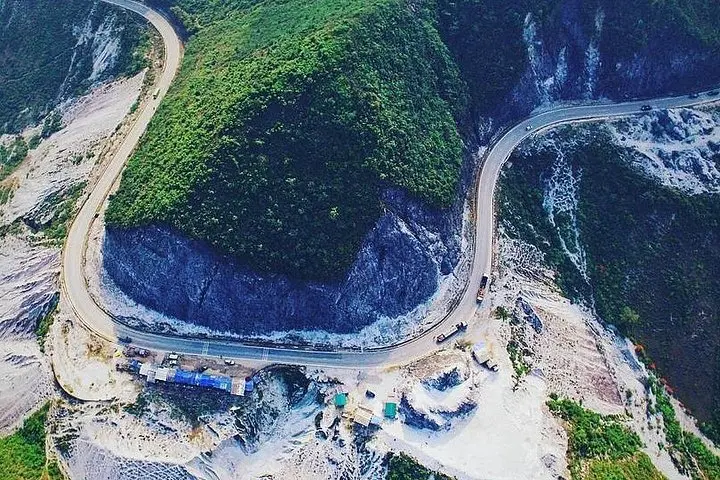
You arrive on a ribbon of road that climbs and narrows, the petrol-scented haze of the city giving way to humid green. By the time the bus dumps you at Thung Khe Pass, the valley opens like a quiet breath: rice paddies stretch in geometric squares, stilt houses sit on low ridgelines, and the limestone ridges beyond seem to watch, patient and grey. The air smells of tilled earth and wood smoke — simple, sharp, honest.
Verified experiences and guided adventures in the surrounding area.
Operated by Charm Tourist · Mai Chau, Hoa Binh
You arrive on a ribbon of road that climbs and narrows, the petrol-scented haze of the city giving way to humid green. By the time the bus dumps you at Thung Khe Pass, the valley opens like a quiet breath: rice paddies stretch in geometric squares, stilt houses sit on low ridgelines, and the limestone ridges beyond seem to watch, patient and grey. The air smells of tilled earth and wood smoke — simple, sharp, honest.
Mai Chau is a living landscape shaped by folded limestone and human hands. The valley sits in Hoa Binh province, carved by tectonic lifts and smoothed by centuries of rice cultivation. Ethnic Thai and Muong communities have farmed these slopes for generations; their stilt houses, woven brocades, and market trade offer a direct line to regional history and craft. Thung Khe Pass itself has long served as a lookout and a stop for traders; today it presents a panorama that makes the valley feel both intimate and vast.
The tour unfolds in measured acts: a morning drive from Hoa Binh through hairpin turns and terraced fields; a stop at the pass where a temporary market bristles with brocade, bamboo wares and sticky rice snacks; a simple family-style lunch served in a stilt house; then a relaxed cycle through village lanes and the river plain; capped by a short trek to a viewpoint or a hill-side hamlet.
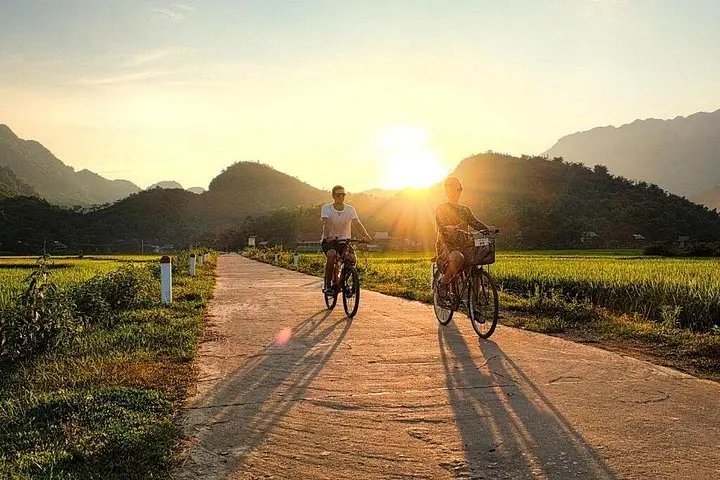
The cycling covers quiet dirt and paved village roads — expect 10–15 kilometers of mostly flat riding interspersed with brief climbs. The trek is short and accessible: 1–2 kilometers on uneven paths with modest elevation gain. Physical strain is low, but the sensory load is high: weaving demonstrations, market haggling, and the quiet rhythm of fieldwork.
Practical matters: the full day lasts roughly 7–8 hours, so start hydrated and pack sun protection. Local guides speak English and Vietnamese and will arrange bikes, lunch and entrance fees. Wear closed-toe shoes for both cycling and the short hike; a light rain shell is useful during shoulder seasons.
This is an experience built around people more than peaks. You leave with an understanding of everyday life in northern Vietnam — the slow craft of brocade, the architecture of stilt homes, and the unassuming pride of hosts who invite you into their living rooms. It’s an accessible cultural loop that rewards curiosity more than endurance, and gives a clear, tactile sense of why Mai Chau feels like Vietnam outside the city: open, work-worn, and quietly persistent.
From Hoa Binh the drive is about 3–3.5 hours one way depending on traffic; from Hanoi expect roughly 3.5–4 hours each way.
Yes — the route uses quiet village roads and flat valley terrain; basic cycling ability is sufficient.
Lunch in the village is included; vegetarian options are available if requested in advance.
Children can join but infants must sit on an adult's lap during transport; check with the operator about child seats for bicycles.
Guides typically speak Vietnamese and basic English; larger groups may include bilingual guides.
No — village paths and some trails are uneven and not suitable for wheelchairs.
Charm Tourist operates guided outdoor trips and adventures with an emphasis on safety, stewardship, and memorable experiences.

You arrive on a ribbon of road that climbs and narrows, the petrol-scented haze of the city giving way to humid green. By the time the bus dumps you at Thung Khe Pass, the valley opens like a quiet breath: rice paddies stretch in geometric squares, stilt houses sit on low ridgelines, and the limestone ridges beyond seem to watch, patient and grey. The air smells of tilled earth and wood smoke — simple, sharp, honest.
You arrive on a ribbon of road that climbs and narrows, the petrol-scented haze of the city giving way to humid green. By the time the bus dumps you at Thung Khe Pass, the valley opens like a quiet breath: rice paddies stretch in geometric squares, stilt houses sit on low ridgelines, and the limestone ridges beyond seem to watch, patient and grey. The air smells of tilled earth and wood smoke — simple, sharp, honest.
Mai Chau is a living landscape shaped by folded limestone and human hands. The valley sits in Hoa Binh province, carved by tectonic lifts and smoothed by centuries of rice cultivation. Ethnic Thai and Muong communities have farmed these slopes for generations; their stilt houses, woven brocades, and market trade offer a direct line to regional history and craft. Thung Khe Pass itself has long served as a lookout and a stop for traders; today it presents a panorama that makes the valley feel both intimate and vast.
The tour unfolds in measured acts: a morning drive from Hoa Binh through hairpin turns and terraced fields; a stop at the pass where a temporary market bristles with brocade, bamboo wares and sticky rice snacks; a simple family-style lunch served in a stilt house; then a relaxed cycle through village lanes and the river plain; capped by a short trek to a viewpoint or a hill-side hamlet.
The cycling covers quiet dirt and paved village roads — expect 10–15 kilometers of mostly flat riding interspersed with brief climbs. The trek is short and accessible: 1–2 kilometers on uneven paths with modest elevation gain. Physical strain is low, but the sensory load is high: weaving demonstrations, market haggling, and the quiet rhythm of fieldwork.
Practical matters: the full day lasts roughly 7–8 hours, so start hydrated and pack sun protection. Local guides speak English and Vietnamese and will arrange bikes, lunch and entrance fees. Wear closed-toe shoes for both cycling and the short hike; a light rain shell is useful during shoulder seasons.
This is an experience built around people more than peaks. You leave with an understanding of everyday life in northern Vietnam — the slow craft of brocade, the architecture of stilt homes, and the unassuming pride of hosts who invite you into their living rooms. It’s an accessible cultural loop that rewards curiosity more than endurance, and gives a clear, tactile sense of why Mai Chau feels like Vietnam outside the city: open, work-worn, and quietly persistent.