THE ADVENTURE COLLECTIVE® · Independent discovery and booking for outdoor travel

A one-day escape from Hanoi that pairs a scenic drive over Thung Khe Pass with 10–15 km of easy cycling through Thai villages and rice fields. Expect market stops, hand-woven brocade, and broad valley views—perfect for travelers who want local culture without overnight planning.
A one-day escape from Hanoi that pairs a scenic drive over Thung Khe Pass with 10–15 km of easy cycling through Thai villages and rice fields. Expect market stops, hand-woven brocade, and broad valley views—perfect for travelers who want local culture without overnight planning.
You leave Hanoi before dawn, the city’s heat lamps dimming as the bus eats the first stretches of highway. Roads begin to curve and the air thins of traffic noise; by the time you crest Thung Khe Pass the valley opens like a page turned. Below, the Mai Chau plain is a quilt of flooded rice paddies and narrow lanes where water buffalo nod to passing cyclists. The bikes wait at a village edge—simple frames, firm seats—an invitation to slow down.
Verified experiences and guided adventures in the surrounding area.
Operated by Local Tours SAPA · Mai Chau, Hoa Binh
You leave Hanoi before dawn, the city’s heat lamps dimming as the bus eats the first stretches of highway. Roads begin to curve and the air thins of traffic noise; by the time you crest Thung Khe Pass the valley opens like a page turned. Below, the Mai Chau plain is a quilt of flooded rice paddies and narrow lanes where water buffalo nod to passing cyclists. The bikes wait at a village edge—simple frames, firm seats—an invitation to slow down.
Mai Chau sits in a broad, gently sloping valley carved where upland streams spill from limestone ridges. The people you meet are mostly Thai and Muong ethnic groups: multi-generational households that still live in stilted timber houses and dye cotton by hand. Centuries of upland farming have left the landscape readable—contour lines of rice terraces, irrigation channels that sing in midday, and narrow paths worn into the hillside where kids run between houses.
Historically this valley was a back road between the Red River lowlands and the Annamite foothills; during colonial times Thung Khe Pass marked one of the few reliable thoroughfares and today it’s the same ribbon of asphalt offering viewpoints over the plain. Geologically, the area alternates between alluvial flats and karst limestone outcrops, so your pedal stroke will alternate between glassy flat lanes and short, rolling climbs.
The guided day is straightforward: roughly a four-hour drive each way from Hanoi, a market stop atop the pass, lunch at a local restaurant, then a 10–15 km cycling tour through villages and fields—mostly flat with about 100–200 m cumulative elevation gain across gentle rollers. You’ll see looms clicking as women weave brocade, and you’ll have time to wander through a small village market where hand-dyed fabrics and local snacks are sold.
Practical edge: start early and carry water—shops are sparse on village lanes. Expect mixed surfaces: tarmac, packed dirt, and occasional soft mud after rain. Shoes should be closed-toe; a light rain jacket and sunscreen are non-negotiable in monsoon season. Bring cash for market purchases; many stalls don’t accept cards.
Timing matters—Thung Khe’s viewpoint is best mid-morning when mist burns off and sunlight sculpts the valley. If you want quieter lanes, ask guides to route you away from the main village at the start of the ride. The tour is suitable for riders of basic fitness: steady pedaling, short climbs, and frequent stops to take photos and meet locals.
By late afternoon you return to the bus with clay-streaked knees and a new rhythm in your shoulders—the kind that comes from a day spent pedaling between rice and sky. The drive back to Hanoi gives a final look at the valley—this time framed by the golden light that pushes the paddies into glow before the city swallows it again.
The drive is about four hours one-way depending on traffic; total tour time is roughly 9–10 hours.
Yes—the route is mostly flat with short rolling sections; basic bike control and stamina for 10–15 km is sufficient.
Yes—bikes and helmets are included in the tour; bring your own gloves if you prefer.
A local lunch at a restaurant is included; guides can accommodate vegetarian, vegan, and gluten-free requests if noted at booking.
Children can join but infants must sit on an adult’s lap during transfers; check with the operator about child-size bikes and safety.
Yes—there are restroom stops at the pass, the lunch restaurant, and small village facilities, though conditions vary.
Local Tours SAPA operates guided outdoor trips and adventures with an emphasis on safety, stewardship, and memorable experiences.
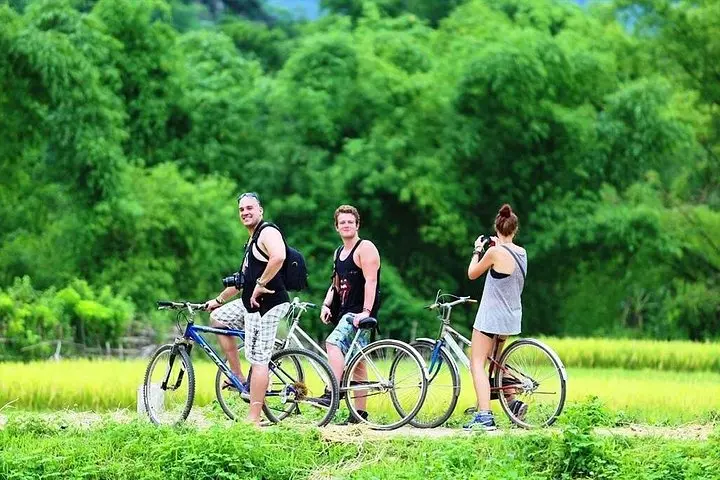
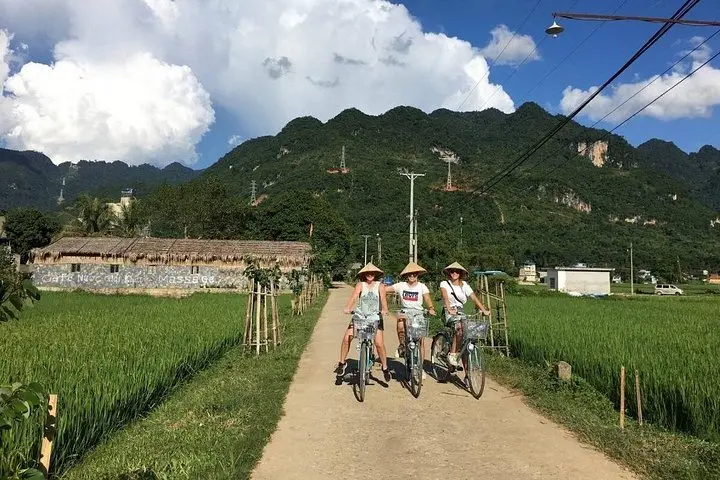
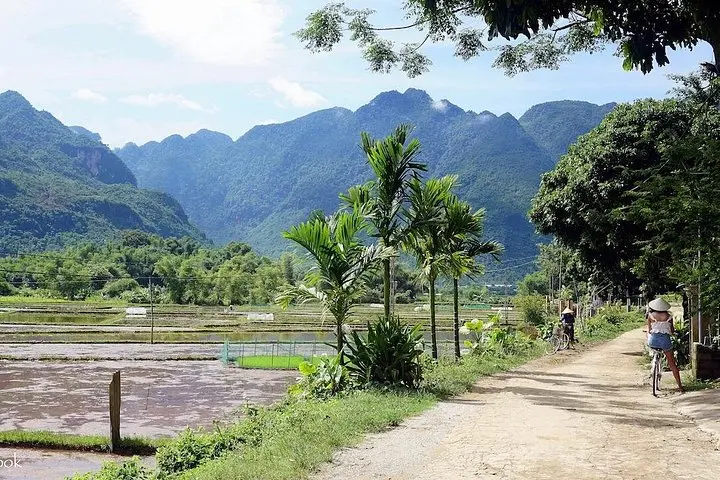
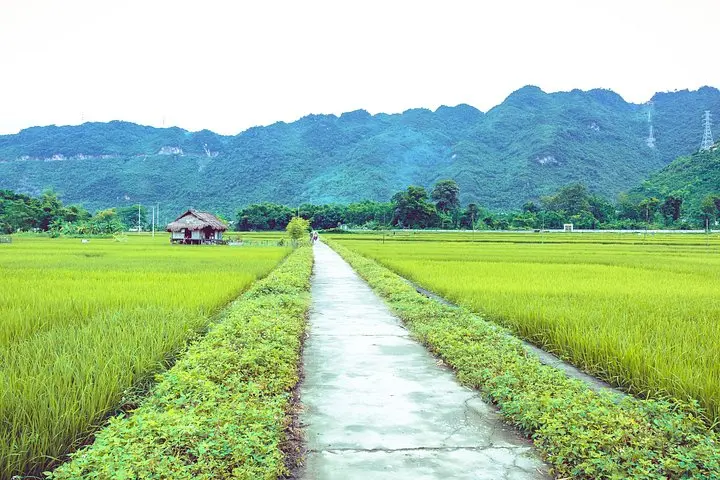
You leave Hanoi before dawn, the city’s heat lamps dimming as the bus eats the first stretches of highway. Roads begin to curve and the air thins of traffic noise; by the time you crest Thung Khe Pass the valley opens like a page turned. Below, the Mai Chau plain is a quilt of flooded rice paddies and narrow lanes where water buffalo nod to passing cyclists. The bikes wait at a village edge—simple frames, firm seats—an invitation to slow down.
You leave Hanoi before dawn, the city’s heat lamps dimming as the bus eats the first stretches of highway. Roads begin to curve and the air thins of traffic noise; by the time you crest Thung Khe Pass the valley opens like a page turned. Below, the Mai Chau plain is a quilt of flooded rice paddies and narrow lanes where water buffalo nod to passing cyclists. The bikes wait at a village edge—simple frames, firm seats—an invitation to slow down.
Mai Chau sits in a broad, gently sloping valley carved where upland streams spill from limestone ridges. The people you meet are mostly Thai and Muong ethnic groups: multi-generational households that still live in stilted timber houses and dye cotton by hand. Centuries of upland farming have left the landscape readable—contour lines of rice terraces, irrigation channels that sing in midday, and narrow paths worn into the hillside where kids run between houses.
Historically this valley was a back road between the Red River lowlands and the Annamite foothills; during colonial times Thung Khe Pass marked one of the few reliable thoroughfares and today it’s the same ribbon of asphalt offering viewpoints over the plain. Geologically, the area alternates between alluvial flats and karst limestone outcrops, so your pedal stroke will alternate between glassy flat lanes and short, rolling climbs.
The guided day is straightforward: roughly a four-hour drive each way from Hanoi, a market stop atop the pass, lunch at a local restaurant, then a 10–15 km cycling tour through villages and fields—mostly flat with about 100–200 m cumulative elevation gain across gentle rollers. You’ll see looms clicking as women weave brocade, and you’ll have time to wander through a small village market where hand-dyed fabrics and local snacks are sold.
Practical edge: start early and carry water—shops are sparse on village lanes. Expect mixed surfaces: tarmac, packed dirt, and occasional soft mud after rain. Shoes should be closed-toe; a light rain jacket and sunscreen are non-negotiable in monsoon season. Bring cash for market purchases; many stalls don’t accept cards.
Timing matters—Thung Khe’s viewpoint is best mid-morning when mist burns off and sunlight sculpts the valley. If you want quieter lanes, ask guides to route you away from the main village at the start of the ride. The tour is suitable for riders of basic fitness: steady pedaling, short climbs, and frequent stops to take photos and meet locals.
By late afternoon you return to the bus with clay-streaked knees and a new rhythm in your shoulders—the kind that comes from a day spent pedaling between rice and sky. The drive back to Hanoi gives a final look at the valley—this time framed by the golden light that pushes the paddies into glow before the city swallows it again.