THE ADVENTURE COLLECTIVE® · Independent discovery and booking for outdoor travel

A compact two-day loop from Hanoi that pairs Mai Chau’s village lanes with a day of trekking through Pu Luong’s dramatic rice terraces—ideal for travelers who want cultural contact and moderate hiking without remote camping.
A compact two-day loop from Hanoi that pairs Mai Chau’s village lanes with a day of trekking through Pu Luong’s dramatic rice terraces—ideal for travelers who want cultural contact and moderate hiking without remote camping.
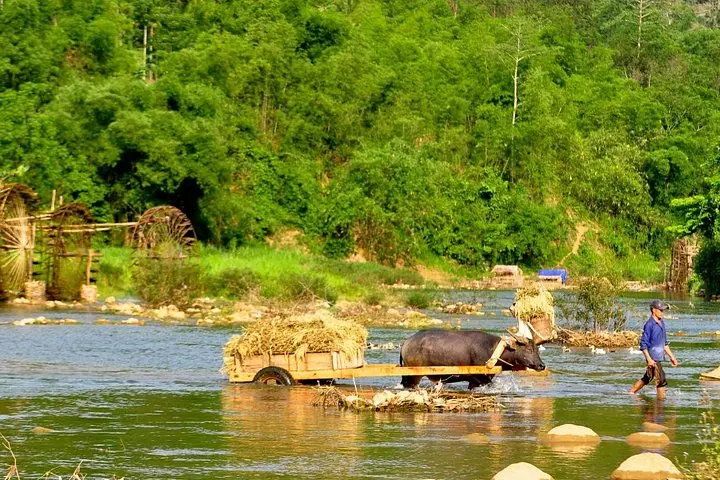
The bus eases out of Hanoi before dawn and the lowland rice paddies slip into hills—patches of green that fold into steeper ridges. By midmorning the road climbs to Thung Khe Pass and the valley opens like an amphitheater: a scatter of stilt houses, compact fields, and slow-moving water buffalo. On this two-day loop, Mai Chau’s broad valley gives way to Pu Luong’s serrated terraces, and the travel rhythm shifts from roadside observation to walking the lanes where life still runs at village pace.
Verified experiences and guided adventures in the surrounding area.
Operated by Red Gecko Travel · Mai Chau, Hoa Binh
The bus eases out of Hanoi before dawn and the lowland rice paddies slip into hills—patches of green that fold into steeper ridges. By midmorning the road climbs to Thung Khe Pass and the valley opens like an amphitheater: a scatter of stilt houses, compact fields, and slow-moving water buffalo. On this two-day loop, Mai Chau’s broad valley gives way to Pu Luong’s serrated terraces, and the travel rhythm shifts from roadside observation to walking the lanes where life still runs at village pace.
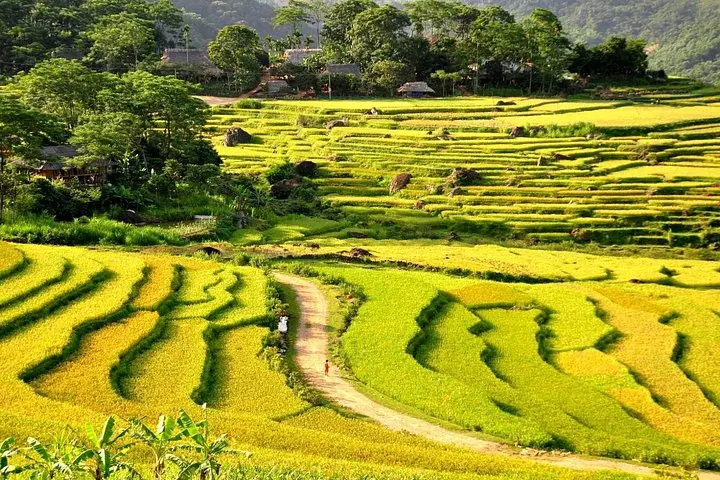
Pu Luong Nature Reserve sits on a limestone plateau that drops into narrow valleys of carved terraces and limestone outcrops. Ethnically diverse groups—White Thai, Black Thai and Muong communities—have farmed these slopes for generations; the rice terraces you see are both agricultural infrastructure and living history. Geologically, the region is a mosaic of karst ridges and red alluvial soil; trails can switch from packed earth to stone steps, with occasional bamboo bridges crossing irrigation channels.
Culturally, the trip is as much social as scenic. Local guides introduce guests to weaving and sample dishes that use glutinous rice, smoked pork and seasonal greens; in Mai Chau you’ll often find small markets on the pass where Muong vendors sell hand-forged chopsticks and woven scarves. The reserve is also a community conservation area—villagers balance tourism income with protecting forest cover and water sources.
Practical route notes: Day one includes a 5-hour afternoon bicycle loop around Mai Chau’s villages (expect 8–12 km on lanes and dirt tracks, mostly flat with a few short climbs). Day two transfers ~35 km to Pu Luong and a guided trek of roughly 6–8 km with 300–500 m cumulative ascent across terraces, forest trails and village paths; allow 3–5 hours on foot depending on stops. Terrain is mixed: packed earth, stone staircases and muddy sections after rain.
Pack lightweight hiking shoes with grip, a breathable rain layer, and a daypack with 2–3 liters of water. Morning and late-afternoon light are best for photos; midday is warm and humid in summer. Be ready to move at a modest pace—schedules include time for village visits, lunch at local homes, and a gentle cultural program in the evening. Travelers should have moderate fitness, be comfortable on uneven ground, and bring small bills for market purchases and tips.
This itinerary offers a grounded way to see northern Vietnam’s rural landscapes: active days on trails and cycles, simple comfortable accommodation, and close contact with hill-country life rather than a remote backcountry expedition.
This tour is rated moderate: you should be comfortable walking 3–5 hours on uneven terrain and cycling short village loops of 8–12 km.
Breakfast, two lunches and one dinner are included; local specialities are served and vegetarian options are available if requested.
Expect 6–8 km of guided trekking with 300–500 m cumulative ascent across terraces and forest trails—timing depends on stops and pace.
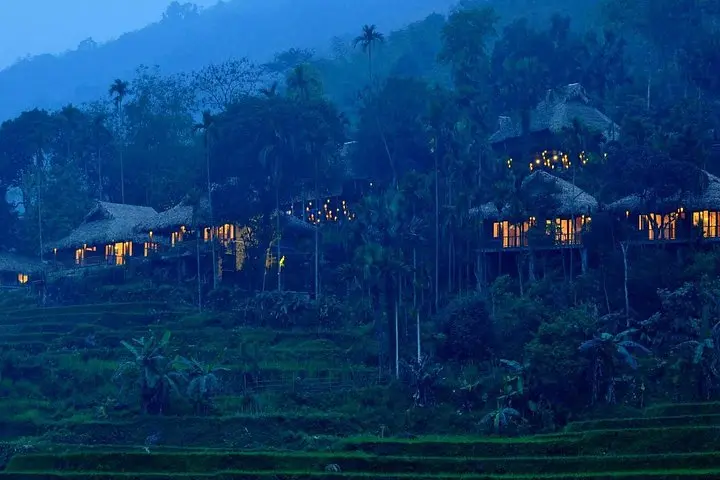
Accommodation is simple and comfortable—local guesthouses or hotels in Mai Chau, not wilderness camping.
Yes—beginners with reasonable fitness can join, but inform the operator of mobility issues during booking for appropriate support.
All sales are final—this operator does not offer refunds for cancellations and may cancel only for bad weather.
Red Gecko Travel operates guided outdoor trips and adventures with an emphasis on safety, stewardship, and memorable experiences.
The bus eases out of Hanoi before dawn and the lowland rice paddies slip into hills—patches of green that fold into steeper ridges. By midmorning the road climbs to Thung Khe Pass and the valley opens like an amphitheater: a scatter of stilt houses, compact fields, and slow-moving water buffalo. On this two-day loop, Mai Chau’s broad valley gives way to Pu Luong’s serrated terraces, and the travel rhythm shifts from roadside observation to walking the lanes where life still runs at village pace.
The bus eases out of Hanoi before dawn and the lowland rice paddies slip into hills—patches of green that fold into steeper ridges. By midmorning the road climbs to Thung Khe Pass and the valley opens like an amphitheater: a scatter of stilt houses, compact fields, and slow-moving water buffalo. On this two-day loop, Mai Chau’s broad valley gives way to Pu Luong’s serrated terraces, and the travel rhythm shifts from roadside observation to walking the lanes where life still runs at village pace.
Pu Luong Nature Reserve sits on a limestone plateau that drops into narrow valleys of carved terraces and limestone outcrops. Ethnically diverse groups—White Thai, Black Thai and Muong communities—have farmed these slopes for generations; the rice terraces you see are both agricultural infrastructure and living history. Geologically, the region is a mosaic of karst ridges and red alluvial soil; trails can switch from packed earth to stone steps, with occasional bamboo bridges crossing irrigation channels.
Culturally, the trip is as much social as scenic. Local guides introduce guests to weaving and sample dishes that use glutinous rice, smoked pork and seasonal greens; in Mai Chau you’ll often find small markets on the pass where Muong vendors sell hand-forged chopsticks and woven scarves. The reserve is also a community conservation area—villagers balance tourism income with protecting forest cover and water sources.
Practical route notes: Day one includes a 5-hour afternoon bicycle loop around Mai Chau’s villages (expect 8–12 km on lanes and dirt tracks, mostly flat with a few short climbs). Day two transfers ~35 km to Pu Luong and a guided trek of roughly 6–8 km with 300–500 m cumulative ascent across terraces, forest trails and village paths; allow 3–5 hours on foot depending on stops. Terrain is mixed: packed earth, stone staircases and muddy sections after rain.
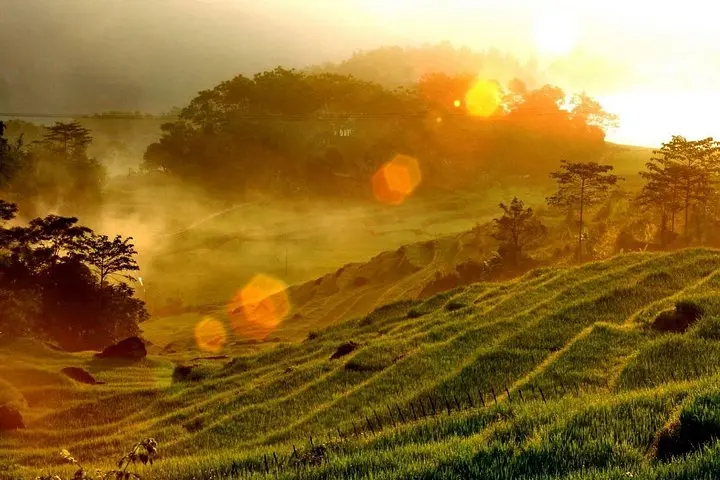
Pack lightweight hiking shoes with grip, a breathable rain layer, and a daypack with 2–3 liters of water. Morning and late-afternoon light are best for photos; midday is warm and humid in summer. Be ready to move at a modest pace—schedules include time for village visits, lunch at local homes, and a gentle cultural program in the evening. Travelers should have moderate fitness, be comfortable on uneven ground, and bring small bills for market purchases and tips.
This itinerary offers a grounded way to see northern Vietnam’s rural landscapes: active days on trails and cycles, simple comfortable accommodation, and close contact with hill-country life rather than a remote backcountry expedition.