THE ADVENTURE COLLECTIVE® · Independent discovery and booking for outdoor travel
Enter through the jaws of a giant replica and watch crocodiles sun themselves as guides explain their biology and conservation. This Broome tour combines feeding demos, VIP access and return transport for a compact, family-friendly wildlife experience.
Enter through the jaws of a giant replica and watch crocodiles sun themselves as guides explain their biology and conservation. This Broome tour combines feeding demos, VIP access and return transport for a compact, family-friendly wildlife experience.
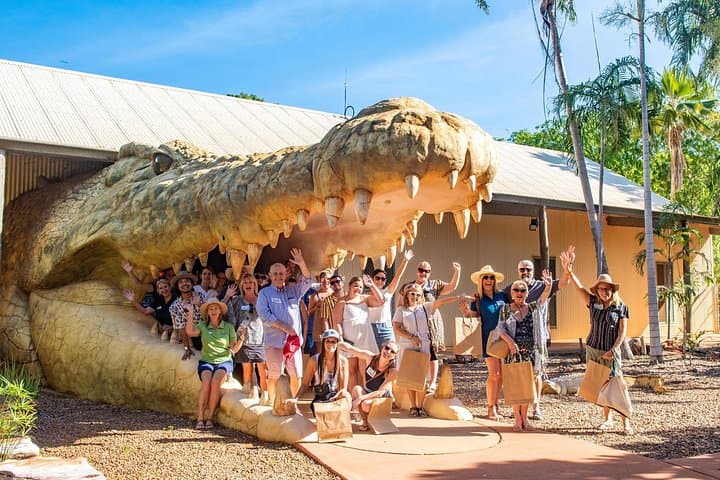
You step through the open jaws of a giant saltwater crocodile replica and the Kimberley heat wraps around you like a slow, deliberate presence.
Verified experiences and guided adventures in the surrounding area.
Operated by Broome and Around Bus Charters and Tours · Broome, Western Australia
You step through the open jaws of a giant saltwater crocodile replica and the Kimberley heat wraps around you like a slow, deliberate presence.
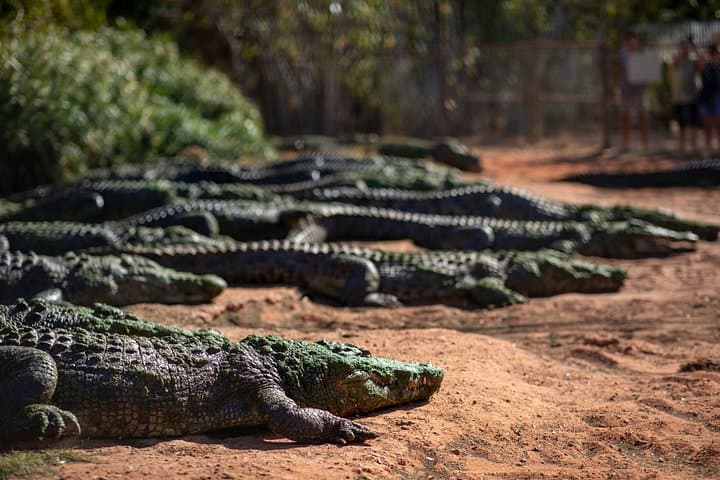
At Malcolm Douglas Crocodile Park outside Broome, boardwalks thread past sun-baked enclosures where hundreds of crocodiles lie like living boulders, eyes half-closed but always watching. The guided visit pairs close, careful observation with storytelling: guides explain seasonal behaviour, the species’ deep-time lineage and how the park evolved from Malcolm Douglas’s field films into a conservation and education hub.
The place sits on Broome’s coastal plain where red earth meets tropical scrub; tidal creeks shaped the local landscape and shaped the relationship between people and crocs for millennia. Expect cultural references to Indigenous connections to country and practical notes about how crocodile management changed after the mid-20th century hunting era.
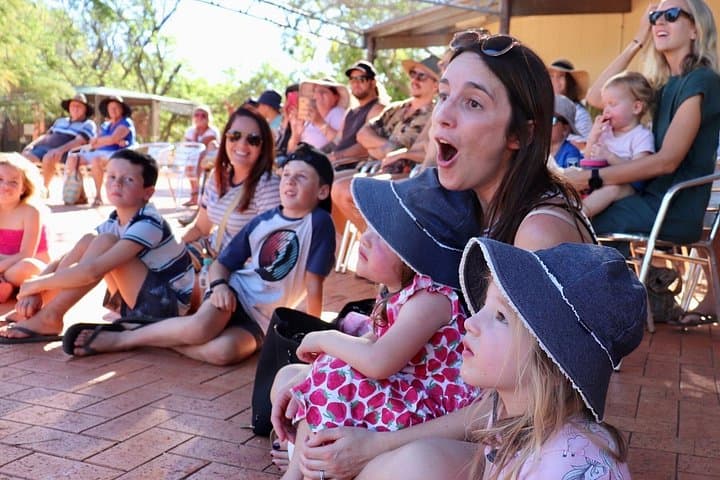
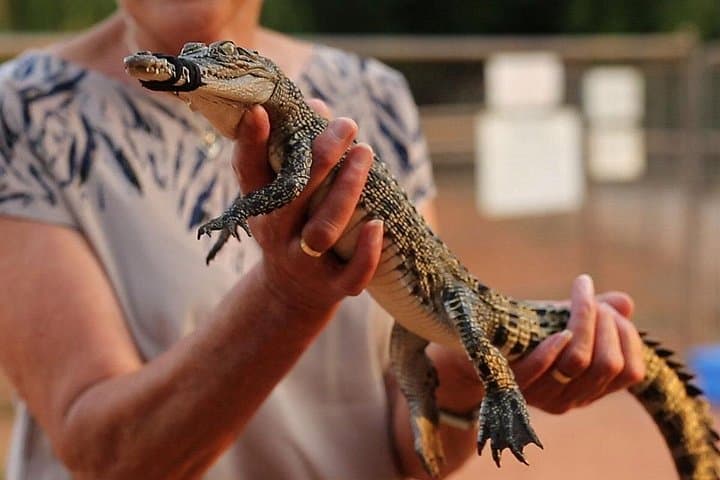
Tours include VIP entry, feeding demonstrations and chances for staged photos with experienced handlers. Transportation from Broome accommodation or the airport is usually included, making arrival and departure simple.
Plan for heat and sun: mornings are cooler and crocodiles are often more active, while afternoons bring languid basking. Wear sturdy shoes for gravel paths, bring a refillable water bottle, and keep a respectful distance from fenced enclosures — the animals are powerful and unpredictable.
This is an educational, family-friendly outing that blends hands-on interpretation with conservation messaging. It’s best for travelers who want close views of crocodilians without sacrificing safety or context — an accessible way to encounter one of Australia’s most iconic and controversial animals.
Yes; the park and tour are family-friendly with stroller access and controlled viewing areas, but children must remain behind barriers and supervised at all times.
General photography from viewing platforms is allowed; formal photos with handlers are organized by staff and subject to safety rules.
Most bookings include pick-up and drop-off from Broome accommodations and the airport—confirm pickup details at booking.
Yes, feeding demonstrations are scheduled parts of the guided tour and are conducted by trained staff under strict safety protocols.
Broome and Around Bus Charters and Tours operates guided outdoor trips and adventures with an emphasis on safety, stewardship, and memorable experiences.
You step through the open jaws of a giant saltwater crocodile replica and the Kimberley heat wraps around you like a slow, deliberate presence.
You step through the open jaws of a giant saltwater crocodile replica and the Kimberley heat wraps around you like a slow, deliberate presence.
At Malcolm Douglas Crocodile Park outside Broome, boardwalks thread past sun-baked enclosures where hundreds of crocodiles lie like living boulders, eyes half-closed but always watching. The guided visit pairs close, careful observation with storytelling: guides explain seasonal behaviour, the species’ deep-time lineage and how the park evolved from Malcolm Douglas’s field films into a conservation and education hub.
The place sits on Broome’s coastal plain where red earth meets tropical scrub; tidal creeks shaped the local landscape and shaped the relationship between people and crocs for millennia. Expect cultural references to Indigenous connections to country and practical notes about how crocodile management changed after the mid-20th century hunting era.
Tours include VIP entry, feeding demonstrations and chances for staged photos with experienced handlers. Transportation from Broome accommodation or the airport is usually included, making arrival and departure simple.
Plan for heat and sun: mornings are cooler and crocodiles are often more active, while afternoons bring languid basking. Wear sturdy shoes for gravel paths, bring a refillable water bottle, and keep a respectful distance from fenced enclosures — the animals are powerful and unpredictable.
This is an educational, family-friendly outing that blends hands-on interpretation with conservation messaging. It’s best for travelers who want close views of crocodilians without sacrificing safety or context — an accessible way to encounter one of Australia’s most iconic and controversial animals.
