THE ADVENTURE COLLECTIVE® · Independent discovery and booking for outdoor travel

A half- to full-day hike from Moshi, the Mambori Waterfalls trail threads Kilimanjaro’s lower forest, local coffee plots, and a 120m cascade. Expect forest tracks, stream crossings, and a guide who ties geology to Chagga stories.
A half- to full-day hike from Moshi, the Mambori Waterfalls trail threads Kilimanjaro’s lower forest, local coffee plots, and a 120m cascade. Expect forest tracks, stream crossings, and a guide who ties geology to Chagga stories.
You step off the minivan in Old Moshi and the air changes—cooler, damp, threaded with wood smoke and coffee. The path into the Kilimanjaro foothill forest narrows quickly: roots braided across the trail, ferns brushing your calves, and a guide who speaks in short, exact stories about the fall you’re heading to. Mambori is not a theatrical spectacle from a distance; it reveals itself as you move through mossed boulders, the river daring you with each crossing, until the curtain of water drops 120 metres into a green bowl below.
Verified experiences and guided adventures in the surrounding area.
Operated by Livingstone Safari Tanzania · Moshi, Kilimanjaro Region
You step off the minivan in Old Moshi and the air changes—cooler, damp, threaded with wood smoke and coffee. The path into the Kilimanjaro foothill forest narrows quickly: roots braided across the trail, ferns brushing your calves, and a guide who speaks in short, exact stories about the fall you’re heading to. Mambori is not a theatrical spectacle from a distance; it reveals itself as you move through mossed boulders, the river daring you with each crossing, until the curtain of water drops 120 metres into a green bowl below.
The falls sit on the lower slopes of Mount Kilimanjaro and are part of a landscape shaped by volcanic uplift and persistent erosion. Local Chagga communities have made this corridor their home for centuries; trails are older than roads, and your guide’s oral histories explain how the name “Mambori” came from a family legend tied to the river’s sound. Geologically, the gorge is carved from compacted volcanic ash and lava flows; the loose soil and high rainfall give the approach a frequently muddy character.
Culturally the visit is modest and direct: you’ll move through small plots of banana and coffee plants, pass a few village homes, and likely see farmers carrying tools. Stops include a short coffee demonstration if your group arranges it—learning how Kilimanjaro’s coffee is processed feels like an immediate way to connect the land to the people who tend it.
The practical side is straightforward. The full excursion runs 6–8 hours and includes private transport, bottled water, lunch, and a guide. Expect 4–6 kilometres of walking round-trip with an elevation change of roughly 150–300 metres depending on the route your guide takes. Terrain alternates between compact forest track, loose volcanic scree, damp rock slabs near the river, and carved stair sections. There are multiple stream crossings—some with simple log bridges—so sturdy, grippy footwear matters more than fanciful packing lists.
Timing matters: mornings are cooler and light is better for photos; afternoons are louder with rain clouds and slippier underfoot. Hydrate before you hike—the provided bottled water is helpful but bring a reusable bottle if you prefer. The provider flags the trip as suitable for most fitness levels but not for pregnant travelers or those with serious back problems; ascent on the return can be steady and requires good knees.
For planning: confirm hotel pickup in Moshi (many hotels served), wear layers that dry quickly, and bring insect repellent and a small first-aid kit. Respect local customs—ask before photographing people—and leave no trace: the trail is popular with nearby communities and benefits when visitors pack out waste. At the plunge pool, the water seems to pull and push like a living thing; stand close, feel the spray, and remember this is both a natural feature and a working landscape.
Expect roughly 4–6 km round-trip on forest tracks, with an elevation change of about 150–300 metres depending on the exact route taken.
Yes if they are used to walking uneven ground; the provider marks the tour as suitable for most fitness levels, but the ascent back can be steep and tiring.
Quick-dry clothing, a rain shell, and sturdy shoes with good grip; bring layers for changing temperatures near the forest and river.
Basic facilities may exist at village stops, but expect limited options on the trail—travel with tissues and hand sanitizer.
You can wade in some plunge-pool areas depending on flow, but follow your guide’s advice—currents can be stronger than they look.
Private hotel pickup in Moshi/Old Moshi is offered; confirm your hotel and pickup time when booking, usually 30 minutes before departure.
Livingstone Safari Tanzania operates guided outdoor trips and adventures with an emphasis on safety, stewardship, and memorable experiences.
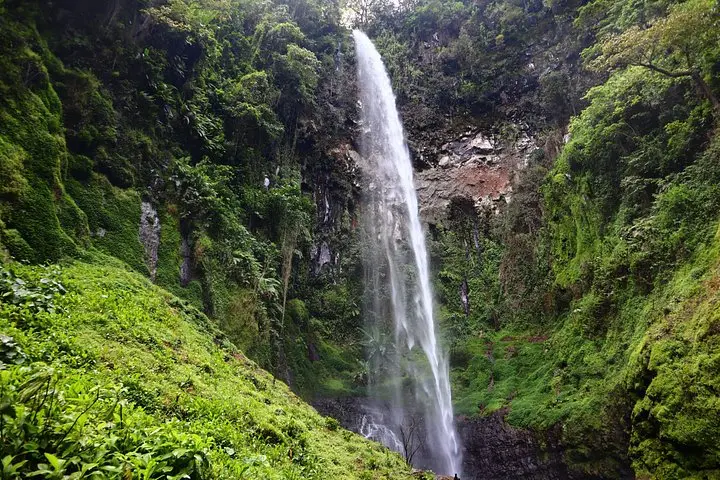
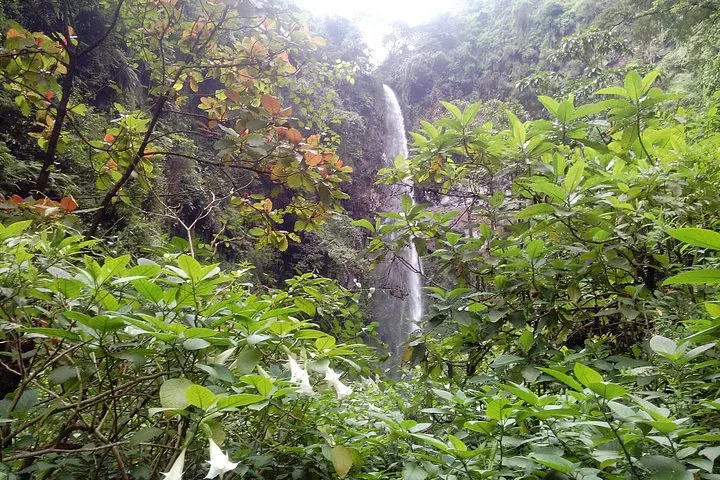
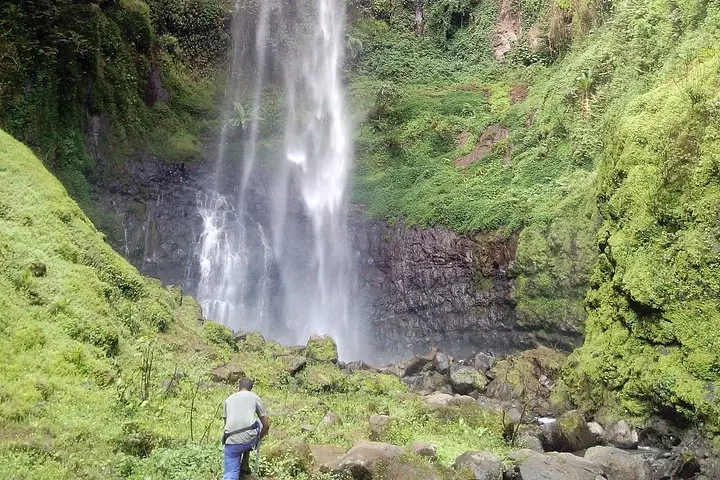
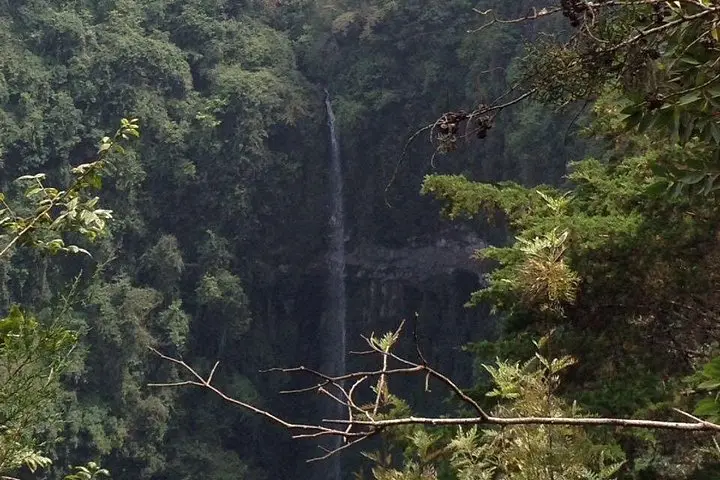
You step off the minivan in Old Moshi and the air changes—cooler, damp, threaded with wood smoke and coffee. The path into the Kilimanjaro foothill forest narrows quickly: roots braided across the trail, ferns brushing your calves, and a guide who speaks in short, exact stories about the fall you’re heading to. Mambori is not a theatrical spectacle from a distance; it reveals itself as you move through mossed boulders, the river daring you with each crossing, until the curtain of water drops 120 metres into a green bowl below.
You step off the minivan in Old Moshi and the air changes—cooler, damp, threaded with wood smoke and coffee. The path into the Kilimanjaro foothill forest narrows quickly: roots braided across the trail, ferns brushing your calves, and a guide who speaks in short, exact stories about the fall you’re heading to. Mambori is not a theatrical spectacle from a distance; it reveals itself as you move through mossed boulders, the river daring you with each crossing, until the curtain of water drops 120 metres into a green bowl below.
The falls sit on the lower slopes of Mount Kilimanjaro and are part of a landscape shaped by volcanic uplift and persistent erosion. Local Chagga communities have made this corridor their home for centuries; trails are older than roads, and your guide’s oral histories explain how the name “Mambori” came from a family legend tied to the river’s sound. Geologically, the gorge is carved from compacted volcanic ash and lava flows; the loose soil and high rainfall give the approach a frequently muddy character.
Culturally the visit is modest and direct: you’ll move through small plots of banana and coffee plants, pass a few village homes, and likely see farmers carrying tools. Stops include a short coffee demonstration if your group arranges it—learning how Kilimanjaro’s coffee is processed feels like an immediate way to connect the land to the people who tend it.
The practical side is straightforward. The full excursion runs 6–8 hours and includes private transport, bottled water, lunch, and a guide. Expect 4–6 kilometres of walking round-trip with an elevation change of roughly 150–300 metres depending on the route your guide takes. Terrain alternates between compact forest track, loose volcanic scree, damp rock slabs near the river, and carved stair sections. There are multiple stream crossings—some with simple log bridges—so sturdy, grippy footwear matters more than fanciful packing lists.
Timing matters: mornings are cooler and light is better for photos; afternoons are louder with rain clouds and slippier underfoot. Hydrate before you hike—the provided bottled water is helpful but bring a reusable bottle if you prefer. The provider flags the trip as suitable for most fitness levels but not for pregnant travelers or those with serious back problems; ascent on the return can be steady and requires good knees.
For planning: confirm hotel pickup in Moshi (many hotels served), wear layers that dry quickly, and bring insect repellent and a small first-aid kit. Respect local customs—ask before photographing people—and leave no trace: the trail is popular with nearby communities and benefits when visitors pack out waste. At the plunge pool, the water seems to pull and push like a living thing; stand close, feel the spray, and remember this is both a natural feature and a working landscape.