THE ADVENTURE COLLECTIVE® · Independent discovery and booking for outdoor travel

Spend one clear day on Kilimanjaro’s Marangu Route: a 3–4 hour climb to Mandara Hut through rain forest, lunch with a view over Moshi, a walk to Maundi Crater and a relaxed descent back to Arusha. A perfect taste of the mountain without committing to a multi-day summit.
Spend one clear day on Kilimanjaro’s Marangu Route: a 3–4 hour climb to Mandara Hut through rain forest, lunch with a view over Moshi, a walk to Maundi Crater and a relaxed descent back to Arusha. A perfect taste of the mountain without committing to a multi-day summit.
You step out of the 4x4 at Marangu gate and the mountain takes over. The rain forest greets you first—humidity clings to your shirt, leaves drip from a recent shower, and birds pick at the understory like small, urgent notes. Your guide checks paperwork, points you toward the narrow muddy track and, with a practiced nod, sends you up. The first hour is a slow climb through green shafts of light; then the forest opens to mossy clearings and the silhouette of Mandara Hut perches above like a low, friendly refuge.
Verified experiences and guided adventures in the surrounding area.
Operated by Gracepatt Ecotours Kenya · Marangu, Kilimanjaro Region
You step out of the 4x4 at Marangu gate and the mountain takes over. The rain forest greets you first—humidity clings to your shirt, leaves drip from a recent shower, and birds pick at the understory like small, urgent notes. Your guide checks paperwork, points you toward the narrow muddy track and, with a practiced nod, sends you up. The first hour is a slow climb through green shafts of light; then the forest opens to mossy clearings and the silhouette of Mandara Hut perches above like a low, friendly refuge.
Mount Kilimanjaro is a three-peaked stratovolcano—Kibo, Mawenzi and Shira—built from successive eruptions millions of years ago. The Marangu Route, one of the oldest paths first used by local guides and colonial explorers, cuts a patient line up the mountain's southeastern flank. The hike to Mandara Hut skirts a living edge of ecology: heated equatorial highland forest giving way to heath and moorland as you gain roughly 700–900 meters of elevation. The local Chagga people historically farmed the lower slopes; today their terraces and coffee farms frame views back toward Moshi and the sprawling plains below.
Wildlife punctuates the way. Monkeys swing overhead and forest birds—turacos and sunbirds—announce themselves in bright flashes. Geologically, you’re hiking on rhyolitic and trachytic soils that hold water, which is why the rainforest feels almost theatrical with dripping ferns and lianas.
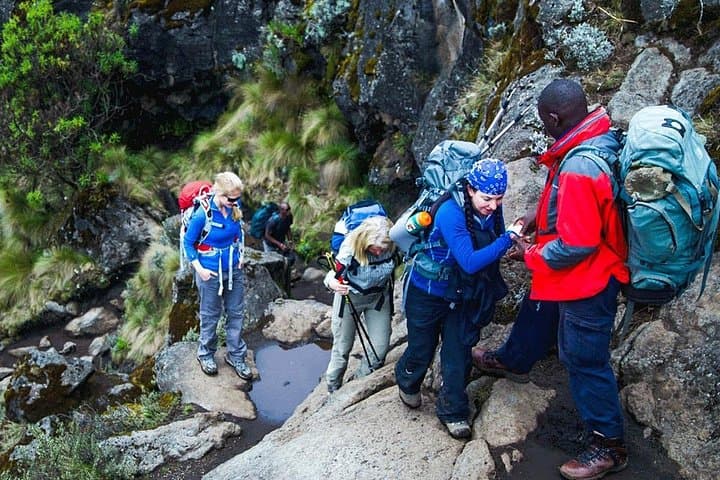
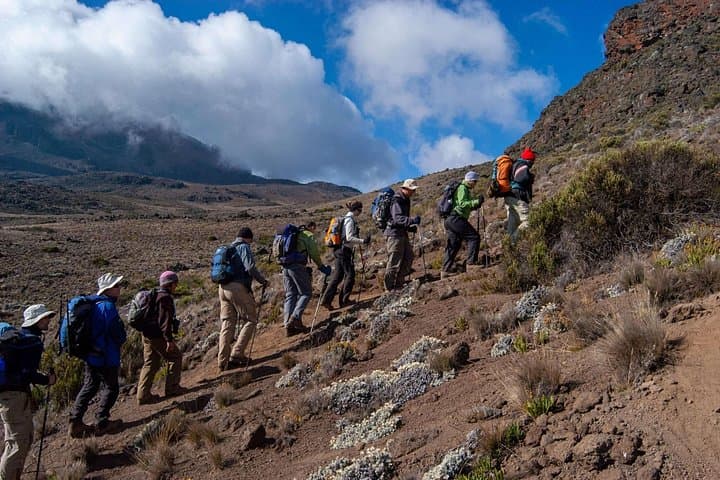
This day trip is ideal if you want a concentrated taste of Kilimanjaro without committing to a multi-day summit push. Expect a 3–4 hour ascent to Mandara Hut from the Marangu gate (about 1,970 m at the gate to roughly 2,700–2,800 m at the hut), lunch at the hut with sweeping views toward Moshi, a short guided walk to Maundi Crater, then a leisurely 2-hour descent back to the gate and return to Arusha. The route is well-trodden but can be slippery; trekking poles help. Weather on the mountain is mercurial—morning sun can flip to mist and cold by late afternoon.
Practical edge: bring layers for damp chill, carry at least 2–3 liters of water, and use sturdy, broken-in boots with good ankle support. The included lunch and park fees simplify logistics, and pickup from Arusha makes the day seamless. Aim for early departures to maximize clear views and avoid afternoon cloud. Even on a short outing, pay attention to how you’re breathing—altitude can blunt energy levels in surprising ways.
If you want to pair culture with terrain, spend an extra evening in Marangu village to visit coffee farms and meet Chagga guides—the context will deepen what you see on the trail. This is a hike that hands you a concentrated version of Kilimanjaro: close-up ecosystems, volcanic rock underfoot, and the uncompromising scale of Africa’s highest mountain pulling at the horizon.
Expect 3–4 hours uphill to Mandara Hut from Marangu gate and about 2 hours for the descent—total on-trail time around 5 hours.
Yes—this is rated suitable for most fitness levels, but you should be comfortable hiking uphill for several hours and prepare for altitude-related fatigue.
Yes—entrance to Kilimanjaro National Park and a heavy lunch box are included in the tour price.
Yes—a professional driver-guide accompanies the group and provides route information and safety support.
Yes—hotel pickup in Arusha is provided; the operator will confirm specific pickup times and locations when you book.
This day hike reaches about 2,700–2,800 m; altitude effects are possible—move at a steady pace, hydrate, and notify your guide if you feel unwell.
Gracepatt Ecotours Kenya operates guided outdoor trips and adventures with an emphasis on safety, stewardship, and memorable experiences.
You step out of the 4x4 at Marangu gate and the mountain takes over. The rain forest greets you first—humidity clings to your shirt, leaves drip from a recent shower, and birds pick at the understory like small, urgent notes. Your guide checks paperwork, points you toward the narrow muddy track and, with a practiced nod, sends you up. The first hour is a slow climb through green shafts of light; then the forest opens to mossy clearings and the silhouette of Mandara Hut perches above like a low, friendly refuge.
You step out of the 4x4 at Marangu gate and the mountain takes over. The rain forest greets you first—humidity clings to your shirt, leaves drip from a recent shower, and birds pick at the understory like small, urgent notes. Your guide checks paperwork, points you toward the narrow muddy track and, with a practiced nod, sends you up. The first hour is a slow climb through green shafts of light; then the forest opens to mossy clearings and the silhouette of Mandara Hut perches above like a low, friendly refuge.
Mount Kilimanjaro is a three-peaked stratovolcano—Kibo, Mawenzi and Shira—built from successive eruptions millions of years ago. The Marangu Route, one of the oldest paths first used by local guides and colonial explorers, cuts a patient line up the mountain's southeastern flank. The hike to Mandara Hut skirts a living edge of ecology: heated equatorial highland forest giving way to heath and moorland as you gain roughly 700–900 meters of elevation. The local Chagga people historically farmed the lower slopes; today their terraces and coffee farms frame views back toward Moshi and the sprawling plains below.
Wildlife punctuates the way. Monkeys swing overhead and forest birds—turacos and sunbirds—announce themselves in bright flashes. Geologically, you’re hiking on rhyolitic and trachytic soils that hold water, which is why the rainforest feels almost theatrical with dripping ferns and lianas.
This day trip is ideal if you want a concentrated taste of Kilimanjaro without committing to a multi-day summit push. Expect a 3–4 hour ascent to Mandara Hut from the Marangu gate (about 1,970 m at the gate to roughly 2,700–2,800 m at the hut), lunch at the hut with sweeping views toward Moshi, a short guided walk to Maundi Crater, then a leisurely 2-hour descent back to the gate and return to Arusha. The route is well-trodden but can be slippery; trekking poles help. Weather on the mountain is mercurial—morning sun can flip to mist and cold by late afternoon.
Practical edge: bring layers for damp chill, carry at least 2–3 liters of water, and use sturdy, broken-in boots with good ankle support. The included lunch and park fees simplify logistics, and pickup from Arusha makes the day seamless. Aim for early departures to maximize clear views and avoid afternoon cloud. Even on a short outing, pay attention to how you’re breathing—altitude can blunt energy levels in surprising ways.
If you want to pair culture with terrain, spend an extra evening in Marangu village to visit coffee farms and meet Chagga guides—the context will deepen what you see on the trail. This is a hike that hands you a concentrated version of Kilimanjaro: close-up ecosystems, volcanic rock underfoot, and the uncompromising scale of Africa’s highest mountain pulling at the horizon.