THE ADVENTURE COLLECTIVE® · Independent discovery and booking for outdoor travel

Glide through shadowed mangrove tunnels on a two-hour pedal kayak eco-tour off Anna Maria Island. This accessible trip pairs easy pedaling with up-close wildlife viewing—dolphins, manatees, and coastal birds—guided from the Neal Preserve launch.
Glide through shadowed mangrove tunnels on a two-hour pedal kayak eco-tour off Anna Maria Island. This accessible trip pairs easy pedaling with up-close wildlife viewing—dolphins, manatees, and coastal birds—guided from the Neal Preserve launch.
The first paddle slips under a low mangrove canopy and light narrows to a green tunnel; air tastes faintly of salt and decaying leaves, and the water reflects a lattice of roots. Pedal kayaks push forward with minimal effort, letting you watch a current of shorebirds and the occasional dolphin track the channel mouth.
Verified experiences and guided adventures in the surrounding area.
Operated by Liquid Blue Outfitters · Anna Maria, Florida
The first paddle slips under a low mangrove canopy and light narrows to a green tunnel; air tastes faintly of salt and decaying leaves, and the water reflects a lattice of roots. Pedal kayaks push forward with minimal effort, letting you watch a current of shorebirds and the occasional dolphin track the channel mouth.
This two-hour eco-tour runs from the boat ramp at the east end of the bridge to Anna Maria Island, near the south edge of Neal Preserve. The mangrove systems here formed over millennia as the Gulf’s tides deposited sediment, creating sheltered backchannels that supported indigenous fishing communities and, later, small commercial fishing hamlets like nearby Cortez.
Geology is subtle—low-lying carbonate sands ring the island while the mangroves colonize tidal flats—but the biological richness is obvious: oysters cling to roots, fiddler crabs dart in mud, and manatees surface like indifferent islands. Local culture remains quietly maritime—old bait shops and boatyards persist on the mainland—and guides often point out the human history tied to these waterways.
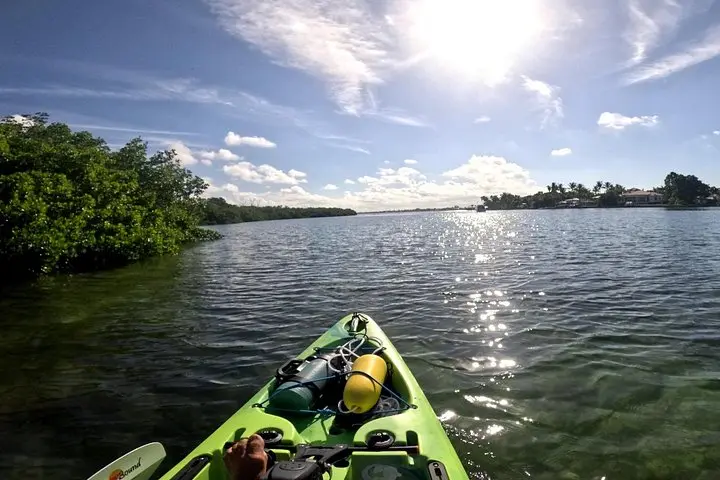
Practicalities: expect flat, tidal waters and narrow channels rather than open sea; total paddling covers roughly 2–4 miles depending on tides and route. Wear quick-dry layers, reef-safe sunscreen, and a hat; bring water in a soft bottle and secure valuables in the provided drybag. Morning departures give calmer water and better wildlife viewing; keep a respectful distance from manatees and birds. Guides provide pedal kayaks, lifejackets, and a short orientation, so no prior kayak experience is required—just curiosity and a steady pace. The trip is an accessible way to see Florida’s coastal ecology up close without deep technical skills.
No—this tour uses stable pedal kayaks and includes a safety orientation; basic comfort sitting and pedaling is sufficient.
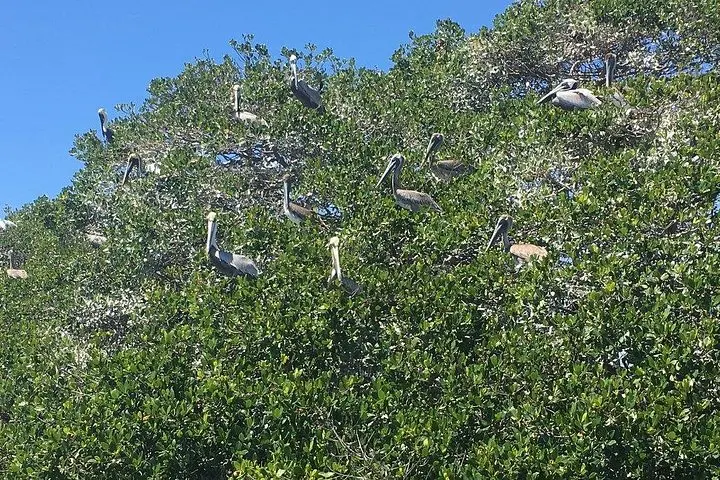
Common sightings include bottlenose dolphins, West Indian manatees, ospreys, herons, and shorebirds; sightings can’t be guaranteed.
Meet at the boat ramp at the east end of the bridge to Anna Maria Island on Manatee Avenue near Neal Preserve; the guided portion lasts about two hours.
Yes—tours are typically suitable for older children and families, but check age or weight limits when booking and notify guides of any special needs.
Liquid Blue Outfitters operates guided outdoor trips and adventures with an emphasis on safety, stewardship, and memorable experiences.
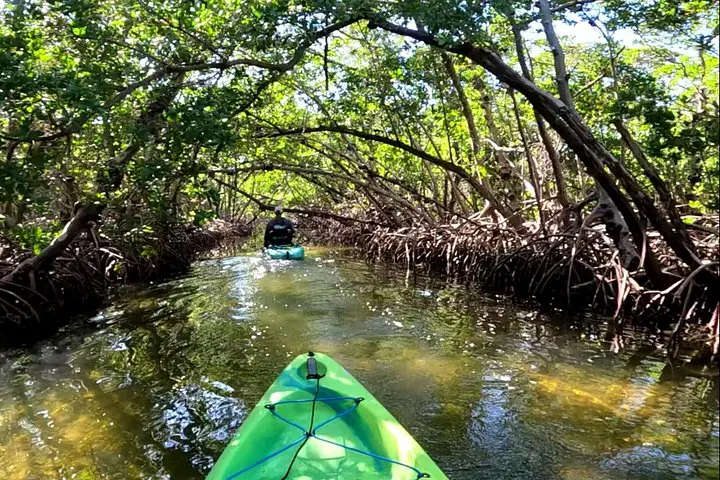
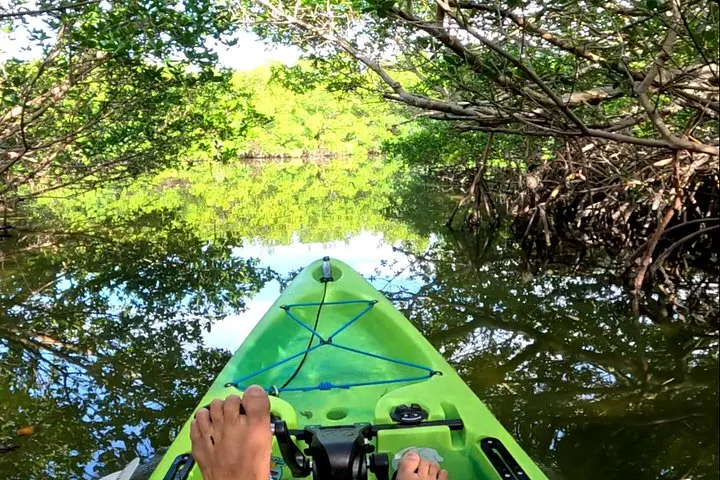
The first paddle slips under a low mangrove canopy and light narrows to a green tunnel; air tastes faintly of salt and decaying leaves, and the water reflects a lattice of roots. Pedal kayaks push forward with minimal effort, letting you watch a current of shorebirds and the occasional dolphin track the channel mouth.
The first paddle slips under a low mangrove canopy and light narrows to a green tunnel; air tastes faintly of salt and decaying leaves, and the water reflects a lattice of roots. Pedal kayaks push forward with minimal effort, letting you watch a current of shorebirds and the occasional dolphin track the channel mouth.
This two-hour eco-tour runs from the boat ramp at the east end of the bridge to Anna Maria Island, near the south edge of Neal Preserve. The mangrove systems here formed over millennia as the Gulf’s tides deposited sediment, creating sheltered backchannels that supported indigenous fishing communities and, later, small commercial fishing hamlets like nearby Cortez.
Geology is subtle—low-lying carbonate sands ring the island while the mangroves colonize tidal flats—but the biological richness is obvious: oysters cling to roots, fiddler crabs dart in mud, and manatees surface like indifferent islands. Local culture remains quietly maritime—old bait shops and boatyards persist on the mainland—and guides often point out the human history tied to these waterways.
Practicalities: expect flat, tidal waters and narrow channels rather than open sea; total paddling covers roughly 2–4 miles depending on tides and route. Wear quick-dry layers, reef-safe sunscreen, and a hat; bring water in a soft bottle and secure valuables in the provided drybag. Morning departures give calmer water and better wildlife viewing; keep a respectful distance from manatees and birds. Guides provide pedal kayaks, lifejackets, and a short orientation, so no prior kayak experience is required—just curiosity and a steady pace. The trip is an accessible way to see Florida’s coastal ecology up close without deep technical skills.