THE ADVENTURE COLLECTIVE® · Independent discovery and booking for outdoor travel

Paddle quiet mangrove channels and glide into Phang Nga Bay with a local guide who explains fishing life, tidal rhythms, and the karst geology that shapes this coastline. This flexible small-group SUP tour balances calm exploration with cultural stops.
Paddle quiet mangrove channels and glide into Phang Nga Bay with a local guide who explains fishing life, tidal rhythms, and the karst geology that shapes this coastline. This flexible small-group SUP tour balances calm exploration with cultural stops.
The paddle slips from the wooden jetty and the river breathes around you — a narrow channel of dark water lined with arched roots and silent, bright-green leaves. Your guide points to a braided channel; the board rocks as you push off and the mangrove seems to part to let you through. This is east-coast Phuket, where calm waterways give way to the open sweep of Phang Nga Bay and limestone islands rise like weathered sculptures.
Verified experiences and guided adventures in the surrounding area.
Operated by Paddle Phuket · Phuket, Phuket Province
The paddle slips from the wooden jetty and the river breathes around you — a narrow channel of dark water lined with arched roots and silent, bright-green leaves. Your guide points to a braided channel; the board rocks as you push off and the mangrove seems to part to let you through. This is east-coast Phuket, where calm waterways give way to the open sweep of Phang Nga Bay and limestone islands rise like weathered sculptures.
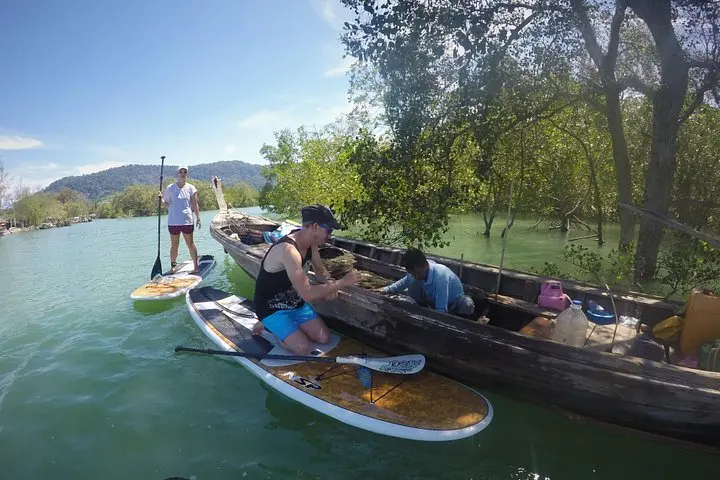
Mangroves here are young coastal forests built on silt and tide, a frontline between sea and village for generations of local fishers. Geologically, the bay’s karst towers are part of the same limestone that folds through southern Thailand, sculpted by rain and sea. Culturally, small fishing settlements still rely on these sheltered waterways; guides often stop to explain crab trapping, tidal rice paddies, and the daily rhythm of the shore.
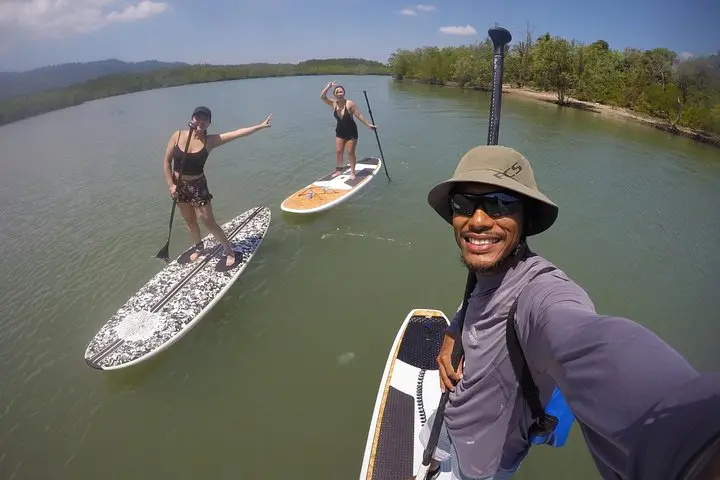
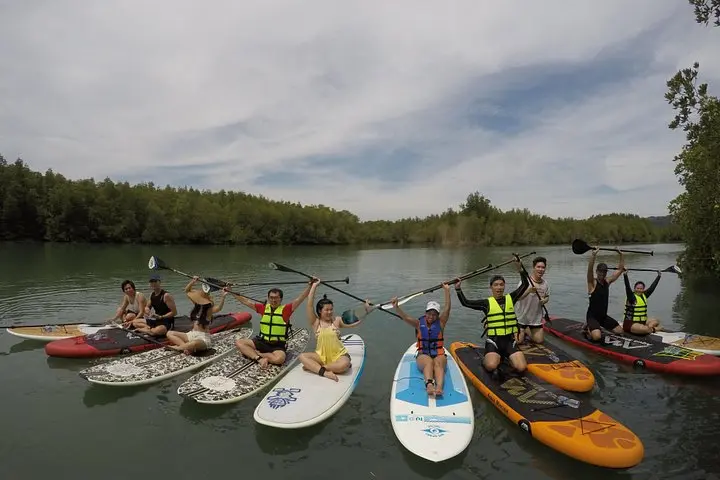
Expect 6–10 km of paddling over roughly five hours, starting in shallow, placid mangrove channels before threading out into tidal flats and low waves on the bay. The guide adapts pace to skill level and tides; you’ll visit a quiet fishing village and make photo stops.
Practical advice: choose a morning launch for lighter winds and cooler air, wear quick-dry layers and reef-safe sunscreen, and bring a dry bag and sturdy water shoes. Swim ability is required — you may fall in deep water. Operators often provide boards, paddles, bottled water, snacks, and pickup by air-conditioned vehicle. Weather and tides can cancel trips, so confirm plans the day before.
This tour balances easy technical demand with a tactile sense of place: trees reaching low, waters nudging your board, and a coastline that keeps asking you to look closer.
No prior experience required; the guide provides instruction and leads the group, but you should be comfortable in water and able to balance on the board.
Pickup by air-conditioned vehicle is offered if requested at booking; confirm your pickup point and time in advance.
Trips may be canceled for heavy rain, strong winds, or unsafe tides — you’ll get a full refund if canceled at least 24 hours before departure per the operator’s policy.
Policies vary; participants must meet the operator’s minimum age and be competent swimmers — check specific requirements and weight considerations when booking.
Paddle Phuket operates guided outdoor trips and adventures with an emphasis on safety, stewardship, and memorable experiences.
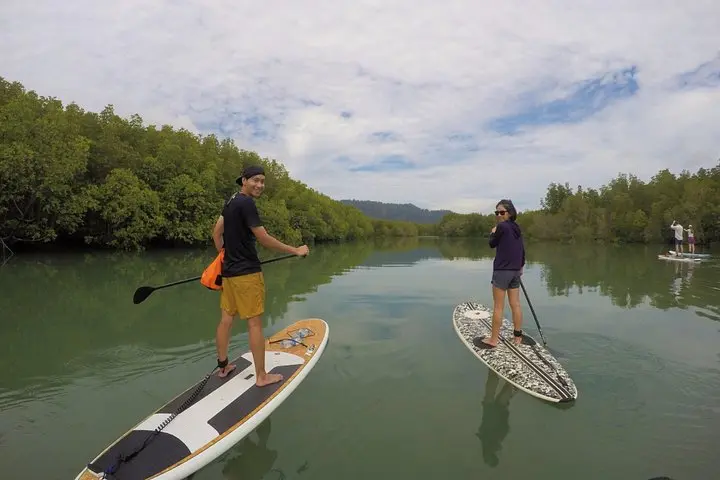
The paddle slips from the wooden jetty and the river breathes around you — a narrow channel of dark water lined with arched roots and silent, bright-green leaves. Your guide points to a braided channel; the board rocks as you push off and the mangrove seems to part to let you through. This is east-coast Phuket, where calm waterways give way to the open sweep of Phang Nga Bay and limestone islands rise like weathered sculptures.
The paddle slips from the wooden jetty and the river breathes around you — a narrow channel of dark water lined with arched roots and silent, bright-green leaves. Your guide points to a braided channel; the board rocks as you push off and the mangrove seems to part to let you through. This is east-coast Phuket, where calm waterways give way to the open sweep of Phang Nga Bay and limestone islands rise like weathered sculptures.
Mangroves here are young coastal forests built on silt and tide, a frontline between sea and village for generations of local fishers. Geologically, the bay’s karst towers are part of the same limestone that folds through southern Thailand, sculpted by rain and sea. Culturally, small fishing settlements still rely on these sheltered waterways; guides often stop to explain crab trapping, tidal rice paddies, and the daily rhythm of the shore.
Expect 6–10 km of paddling over roughly five hours, starting in shallow, placid mangrove channels before threading out into tidal flats and low waves on the bay. The guide adapts pace to skill level and tides; you’ll visit a quiet fishing village and make photo stops.
Practical advice: choose a morning launch for lighter winds and cooler air, wear quick-dry layers and reef-safe sunscreen, and bring a dry bag and sturdy water shoes. Swim ability is required — you may fall in deep water. Operators often provide boards, paddles, bottled water, snacks, and pickup by air-conditioned vehicle. Weather and tides can cancel trips, so confirm plans the day before.
This tour balances easy technical demand with a tactile sense of place: trees reaching low, waters nudging your board, and a coastline that keeps asking you to look closer.