THE ADVENTURE COLLECTIVE® · Independent discovery and booking for outdoor travel

Walk a rare gravel mangrove and climb a tectonic headland on a private 3–4 hour coastal circuit in Búzios. Expect braided roots, tide pools, steep rocky steps and a viewpoint that looks over turtle-friendly green waters.
Walk a rare gravel mangrove and climb a tectonic headland on a private 3–4 hour coastal circuit in Búzios. Expect braided roots, tide pools, steep rocky steps and a viewpoint that looks over turtle-friendly green waters.
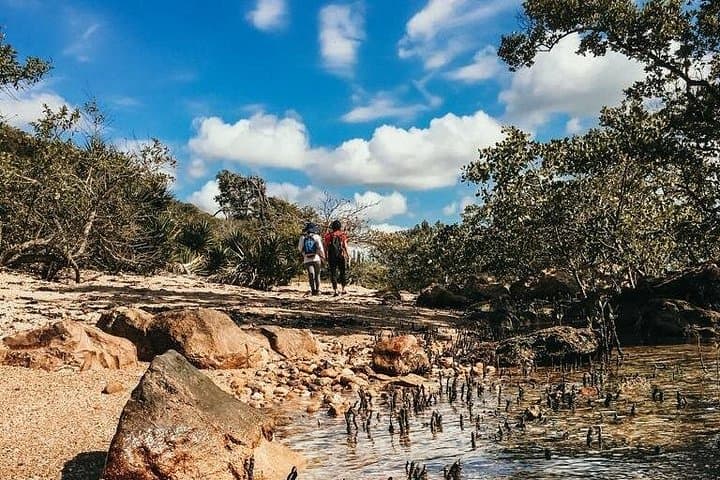
The trail opens on Rua Carlito Gonçalves where wind and salt sharpen the view. From the viewpoint the path slips through low scrub and quickly drops to Mangue de Pedras, a mangrove that refuses the usual rules — forming on coarse gravel and sand rather than river mud. Roots braid themselves across rock, and small emerald pools mirror the sky as cacti and bromeliads push terraces of color at the mangrove’s edge.
Verified experiences and guided adventures in the surrounding area.
Operated by Cactus Experiências · Armação dos Búzios, Rio de Janeiro
The trail opens on Rua Carlito Gonçalves where wind and salt sharpen the view. From the viewpoint the path slips through low scrub and quickly drops to Mangue de Pedras, a mangrove that refuses the usual rules — forming on coarse gravel and sand rather than river mud. Roots braid themselves across rock, and small emerald pools mirror the sky as cacti and bromeliads push terraces of color at the mangrove’s edge.
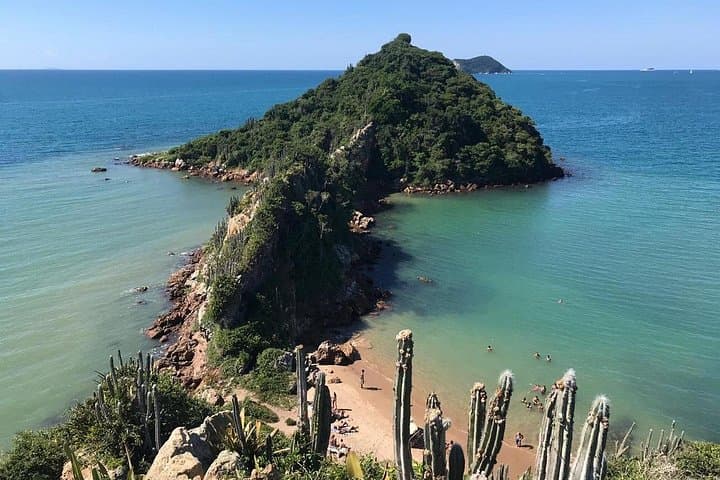
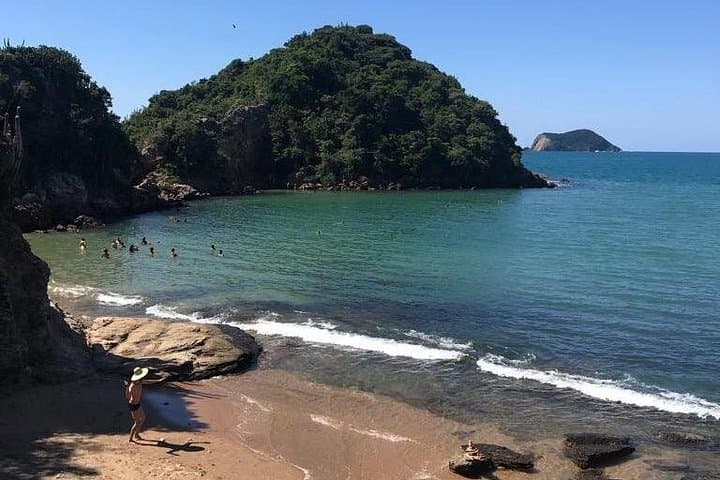
Geologists call Ponta do Pai Vitório a fault: a hard seam of rock that has been lifted and carved, pushing green vegetation over the surf. That tectonic action gives the point its raw profiles and the steep viewpoint that frames sweeping bays and the small, sheltered Praia do Pai Vitório below — a regular turtle visitation site.
This is a short, private coastal circuit (about 3–4 hours) focused on rugged shoreline walking, intermittent scrambling and a couple of steep, closed sections to the Pai Vitório overlook. An accredited guide is included, and the route’s mix of rock, sand and vegetation rewards photographers and swimmers willing to enter the clear, calm water below.
Practicalities: wear grippy shoes for uneven, often slick rock; bring sun protection and at least 1.5 liters of water; expect narrow trail segments and short steep climbs requiring moderate fitness and good balance. Plan the visit in morning or late afternoon to avoid midday heat and to see turtles more actively.
Respect the fragile root systems and pools — stay on the trail, pack out all waste, and follow your guide’s briefing for the safest and most rewarding experience.
Children with good mobility can join, but the route has steep, uneven sections and slippery rock; supervision and sturdy footwear are essential.
No advanced experience required, but you should be comfortable with rocky scrambling and short steep climbs; the guide manages route safety.
Yes — the small bay below the viewpoint often has calm, clear water and turtle sightings, but always follow your guide and check local sea conditions before entering.
Full refund available if canceled at least 24 hours before departure; the operator may cancel for bad weather or insufficient travelers.
Cactus Experiências operates guided outdoor trips and adventures with an emphasis on safety, stewardship, and memorable experiences.

The trail opens on Rua Carlito Gonçalves where wind and salt sharpen the view. From the viewpoint the path slips through low scrub and quickly drops to Mangue de Pedras, a mangrove that refuses the usual rules — forming on coarse gravel and sand rather than river mud. Roots braid themselves across rock, and small emerald pools mirror the sky as cacti and bromeliads push terraces of color at the mangrove’s edge.
The trail opens on Rua Carlito Gonçalves where wind and salt sharpen the view. From the viewpoint the path slips through low scrub and quickly drops to Mangue de Pedras, a mangrove that refuses the usual rules — forming on coarse gravel and sand rather than river mud. Roots braid themselves across rock, and small emerald pools mirror the sky as cacti and bromeliads push terraces of color at the mangrove’s edge.
Geologists call Ponta do Pai Vitório a fault: a hard seam of rock that has been lifted and carved, pushing green vegetation over the surf. That tectonic action gives the point its raw profiles and the steep viewpoint that frames sweeping bays and the small, sheltered Praia do Pai Vitório below — a regular turtle visitation site.
This is a short, private coastal circuit (about 3–4 hours) focused on rugged shoreline walking, intermittent scrambling and a couple of steep, closed sections to the Pai Vitório overlook. An accredited guide is included, and the route’s mix of rock, sand and vegetation rewards photographers and swimmers willing to enter the clear, calm water below.
Practicalities: wear grippy shoes for uneven, often slick rock; bring sun protection and at least 1.5 liters of water; expect narrow trail segments and short steep climbs requiring moderate fitness and good balance. Plan the visit in morning or late afternoon to avoid midday heat and to see turtles more actively.
Respect the fragile root systems and pools — stay on the trail, pack out all waste, and follow your guide’s briefing for the safest and most rewarding experience.