THE ADVENTURE COLLECTIVE® · Independent discovery and booking for outdoor travel

Taste Manila’s restless streets on a two-hour walking food tour through Tondo and Binondo. Local guides lead you to 6–10 tastings—from savory siopao to halo-halo—while sharing history, culture, and where locals eat.
Taste Manila’s restless streets on a two-hour walking food tour through Tondo and Binondo. Local guides lead you to 6–10 tastings—from savory siopao to halo-halo—while sharing history, culture, and where locals eat.
The morning opens with steam rising from street grills and the sharp hiss of vendors frying kwek-kwek; you step into a current of scent and sound that feels impatient and alive. This two-hour walking tour threads through Tondo’s market lanes and into Binondo’s narrow alleys, where soy and caramelized sugar pull you toward small shops and street stalls.
Verified experiences and guided adventures in the surrounding area.
Operated by Manila Experience (V.S Tour Services) · Manila, Metro Manila
The morning opens with steam rising from street grills and the sharp hiss of vendors frying kwek-kwek; you step into a current of scent and sound that feels impatient and alive. This two-hour walking tour threads through Tondo’s market lanes and into Binondo’s narrow alleys, where soy and caramelized sugar pull you toward small shops and street stalls.
Manila’s streets tell layered stories: Spanish colonial grids over a flat coastal plain, the Pasig River shaping trade routes, and Binondo — the world’s oldest Chinatown — grafting Chinese-Filipino commerce onto local markets. Geology here is urban: reclaimed tidelands and Manila Bay’s proximity keep the air humid and the skyline low, while century-old bakeries and sari-sari stalls speak to a culture that eats as it works.
You’ll taste six to ten bites: savory adobo riffs, chewy siopao, tangy kinilaw notes, crunchy kwek-kwek, and a cooling halo-halo to finish. A local guide decodes names, points out vendor reputations, and steers you to stalls frequented by residents rather than tourists.
Practicalities matter: wear grippy shoes for uneven sidewalks, carry small bills for cash-only vendors, and time the tour for morning or early evening to avoid mid-day heat. Bring a reusable bottle and be ready to move at an easy city-pace with frequent stops. This is food-focused urban exploration — an approachable way to taste Manila’s history one bite at a time.
Expect between 6 and 10 food tastings, varying with local availability and the guide’s route.
The tour is family-friendly but involves walking and some stairs; notify the operator for accessibility accommodations.
Yes—inform the operator when booking and guides will try to visit suitable vendors, but complete exclusion of all ingredients may not be guaranteed.
Meeting and end points are typically in central Manila neighborhoods near public transit; exact details are provided after booking.
Manila Experience (V.S Tour Services) operates guided outdoor trips and adventures with an emphasis on safety, stewardship, and memorable experiences.
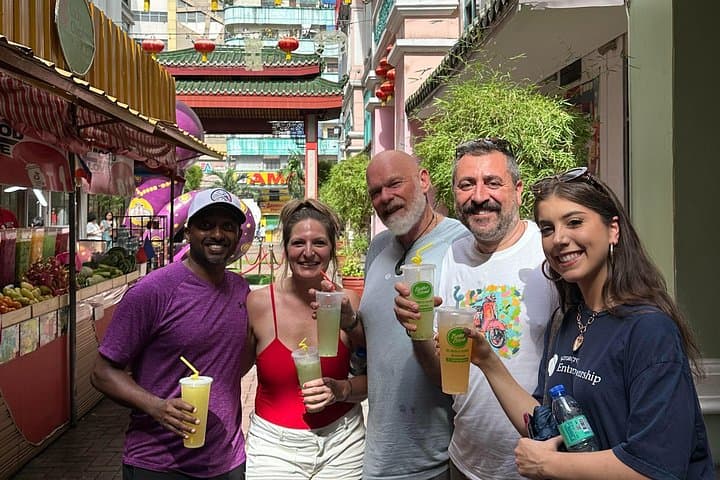


The morning opens with steam rising from street grills and the sharp hiss of vendors frying kwek-kwek; you step into a current of scent and sound that feels impatient and alive. This two-hour walking tour threads through Tondo’s market lanes and into Binondo’s narrow alleys, where soy and caramelized sugar pull you toward small shops and street stalls.
The morning opens with steam rising from street grills and the sharp hiss of vendors frying kwek-kwek; you step into a current of scent and sound that feels impatient and alive. This two-hour walking tour threads through Tondo’s market lanes and into Binondo’s narrow alleys, where soy and caramelized sugar pull you toward small shops and street stalls.
Manila’s streets tell layered stories: Spanish colonial grids over a flat coastal plain, the Pasig River shaping trade routes, and Binondo — the world’s oldest Chinatown — grafting Chinese-Filipino commerce onto local markets. Geology here is urban: reclaimed tidelands and Manila Bay’s proximity keep the air humid and the skyline low, while century-old bakeries and sari-sari stalls speak to a culture that eats as it works.
You’ll taste six to ten bites: savory adobo riffs, chewy siopao, tangy kinilaw notes, crunchy kwek-kwek, and a cooling halo-halo to finish. A local guide decodes names, points out vendor reputations, and steers you to stalls frequented by residents rather than tourists.
Practicalities matter: wear grippy shoes for uneven sidewalks, carry small bills for cash-only vendors, and time the tour for morning or early evening to avoid mid-day heat. Bring a reusable bottle and be ready to move at an easy city-pace with frequent stops. This is food-focused urban exploration — an approachable way to taste Manila’s history one bite at a time.