THE ADVENTURE COLLECTIVE® · Independent discovery and booking for outdoor travel

A rain-washed forest walk leads to a 150-foot cascade and movie-set scenery—the Manoa Falls hike is a compact rainforest immersion near Honolulu. This self-guided option pairs a short but often muddy trail with Tantalus lookout views and local history.
A rain-washed forest walk leads to a 150-foot cascade and movie-set scenery—the Manoa Falls hike is a compact rainforest immersion near Honolulu. This self-guided option pairs a short but often muddy trail with Tantalus lookout views and local history.
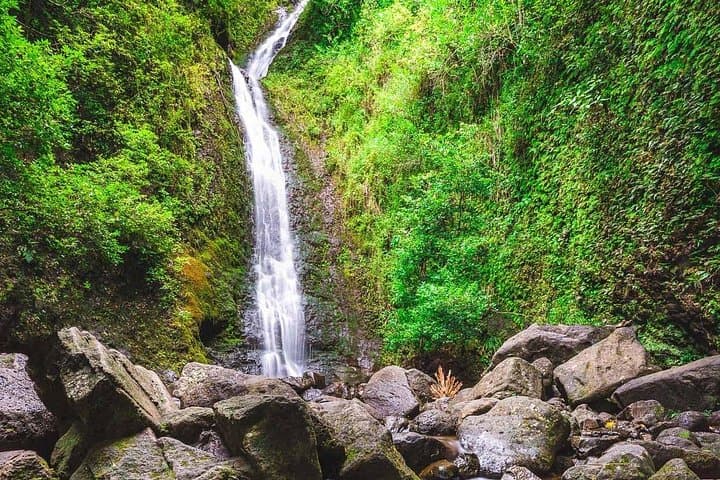
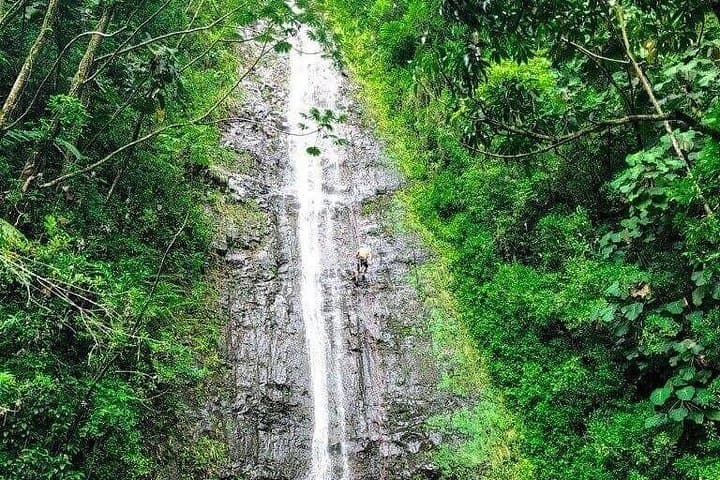
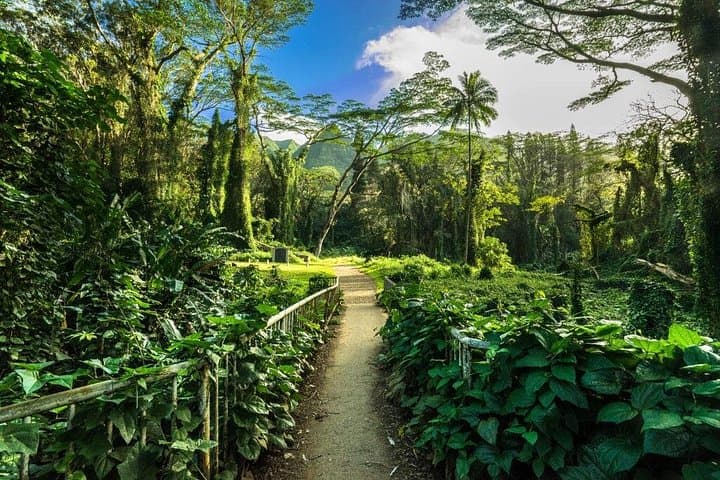
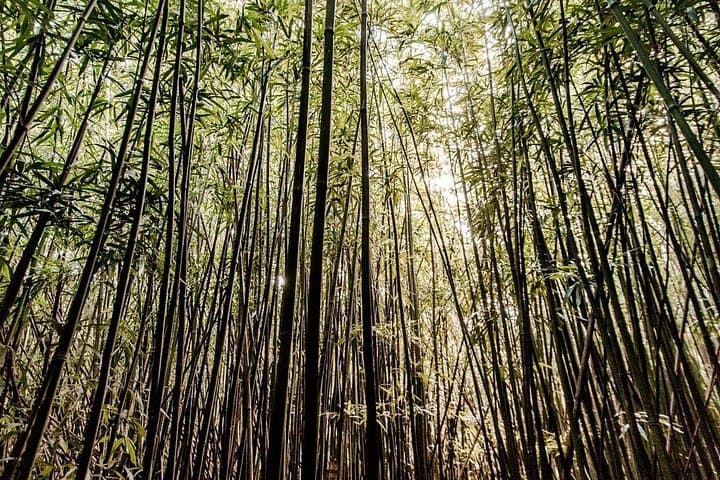
The trail opens like a cathedral of green. Moist air drips from broad-leafed ferns, and the rainforest seems to lean in, listening as hikers pass. Footsteps soften on the root-strewn path while birds—more curious than shy—call from the canopy. At the end of the 1.6-mile round-trip, Manoa Falls drops in a single column roughly 150 feet into a shallow pool; the cascade does the talking, throwing spray that beads on hair and camera lenses.
Verified experiences and guided adventures in the surrounding area.
Operated by Karma Tour Hawaii · Honolulu, Hawaii
The trail opens like a cathedral of green. Moist air drips from broad-leafed ferns, and the rainforest seems to lean in, listening as hikers pass. Footsteps soften on the root-strewn path while birds—more curious than shy—call from the canopy. At the end of the 1.6-mile round-trip, Manoa Falls drops in a single column roughly 150 feet into a shallow pool; the cascade does the talking, throwing spray that beads on hair and camera lenses.
Manoa Valley is part of Oahu’s volcanic cradle. The falls spill from watershed carved into the island’s ancient lava and ash, channels worn by daily trade winds and near-constant rain. The valley’s climate created the high, wet forest that made Manoa ideal for the islands’ first coffee and sugarcane plots in the early 19th century—Chief Boki famously brought coffee to Oahu via Manoa. The trail has double life as a movie set: Jurassic Park, Catching Fire, Lost and Hawaii Five-0 all used the valley’s unvarnished jungle as backdrop.
On the drive up through the valley the guide points out old plantation terraces, then pauses at Puu Ualakaa (Tantalus) for an expansive view of Diamond Head and the Waikiki skyline—an abrupt switch from wet green to the city’s bone and blue. Locals treat the valley as both sanctuary and classroom: school groups practice plant ID here, and photographers time visits for the soft light after a shower when rainbows often arc across the falls.
Practicalities matter on a trail as popular and wet as Manoa. Expect about 400 feet of elevation gain on packed dirt that quickly turns slippery after rain; sturdy hiking shoes with traction are mandatory. The hike itself takes 45–90 minutes round-trip depending on stops; the tour combines driving time for a total window of roughly three hours. Because the path funnels visitors and the pool can be crowded, plan an early start for quieter light and fewer people. Bring a lightweight poncho and zip-lock for electronics—spray and mud are constants. Insect repellent and a full water bottle are essentials; there are no services on-trail.
Safety and stewardship go hand in hand. Stay on the trail to limit erosion and invasive plant spread, and avoid swimming in the plunge pool—the rocks are slick and the current deceptive. The tour’s small-group SUV or minivan approach reduces parking pressure at the trailhead and gives visitors time for the Tantalus lookout and a brief historical orientation.
For anyone who wants a short, intense encounter with Oahu’s rainforest—complete with history, cinematic cachet, and a genuine waterfall—Manoa delivers. It’s an accessible piece of wild that still demands respect: the valley gives you its green only if you come prepared and leave no trace.
The trail is about 1.6 miles round-trip (2.6 km) with roughly 400 feet (120 m) of elevation gain; plan 45–90 minutes of walking time depending on stops.
No—rocks around the pool are slippery and currents can be unpredictable; local operators advise against swimming for safety and conservation reasons.
This is a self-guided hike included in a small-group tour package—transport, historical context, and stopovers like Tantalus lookout are provided, but the trail portion is up to you with guidance and rules from staff.
Facilities are minimal; use restrooms in Waikiki before pickup and bring snacks; there are no services on the trail itself.
Wear closed-toe hiking shoes with good tread or trail runners, bring a change of socks, and carry a small towel or micro-fiber cloth to wipe gear and camera lenses.
Many families and older visitors do the hike, but it requires steady footing and some stamina; those with mobility issues should mention this at booking since some tour vehicles can’t accommodate wheelchairs.
Karma Tour Hawaii operates guided outdoor trips and adventures with an emphasis on safety, stewardship, and memorable experiences.
The trail opens like a cathedral of green. Moist air drips from broad-leafed ferns, and the rainforest seems to lean in, listening as hikers pass. Footsteps soften on the root-strewn path while birds—more curious than shy—call from the canopy. At the end of the 1.6-mile round-trip, Manoa Falls drops in a single column roughly 150 feet into a shallow pool; the cascade does the talking, throwing spray that beads on hair and camera lenses.
The trail opens like a cathedral of green. Moist air drips from broad-leafed ferns, and the rainforest seems to lean in, listening as hikers pass. Footsteps soften on the root-strewn path while birds—more curious than shy—call from the canopy. At the end of the 1.6-mile round-trip, Manoa Falls drops in a single column roughly 150 feet into a shallow pool; the cascade does the talking, throwing spray that beads on hair and camera lenses.
Manoa Valley is part of Oahu’s volcanic cradle. The falls spill from watershed carved into the island’s ancient lava and ash, channels worn by daily trade winds and near-constant rain. The valley’s climate created the high, wet forest that made Manoa ideal for the islands’ first coffee and sugarcane plots in the early 19th century—Chief Boki famously brought coffee to Oahu via Manoa. The trail has double life as a movie set: Jurassic Park, Catching Fire, Lost and Hawaii Five-0 all used the valley’s unvarnished jungle as backdrop.
On the drive up through the valley the guide points out old plantation terraces, then pauses at Puu Ualakaa (Tantalus) for an expansive view of Diamond Head and the Waikiki skyline—an abrupt switch from wet green to the city’s bone and blue. Locals treat the valley as both sanctuary and classroom: school groups practice plant ID here, and photographers time visits for the soft light after a shower when rainbows often arc across the falls.
Practicalities matter on a trail as popular and wet as Manoa. Expect about 400 feet of elevation gain on packed dirt that quickly turns slippery after rain; sturdy hiking shoes with traction are mandatory. The hike itself takes 45–90 minutes round-trip depending on stops; the tour combines driving time for a total window of roughly three hours. Because the path funnels visitors and the pool can be crowded, plan an early start for quieter light and fewer people. Bring a lightweight poncho and zip-lock for electronics—spray and mud are constants. Insect repellent and a full water bottle are essentials; there are no services on-trail.
Safety and stewardship go hand in hand. Stay on the trail to limit erosion and invasive plant spread, and avoid swimming in the plunge pool—the rocks are slick and the current deceptive. The tour’s small-group SUV or minivan approach reduces parking pressure at the trailhead and gives visitors time for the Tantalus lookout and a brief historical orientation.
For anyone who wants a short, intense encounter with Oahu’s rainforest—complete with history, cinematic cachet, and a genuine waterfall—Manoa delivers. It’s an accessible piece of wild that still demands respect: the valley gives you its green only if you come prepared and leave no trace.