THE ADVENTURE COLLECTIVE® · Independent discovery and booking for outdoor travel

Taste three of Costa Rica’s sweetest traditions—cacao, coffee, and freshly pressed sugar cane—during a three-hour walk through a private jungle preserve near Manuel Antonio. Expect hands-on demos, tastings, local history, and wildlife sightings.
Taste three of Costa Rica’s sweetest traditions—cacao, coffee, and freshly pressed sugar cane—during a three-hour walk through a private jungle preserve near Manuel Antonio. Expect hands-on demos, tastings, local history, and wildlife sightings.
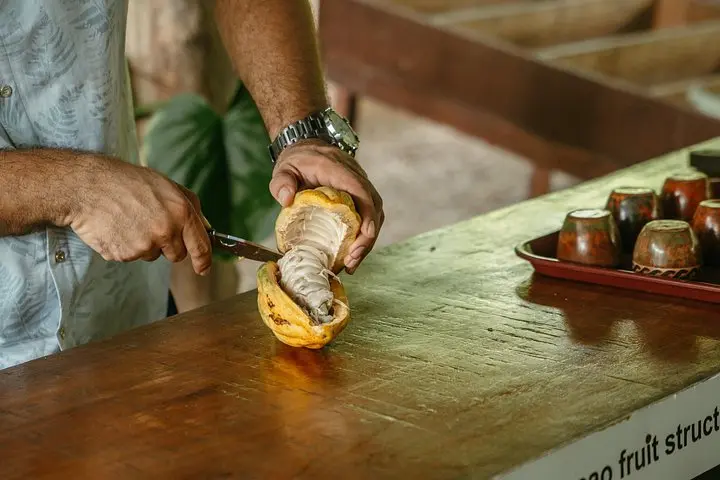
You step off the coastal road into a humid pocket of green: a private jungle preserve ten minutes from Manuel Antonio where cacao pods flash orange against glossy leaves and birds call like punctuation. The air tastes faintly sweet; somewhere nearby a trapiche grinds cane and the caffeine steam of freshly brewed café chorreado threads through the understory.
Verified experiences and guided adventures in the surrounding area.
Operated by Cooking Class Manuel Antonio · Quepos, Puntarenas
You step off the coastal road into a humid pocket of green: a private jungle preserve ten minutes from Manuel Antonio where cacao pods flash orange against glossy leaves and birds call like punctuation. The air tastes faintly sweet; somewhere nearby a trapiche grinds cane and the caffeine steam of freshly brewed café chorreado threads through the understory.
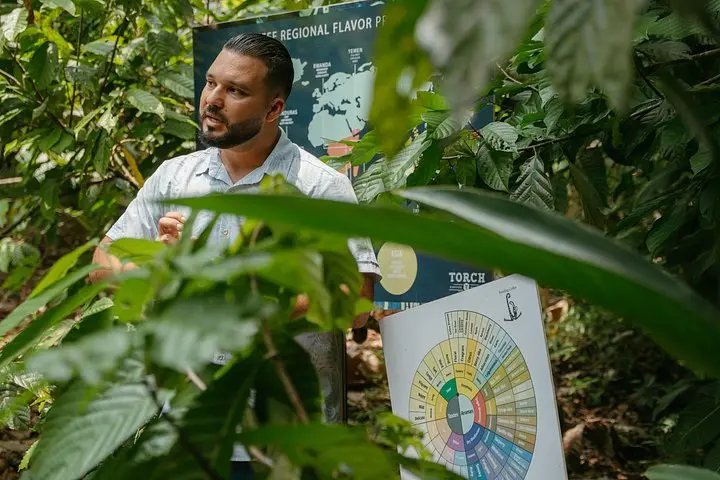
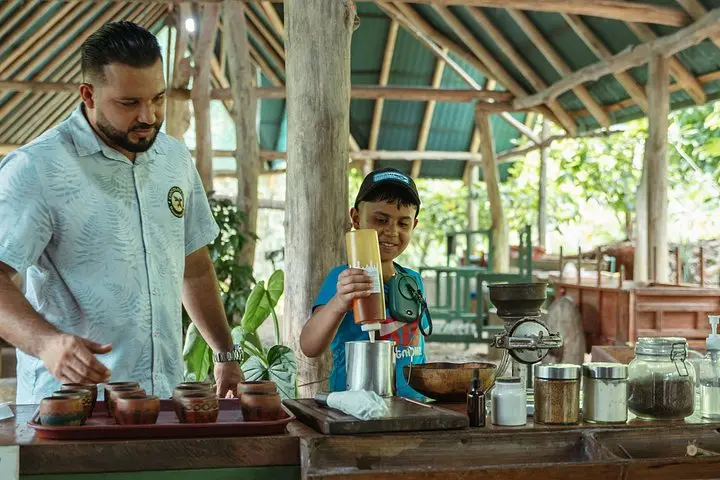
The tour moves with intent—first cacao, then coffee, then sugar cane—each stop a short classroom where biology and local culture intersect. Cacao’s story here is both natural and colonial: native trees used by Indigenous peoples later became export crops shaped by global demand. Coffee arrives uphill—plants, drying racks, and a demonstration of Costa Rica’s traditional drip method. Finally the trapiche presses cane into agua de sapo, an earthy-sweet refresher that ties the day together.
Geologically the region is a slender, biodiverse coastal band where volcanic soils and Pacific humidity make microclimates ideal for both cacao and coffee. Monkeys, sloths, toucans and frogs often punctuate the stops; guides know where to look and how to move quietly.
Practical guidance: allow three hours, wear closed-toe shoes for uneven forest paths, and bring a light rain jacket during the wet season. The experience is family-friendly and accessible for most fitness levels, with tastings and a included lunch.
This is a hands-on cultural walk-through—expect sensory demonstrations, short interpretive talks, and several tasting stations. Bring a camera, but also bring curiosity: the best souvenirs are new questions about how food, land, and history are stitched together here.
The preserve is roughly 10 minutes from Manuel Antonio; public buses and local taxis run between Quepos/Manuel Antonio—confirm arrival time with the operator.
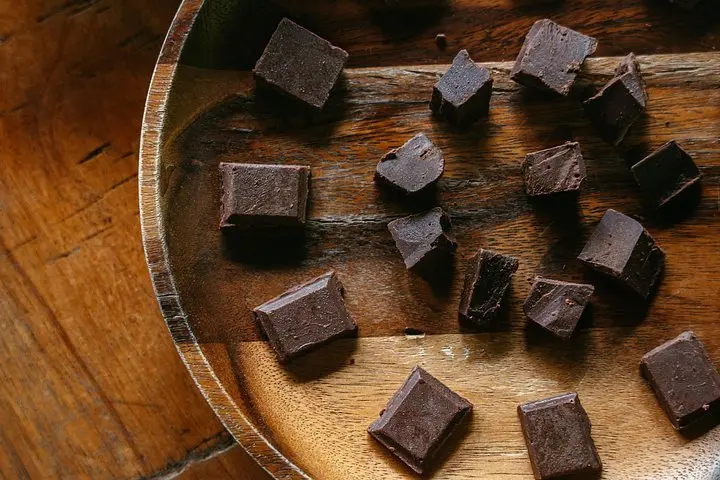
Yes—chocolate and coffee tastings plus a locally prepared lunch are included in the standard tour price.
Yes—short walks and stroller-accessible areas are noted, but some paths are uneven; parents should expect limited stroller use on lighter trails.
Yes—the operator states they can handle vegetarian, vegan, and gluten-free requests if advised at booking.
Cooking Class Manuel Antonio operates guided outdoor trips and adventures with an emphasis on safety, stewardship, and memorable experiences.
You step off the coastal road into a humid pocket of green: a private jungle preserve ten minutes from Manuel Antonio where cacao pods flash orange against glossy leaves and birds call like punctuation. The air tastes faintly sweet; somewhere nearby a trapiche grinds cane and the caffeine steam of freshly brewed café chorreado threads through the understory.
You step off the coastal road into a humid pocket of green: a private jungle preserve ten minutes from Manuel Antonio where cacao pods flash orange against glossy leaves and birds call like punctuation. The air tastes faintly sweet; somewhere nearby a trapiche grinds cane and the caffeine steam of freshly brewed café chorreado threads through the understory.
The tour moves with intent—first cacao, then coffee, then sugar cane—each stop a short classroom where biology and local culture intersect. Cacao’s story here is both natural and colonial: native trees used by Indigenous peoples later became export crops shaped by global demand. Coffee arrives uphill—plants, drying racks, and a demonstration of Costa Rica’s traditional drip method. Finally the trapiche presses cane into agua de sapo, an earthy-sweet refresher that ties the day together.
Geologically the region is a slender, biodiverse coastal band where volcanic soils and Pacific humidity make microclimates ideal for both cacao and coffee. Monkeys, sloths, toucans and frogs often punctuate the stops; guides know where to look and how to move quietly.
Practical guidance: allow three hours, wear closed-toe shoes for uneven forest paths, and bring a light rain jacket during the wet season. The experience is family-friendly and accessible for most fitness levels, with tastings and a included lunch.
This is a hands-on cultural walk-through—expect sensory demonstrations, short interpretive talks, and several tasting stations. Bring a camera, but also bring curiosity: the best souvenirs are new questions about how food, land, and history are stitched together here.