THE ADVENTURE COLLECTIVE® · Independent discovery and booking for outdoor travel

Walk the Manuel Antonio rainforest after dark with a bilingual naturalist and search for glass frogs, kinkajous, and bioluminescent insects. This two-hour guided night tour focuses on close, respectful wildlife observation along easy forest trails.
Walk the Manuel Antonio rainforest after dark with a bilingual naturalist and search for glass frogs, kinkajous, and bioluminescent insects. This two-hour guided night tour focuses on close, respectful wildlife observation along easy forest trails.
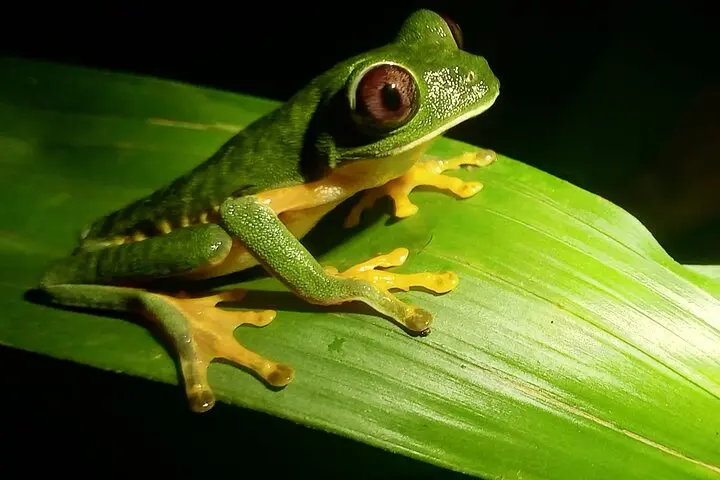
When the last hard light of day slips behind the coastal hills, the rainforest exhales a different rhythm. Lantern beams cut through humid air, palms rustle, and a guide’s whisper points to a glass frog clinging to a leaf—their luminous underbellies visible only to night eyes.
Verified experiences and guided adventures in the surrounding area.
Operated by Sukia Park & Zip Line Tour · Quepos, Puntarenas
When the last hard light of day slips behind the coastal hills, the rainforest exhales a different rhythm. Lantern beams cut through humid air, palms rustle, and a guide’s whisper points to a glass frog clinging to a leaf—their luminous underbellies visible only to night eyes.
This two-hour Sukia Park night tour threads through lowland Pacific rainforest adjacent to Manuel Antonio. Geologically the area is young volcanic foothills grading to mangrove-lined lagoons; biologically it’s restless at night. The route passes small waterways and the Crocodile Lagoon, where tidal influence and freshwater meet, creating concentrated wildlife activity. Human history here is recent conservation—Manuel Antonio National Park was established in the 1970s to protect coastal forest and marine habitat—while local guides draw on traditional knowledge of animal behavior to time encounters.
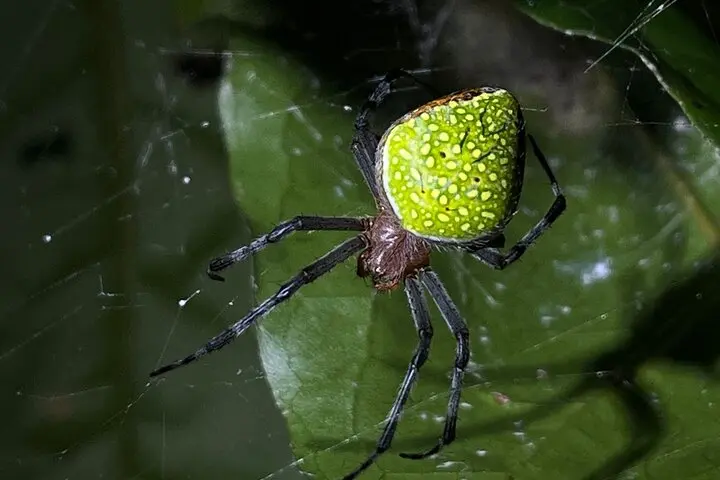
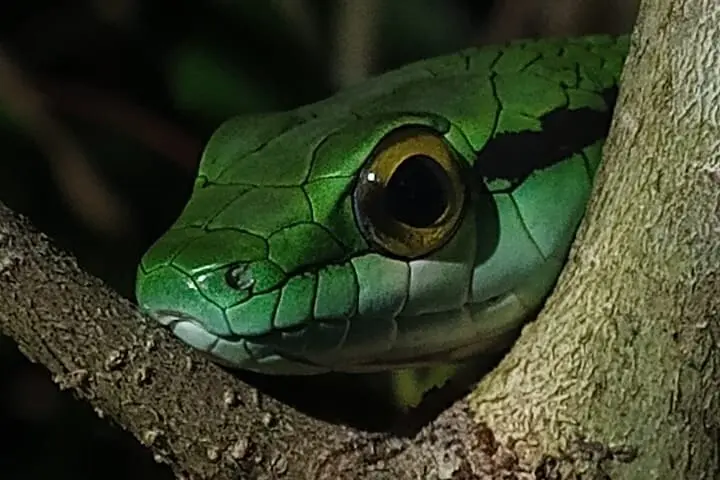
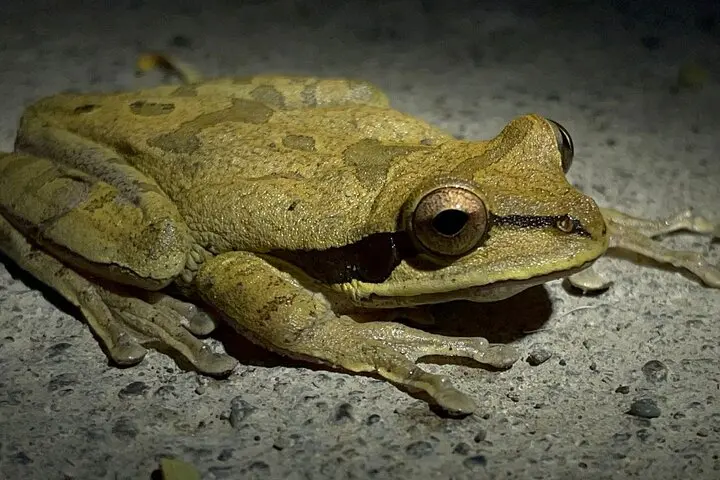
Expect tight dirt trails, occasional muddy sections, and low canopy that brings wildlife close: glass frogs, kinkajous, non-venomous snakes, and bioluminescent insects. The experience is observational rather than strenuous—walks are slow, punctuated by stops for identification and photos.
Practical guidance: wear closed-toe, grippy shoes and long sleeves for insect protection; bring a compact rain jacket and spare batteries for your headlamp. Move quietly and follow the guide’s light—sudden bright flashes spook sensitive species. Tours are typically private and accessible for most fitness levels, but weather changes fast in the tropics; reschedule if heavy rain makes trails unsafe. Leave no trace: stay on paths, don’t touch wildlife, and keep noise minimal—this preserves sightings for everyone and protects fragile nocturnal ecosystems.
Yes—operators often allow infants in strollers or on laps, but children should be able to stay quiet and follow the guide; check age restrictions when booking.
Sightings are common but not guaranteed; guides maximize chances by visiting known habitat features at peak activity times.
See operator for details.
The tour may proceed with rain protection provided, but very heavy rain can reduce visibility and wildlife activity—cancellation or rescheduling policies vary; confirm before your tour.
Sukia Park & Zip Line Tour operates guided outdoor trips and adventures with an emphasis on safety, stewardship, and memorable experiences.
When the last hard light of day slips behind the coastal hills, the rainforest exhales a different rhythm. Lantern beams cut through humid air, palms rustle, and a guide’s whisper points to a glass frog clinging to a leaf—their luminous underbellies visible only to night eyes.
When the last hard light of day slips behind the coastal hills, the rainforest exhales a different rhythm. Lantern beams cut through humid air, palms rustle, and a guide’s whisper points to a glass frog clinging to a leaf—their luminous underbellies visible only to night eyes.
This two-hour Sukia Park night tour threads through lowland Pacific rainforest adjacent to Manuel Antonio. Geologically the area is young volcanic foothills grading to mangrove-lined lagoons; biologically it’s restless at night. The route passes small waterways and the Crocodile Lagoon, where tidal influence and freshwater meet, creating concentrated wildlife activity. Human history here is recent conservation—Manuel Antonio National Park was established in the 1970s to protect coastal forest and marine habitat—while local guides draw on traditional knowledge of animal behavior to time encounters.
Expect tight dirt trails, occasional muddy sections, and low canopy that brings wildlife close: glass frogs, kinkajous, non-venomous snakes, and bioluminescent insects. The experience is observational rather than strenuous—walks are slow, punctuated by stops for identification and photos.
Practical guidance: wear closed-toe, grippy shoes and long sleeves for insect protection; bring a compact rain jacket and spare batteries for your headlamp. Move quietly and follow the guide’s light—sudden bright flashes spook sensitive species. Tours are typically private and accessible for most fitness levels, but weather changes fast in the tropics; reschedule if heavy rain makes trails unsafe. Leave no trace: stay on paths, don’t touch wildlife, and keep noise minimal—this preserves sightings for everyone and protects fragile nocturnal ecosystems.