THE ADVENTURE COLLECTIVE® · Independent discovery and booking for outdoor travel

Venture into Manuel Antonio’s night forest with a certified naturalist and close-knit group. This 2–3 hour guided walk focuses on nocturnal frogs, spiders, and sometimes sloths or ocelots—expect close-up, educational encounters on a preserved private property.
Venture into Manuel Antonio’s night forest with a certified naturalist and close-knit group. This 2–3 hour guided walk focuses on nocturnal frogs, spiders, and sometimes sloths or ocelots—expect close-up, educational encounters on a preserved private property.
You step off the van as dusk thickens; the path ahead is a dark ribbon threaded with the glow of waterproof flashlights. The guide moves slowly, voice low but precise, and the forest answers—tree frogs chirp from the understory and leaves shiver as nocturnal insects take the stage. The property is compact but richly preserved, with narrow trails that push you close to trunks, roots, and the creatures that favor the cover of night.
Verified experiences and guided adventures in the surrounding area.
Operated by Manuel's Tours, Costa Rica. · Quepos, Puntarenas
You step off the van as dusk thickens; the path ahead is a dark ribbon threaded with the glow of waterproof flashlights. The guide moves slowly, voice low but precise, and the forest answers—tree frogs chirp from the understory and leaves shiver as nocturnal insects take the stage. The property is compact but richly preserved, with narrow trails that push you close to trunks, roots, and the creatures that favor the cover of night.
This stretch of Pacific Costa Rica sits on ancient volcanic soils cut by coastal erosion; the coastal rainforest supports species adapted to warm, humid nights. Manuel Antonio and nearby Quepos grew around cocoa and banana trade routes and now rely heavily on eco-tourism; local naturalists helped establish private reserves to protect habitat for sloths, anteaters, and small cats.
Expect a guided, educational walk of roughly 2–3 hours in small groups (4–6 people). Guides carry waterproof flashlights and provide clean rain boots; you’re encouraged to request specific animal searches in advance. Terrain is uneven, muddy when wet, with brief inclines and dense undergrowth—good situational footing matters.
Practical tips: wear closed-toe shoes and long lightweight pants, bring insect repellent and a compact camera with a tele lens if you want detailed photos. Hydrate beforehand and avoid bright screens during the walk to preserve night vision. The tour runs year-round but is most weather-dependent during the May–December rains; the operator may reschedule if conditions risk safety or visibility. For curious travelers who favor close-up encounters with the small and secretive, this tour balances hands-on learning with careful, conservation-minded searching.
Round-trip local transportation is included for specified pickup zones; otherwise secure parking is available at the meeting point.
Small groups are family-friendly but the tour suits kids who can walk steadily and tolerate dark, close-quarters conditions—check operator age policies when booking.
No—encounters with elusive species are occasional; guides will search for requested animals but sightings cannot be guaranteed.
Tours run in light rain, but heavy storms or unsafe conditions may cause rescheduling or cancellation; book early in your stay to allow flexibility.
Manuel's Tours, Costa Rica. operates guided outdoor trips and adventures with an emphasis on safety, stewardship, and memorable experiences.

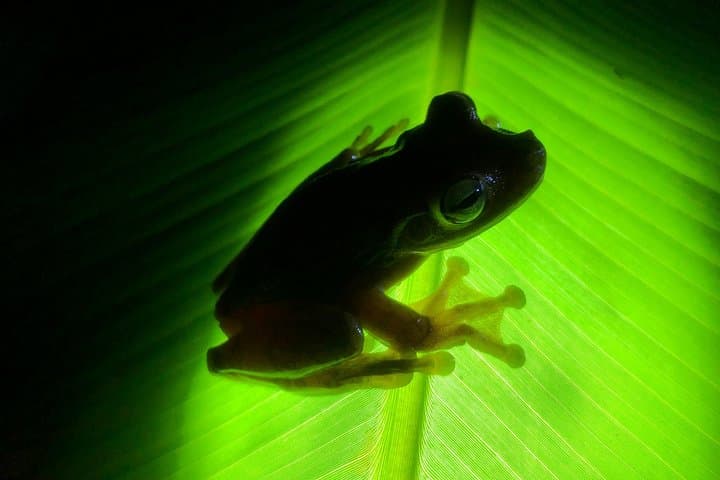
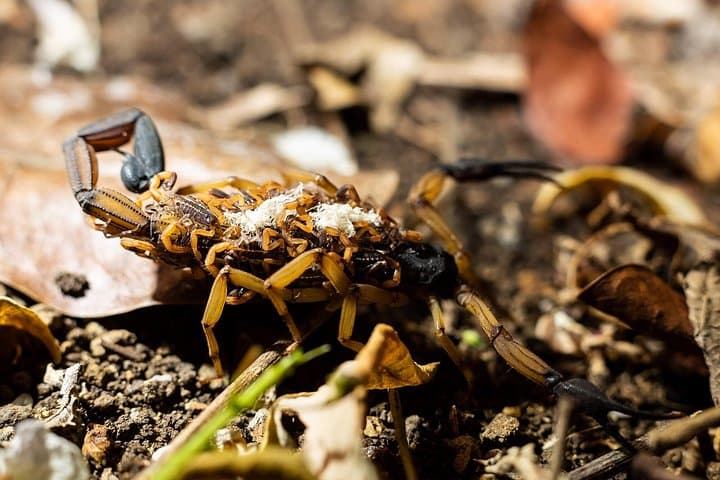

You step off the van as dusk thickens; the path ahead is a dark ribbon threaded with the glow of waterproof flashlights. The guide moves slowly, voice low but precise, and the forest answers—tree frogs chirp from the understory and leaves shiver as nocturnal insects take the stage. The property is compact but richly preserved, with narrow trails that push you close to trunks, roots, and the creatures that favor the cover of night.
You step off the van as dusk thickens; the path ahead is a dark ribbon threaded with the glow of waterproof flashlights. The guide moves slowly, voice low but precise, and the forest answers—tree frogs chirp from the understory and leaves shiver as nocturnal insects take the stage. The property is compact but richly preserved, with narrow trails that push you close to trunks, roots, and the creatures that favor the cover of night.
This stretch of Pacific Costa Rica sits on ancient volcanic soils cut by coastal erosion; the coastal rainforest supports species adapted to warm, humid nights. Manuel Antonio and nearby Quepos grew around cocoa and banana trade routes and now rely heavily on eco-tourism; local naturalists helped establish private reserves to protect habitat for sloths, anteaters, and small cats.
Expect a guided, educational walk of roughly 2–3 hours in small groups (4–6 people). Guides carry waterproof flashlights and provide clean rain boots; you’re encouraged to request specific animal searches in advance. Terrain is uneven, muddy when wet, with brief inclines and dense undergrowth—good situational footing matters.
Practical tips: wear closed-toe shoes and long lightweight pants, bring insect repellent and a compact camera with a tele lens if you want detailed photos. Hydrate beforehand and avoid bright screens during the walk to preserve night vision. The tour runs year-round but is most weather-dependent during the May–December rains; the operator may reschedule if conditions risk safety or visibility. For curious travelers who favor close-up encounters with the small and secretive, this tour balances hands-on learning with careful, conservation-minded searching.