THE ADVENTURE COLLECTIVE® · Independent discovery and booking for outdoor travel

A three‑day guided safari into Maputo Special Reserve takes you from tidal estuaries to grassy plains and coastal forest. Expect tented nights, guided game drives, and close encounters with returning elephant herds along ecological corridors.
A three‑day guided safari into Maputo Special Reserve takes you from tidal estuaries to grassy plains and coastal forest. Expect tented nights, guided game drives, and close encounters with returning elephant herds along ecological corridors.
Dawn breaks over a low, salty horizon and the tide’s whisper competes with a distant trumpet — an elephant moving through coastal scrub. On a three‑day guided trip to Maputo Special Reserve you move between beach, bush and forest: sandy tracks that bite at your tires, flat savanna that opens to the Indian Ocean, and pockets of dense coastal forest where birds call like small alarms.
Verified experiences and guided adventures in the surrounding area.
Operated by Mabeco Tours Lda · Maputo, Maputo Province
Dawn breaks over a low, salty horizon and the tide’s whisper competes with a distant trumpet — an elephant moving through coastal scrub. On a three‑day guided trip to Maputo Special Reserve you move between beach, bush and forest: sandy tracks that bite at your tires, flat savanna that opens to the Indian Ocean, and pockets of dense coastal forest where birds call like small alarms.
Created in the 1960s and long affected by civil war, the reserve has been steadily repopulated as animals return via ecological corridors linking South Africa, Eswatini and Mozambique. The park covers roughly 1,040 km² of coastal plains, estuaries and dune systems where marine ecosystems meet African grasslands; low elevations and sandy soils shape both travel and habitat.
Expect guided game drives at sunrise and late afternoon, basic tented nights and daytime walks on firm but uneven sand and grassy tracks. Guides point out elephant paths, spoor of hippo near estuaries and shorelines where dolphins and shorebirds feed. Local communities around the reserve practice small‑scale fishing and coastal agriculture, and cultural exchanges often accompany park visits.
Practically: the tour runs three days with two nights in tents, park fees included and a professional guide. Moderate fitness is required — you’ll sit through long drives and handle short walks on uneven ground. Pack sun protection, water, sturdy footwear and a good camera or binoculars. Visit in the dry months for easier roads and clearer sightings; expect heat and mosquitoes in the rainy season. This trip is about lowland safari rhythm: slow drives, sudden wildlife moments, and nights under an open coastal sky.
Most tours include pickup in Maputo and drive to the park; travel time is typically 1–3 hours depending on traffic and exact pickup location.
Accommodation is basic tented camping with simple bedding—comfortable for adventurous travelers but not a luxury lodge.
Common sightings include African elephants, antelope species, hippos near estuaries, coastal dolphins and a wide variety of shorebirds.
Consult your doctor; routine vaccinations are recommended and malaria prophylaxis is generally advised for southern Mozambique.
Mabeco Tours Lda operates guided outdoor trips and adventures with an emphasis on safety, stewardship, and memorable experiences.
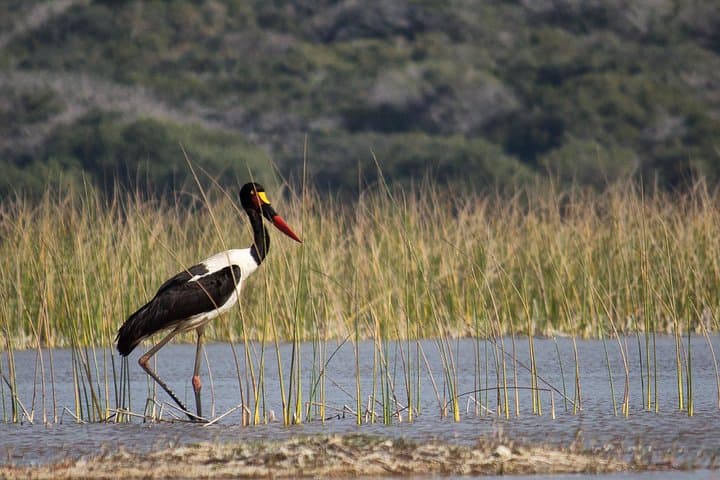


Dawn breaks over a low, salty horizon and the tide’s whisper competes with a distant trumpet — an elephant moving through coastal scrub. On a three‑day guided trip to Maputo Special Reserve you move between beach, bush and forest: sandy tracks that bite at your tires, flat savanna that opens to the Indian Ocean, and pockets of dense coastal forest where birds call like small alarms.
Dawn breaks over a low, salty horizon and the tide’s whisper competes with a distant trumpet — an elephant moving through coastal scrub. On a three‑day guided trip to Maputo Special Reserve you move between beach, bush and forest: sandy tracks that bite at your tires, flat savanna that opens to the Indian Ocean, and pockets of dense coastal forest where birds call like small alarms.
Created in the 1960s and long affected by civil war, the reserve has been steadily repopulated as animals return via ecological corridors linking South Africa, Eswatini and Mozambique. The park covers roughly 1,040 km² of coastal plains, estuaries and dune systems where marine ecosystems meet African grasslands; low elevations and sandy soils shape both travel and habitat.
Expect guided game drives at sunrise and late afternoon, basic tented nights and daytime walks on firm but uneven sand and grassy tracks. Guides point out elephant paths, spoor of hippo near estuaries and shorelines where dolphins and shorebirds feed. Local communities around the reserve practice small‑scale fishing and coastal agriculture, and cultural exchanges often accompany park visits.
Practically: the tour runs three days with two nights in tents, park fees included and a professional guide. Moderate fitness is required — you’ll sit through long drives and handle short walks on uneven ground. Pack sun protection, water, sturdy footwear and a good camera or binoculars. Visit in the dry months for easier roads and clearer sightings; expect heat and mosquitoes in the rainy season. This trip is about lowland safari rhythm: slow drives, sudden wildlife moments, and nights under an open coastal sky.