THE ADVENTURE COLLECTIVE® · Independent discovery and booking for outdoor travel

Short on time but hungry for Kilimanjaro: this full-day Marangu Route hike takes you from coffee farms to Mandara Hut and the Maundi Crater rim, packing rainforest, wildlife and high-mountain views into a single, unforgettable day.
Short on time but hungry for Kilimanjaro: this full-day Marangu Route hike takes you from coffee farms to Mandara Hut and the Maundi Crater rim, packing rainforest, wildlife and high-mountain views into a single, unforgettable day.
A minivan slips out of Moshi before dawn and the foothills of Kilimanjaro grow like a dark wall ahead of you—its snow-capped summit a distant white ridge above a band of cloud. By the time you pass the last coffee terraces, the road steepens and the air takes on that cool, wet smell of mountain forest. At Marangu Gate (1,870m) rangers check permits and the path narrows into a ribbon of leaf litter and roots. The forest here has a voice: Colobus monkeys chatter in high branches, turacos flash green, and the trail itself seems to breathe underfoot as you climb.
Verified experiences and guided adventures in the surrounding area.
Operated by 21 Africa safaris · Moshi, Kilimanjaro Region
A minivan slips out of Moshi before dawn and the foothills of Kilimanjaro grow like a dark wall ahead of you—its snow-capped summit a distant white ridge above a band of cloud. By the time you pass the last coffee terraces, the road steepens and the air takes on that cool, wet smell of mountain forest. At Marangu Gate (1,870m) rangers check permits and the path narrows into a ribbon of leaf litter and roots. The forest here has a voice: Colobus monkeys chatter in high branches, turacos flash green, and the trail itself seems to breathe underfoot as you climb.
This one-day itinerary follows the Marangu Route—the classic, hut-based line that generations of climbers use as the easiest approach to Kilimanjaro. Geologically, Kilimanjaro is a composite volcano made of three cones: Shira, Mawenzi and Kibo; the Marangu path skirts the eastern flank of Mawenzi’s ragged towers before opening into the heath zone near Mandara Hut (2,700m). The elevation gain on the outward leg is roughly 800–900 meters over several kilometers of soft, sometimes muddy trail; expect 3–4 hours up and 2–3 hours back down.
Along the way the landscape reads like continental history: volcanic soils feeding dense montane rainforest, then giving way to heather and broom as the tree line thins. Cultural notes are as close as the next homestead—Chagga farmers have shaped these slopes for centuries, trading coffee and bananas along paths that predate modern roads. Many guides stop at local coffee farms en route; it’s an easy way to understand how human life and mountain ecology have always been entwined here.
Practicality matters: this isn’t a summit push, but the altitude is real. The route is well-defined but rooted and wet in the rainy season, so solid footwear and a steady pace are essential. Lunch at Mandara Hut is a windowed pause—bring a camera for the optional Maundi Crater side trip, where a short scramble leads to sweeping views of Mawenzi and the Kenyan plains beyond.
Sustainability is part of the rhythm: park fees underwrite trail maintenance and local ranger programs, so stick to paths, pack out trash, and keep wildlife viewing respectful. The day tour is ideal for travelers short on time who want a tangible taste of Kilimanjaro—green rainforest, volcanic skyline, Chagga culture and the physical satisfaction of a solid mountain day, all without the logistics of a multi-night expedition.
Expect a total trip of about 9–10 hours from hotel pickup to drop-off; the hike itself is 3–4 hours up and 2–3 hours down, with transfers to and from Moshi or Arusha.
No technical climbing experience is required for the day hike; park entry and government fees are included in the tour price and guides handle permits and registration.
Altitude can affect anyone—this route reaches Mandara Hut at ~2,700m; take it steady, hydrate, and let your guide know if you feel unwell.
Yes—bottled water and a picnic lunch are included; bring extra snacks and a refillable bottle if you prefer more water.
Common sightings include colobus and blue monkeys, plus a variety of forest birds such as turacos and sunbirds along the trail.
Yes—the tour offers pickup from hotels in Moshi and Arusha; confirm your pickup point when booking.
21 Africa safaris operates guided outdoor trips and adventures with an emphasis on safety, stewardship, and memorable experiences.
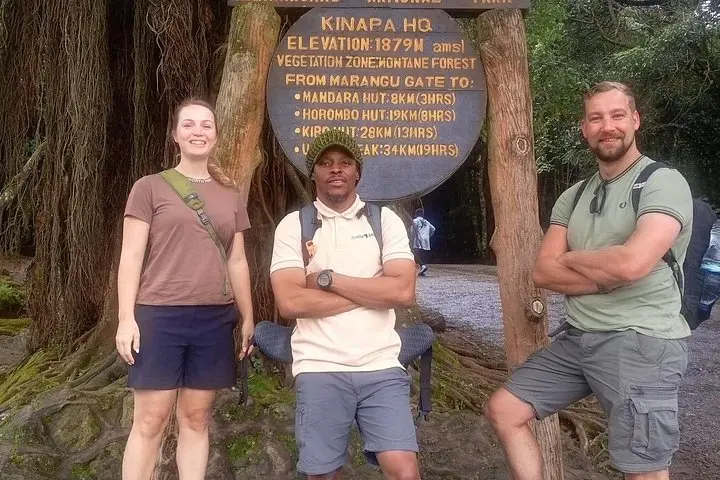
A minivan slips out of Moshi before dawn and the foothills of Kilimanjaro grow like a dark wall ahead of you—its snow-capped summit a distant white ridge above a band of cloud. By the time you pass the last coffee terraces, the road steepens and the air takes on that cool, wet smell of mountain forest. At Marangu Gate (1,870m) rangers check permits and the path narrows into a ribbon of leaf litter and roots. The forest here has a voice: Colobus monkeys chatter in high branches, turacos flash green, and the trail itself seems to breathe underfoot as you climb.
A minivan slips out of Moshi before dawn and the foothills of Kilimanjaro grow like a dark wall ahead of you—its snow-capped summit a distant white ridge above a band of cloud. By the time you pass the last coffee terraces, the road steepens and the air takes on that cool, wet smell of mountain forest. At Marangu Gate (1,870m) rangers check permits and the path narrows into a ribbon of leaf litter and roots. The forest here has a voice: Colobus monkeys chatter in high branches, turacos flash green, and the trail itself seems to breathe underfoot as you climb.
This one-day itinerary follows the Marangu Route—the classic, hut-based line that generations of climbers use as the easiest approach to Kilimanjaro. Geologically, Kilimanjaro is a composite volcano made of three cones: Shira, Mawenzi and Kibo; the Marangu path skirts the eastern flank of Mawenzi’s ragged towers before opening into the heath zone near Mandara Hut (2,700m). The elevation gain on the outward leg is roughly 800–900 meters over several kilometers of soft, sometimes muddy trail; expect 3–4 hours up and 2–3 hours back down.
Along the way the landscape reads like continental history: volcanic soils feeding dense montane rainforest, then giving way to heather and broom as the tree line thins. Cultural notes are as close as the next homestead—Chagga farmers have shaped these slopes for centuries, trading coffee and bananas along paths that predate modern roads. Many guides stop at local coffee farms en route; it’s an easy way to understand how human life and mountain ecology have always been entwined here.
Practicality matters: this isn’t a summit push, but the altitude is real. The route is well-defined but rooted and wet in the rainy season, so solid footwear and a steady pace are essential. Lunch at Mandara Hut is a windowed pause—bring a camera for the optional Maundi Crater side trip, where a short scramble leads to sweeping views of Mawenzi and the Kenyan plains beyond.
Sustainability is part of the rhythm: park fees underwrite trail maintenance and local ranger programs, so stick to paths, pack out trash, and keep wildlife viewing respectful. The day tour is ideal for travelers short on time who want a tangible taste of Kilimanjaro—green rainforest, volcanic skyline, Chagga culture and the physical satisfaction of a solid mountain day, all without the logistics of a multi-night expedition.