THE ADVENTURE COLLECTIVE® · Independent discovery and booking for outdoor travel

Walk from rainforest to icy summit on the classic Marangu Route: a five-day, hut-to-hut climb that leads to Uhuru Peak. This guide covers what you’ll see, the daily distances and elevation changes, and the practical preparation that improves your summit odds.
Walk from rainforest to icy summit on the classic Marangu Route: a five-day, hut-to-hut climb that leads to Uhuru Peak. This guide covers what you’ll see, the daily distances and elevation changes, and the practical preparation that improves your summit odds.
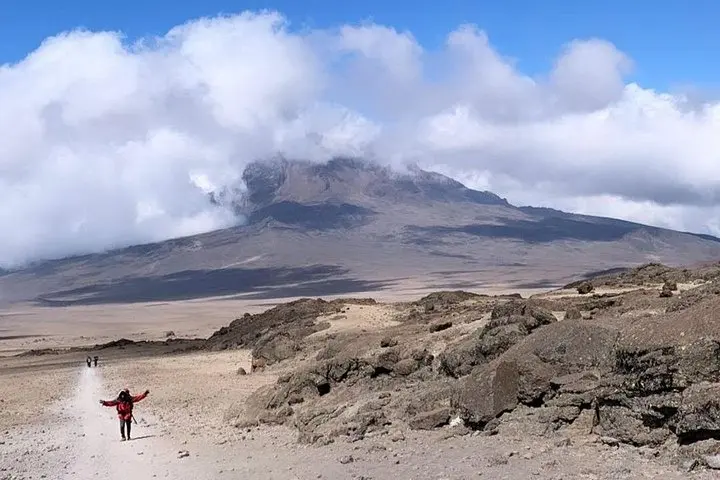
A low, humid mist clings to the cedars as hikers register at Marangu Gate and step onto the path that will lead them up Africa's tallest free-standing mountain. The first hours are framed by a rainforest that smells of wet earth and wood smoke; colobus monkeys call from the canopy and paths narrow beneath a green vault. The trail opens, gradually trading ferns for heath and then for the stunted, windswept plants of the alpine desert. By the time the party reaches the black rock and glacial scree near Kibo, the air is thin and each breath is a deliberate measure of pace.
Verified experiences and guided adventures in the surrounding area.
Operated by Moana Tanzania · Moshi, Kilimanjaro Region
A low, humid mist clings to the cedars as hikers register at Marangu Gate and step onto the path that will lead them up Africa's tallest free-standing mountain. The first hours are framed by a rainforest that smells of wet earth and wood smoke; colobus monkeys call from the canopy and paths narrow beneath a green vault. The trail opens, gradually trading ferns for heath and then for the stunted, windswept plants of the alpine desert. By the time the party reaches the black rock and glacial scree near Kibo, the air is thin and each breath is a deliberate measure of pace.
Kilimanjaro is a stratovolcano capped by three volcanic cones—Kibo, Mawenzi and Shira—carved by ice and weather into steep ridgelines and broad saddles. The Marangu Route is the oldest and one of the most direct tracks to Uhuru Peak (5,895 m). It follows a classic altitude profile: rainforest (1,700–2,740 m) to moorland (2,740–3,700 m), then alpine desert and the cold, glacial summit. The Chagga people have farmed the lower slopes for generations; the route passes villages and coffee terraces that speak to a human history as old as modern guides’ names on hut ledgers.
This itinerary runs five days: Day 1 — Marangu Gate to Mandara Hut (≈8 km, +1,040 m); Day 2 — Mandara to Horombo Huts (≈11 km, +960 m); Day 3 — Horombo to Kibo Hut (≈10 km, +1,000 m); Day 4 — Kibo to Uhuru Peak and down to Horombo (≈20 km, summit day, 10–15 hours, +1,195 m then long descent); Day 5 — Horombo to Marangu Gate (≈19 km, -2,000 m). Huts on Marangu are dormitory-style; the route’s shelter system makes it one of the few Kilimanjaro tracks with hut accommodation rather than tents.
Practical edge: altitude, not technical climbing, is the primary obstacle. Expect long, cold summit nights and a predawn start for the push to Gillman’s Point and Uhuru Peak. Pace conservatively—step, breathe, step—and prioritize hydration and electrolyte replacement. Footwear should be broken-in mountaineering boots; layering matters from humid forest to summit gale. Guides, porters and emergency oxygen are included by the operator; rescue fees are listed in the package.
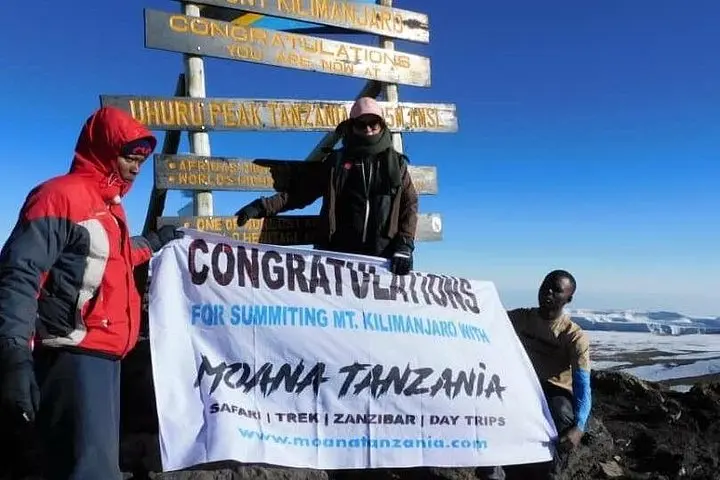
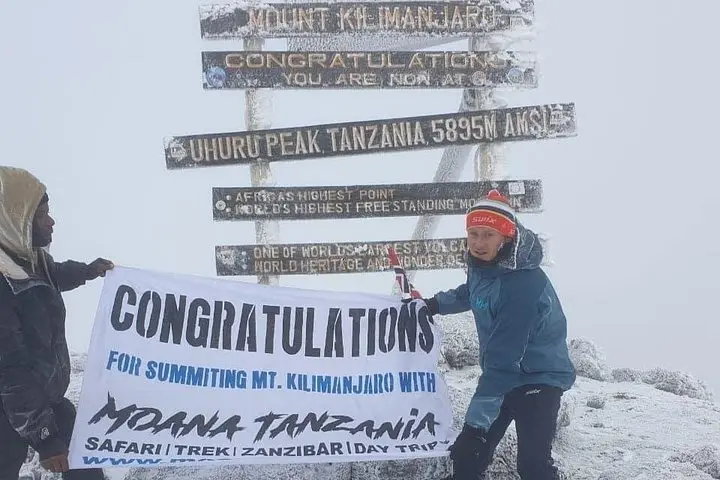
Timing matters: the dry season (June–October) offers the best summit odds and clearer views of the Rift and plains below. Bring a reliable headlamp, spare batteries, and a small personal first-aid kit. Respect park regulations: stay on route, keep food secured, and pack out waste where possible. When you stand on Uhuru, the sky is wide enough to feel like an achievement shared between human endurance and an ancient mountain that keeps you honest.
Marangu is one of the more direct and traditionally easier routes because of hut accommodation and a steady grade, but it still requires excellent fitness and carries the same altitude risks as other routes.
No technical climbing skills or ropes are required—the climb is high-altitude trekking rather than mountaineering—though proper boots and cold-weather gear are essential.
Five-day itineraries have a lower summit success rate than longer acclimatization schedules; success depends on fitness, acclimatization, and weather—many climbers choose 6-day options for better odds.
Huts are basic dormitories with mattresses; bring a warm sleeping liner, earplugs, and a small towel—hot water is provided but limited.
Guides carry pulse oximeters, oxygen and first-aid supplies; however, severe cases require descent to lower elevations and possibly evacuation to medical facilities.
June to October (dry season) typically offers the most stable weather and clearer summit visibility; short rains around November and long rains March–May make the trail muddy and visibility limited.
Moana Tanzania operates guided outdoor trips and adventures with an emphasis on safety, stewardship, and memorable experiences.
A low, humid mist clings to the cedars as hikers register at Marangu Gate and step onto the path that will lead them up Africa's tallest free-standing mountain. The first hours are framed by a rainforest that smells of wet earth and wood smoke; colobus monkeys call from the canopy and paths narrow beneath a green vault. The trail opens, gradually trading ferns for heath and then for the stunted, windswept plants of the alpine desert. By the time the party reaches the black rock and glacial scree near Kibo, the air is thin and each breath is a deliberate measure of pace.
A low, humid mist clings to the cedars as hikers register at Marangu Gate and step onto the path that will lead them up Africa's tallest free-standing mountain. The first hours are framed by a rainforest that smells of wet earth and wood smoke; colobus monkeys call from the canopy and paths narrow beneath a green vault. The trail opens, gradually trading ferns for heath and then for the stunted, windswept plants of the alpine desert. By the time the party reaches the black rock and glacial scree near Kibo, the air is thin and each breath is a deliberate measure of pace.
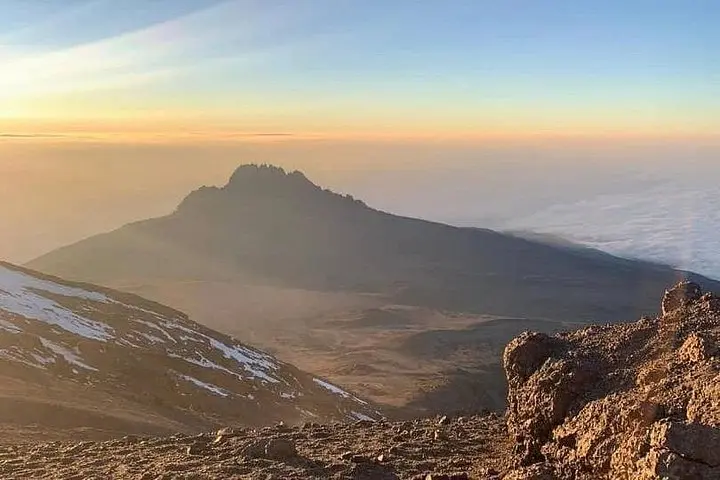
Kilimanjaro is a stratovolcano capped by three volcanic cones—Kibo, Mawenzi and Shira—carved by ice and weather into steep ridgelines and broad saddles. The Marangu Route is the oldest and one of the most direct tracks to Uhuru Peak (5,895 m). It follows a classic altitude profile: rainforest (1,700–2,740 m) to moorland (2,740–3,700 m), then alpine desert and the cold, glacial summit. The Chagga people have farmed the lower slopes for generations; the route passes villages and coffee terraces that speak to a human history as old as modern guides’ names on hut ledgers.
This itinerary runs five days: Day 1 — Marangu Gate to Mandara Hut (≈8 km, +1,040 m); Day 2 — Mandara to Horombo Huts (≈11 km, +960 m); Day 3 — Horombo to Kibo Hut (≈10 km, +1,000 m); Day 4 — Kibo to Uhuru Peak and down to Horombo (≈20 km, summit day, 10–15 hours, +1,195 m then long descent); Day 5 — Horombo to Marangu Gate (≈19 km, -2,000 m). Huts on Marangu are dormitory-style; the route’s shelter system makes it one of the few Kilimanjaro tracks with hut accommodation rather than tents.
Practical edge: altitude, not technical climbing, is the primary obstacle. Expect long, cold summit nights and a predawn start for the push to Gillman’s Point and Uhuru Peak. Pace conservatively—step, breathe, step—and prioritize hydration and electrolyte replacement. Footwear should be broken-in mountaineering boots; layering matters from humid forest to summit gale. Guides, porters and emergency oxygen are included by the operator; rescue fees are listed in the package.
Timing matters: the dry season (June–October) offers the best summit odds and clearer views of the Rift and plains below. Bring a reliable headlamp, spare batteries, and a small personal first-aid kit. Respect park regulations: stay on route, keep food secured, and pack out waste where possible. When you stand on Uhuru, the sky is wide enough to feel like an achievement shared between human endurance and an ancient mountain that keeps you honest.