THE ADVENTURE COLLECTIVE® · Independent discovery and booking for outdoor travel

A classic hut-to-hut ascent of Kilimanjaro via the Marangu Route, this 6–7 day trek trades technical climbing for altitude, steady grades and a route that crosses five ecological zones to reach Uhuru Peak. Expect long days, essential acclimatization and summit night set in the frozen volcanic sand.
A classic hut-to-hut ascent of Kilimanjaro via the Marangu Route, this 6–7 day trek trades technical climbing for altitude, steady grades and a route that crosses five ecological zones to reach Uhuru Peak. Expect long days, essential acclimatization and summit night set in the frozen volcanic sand.
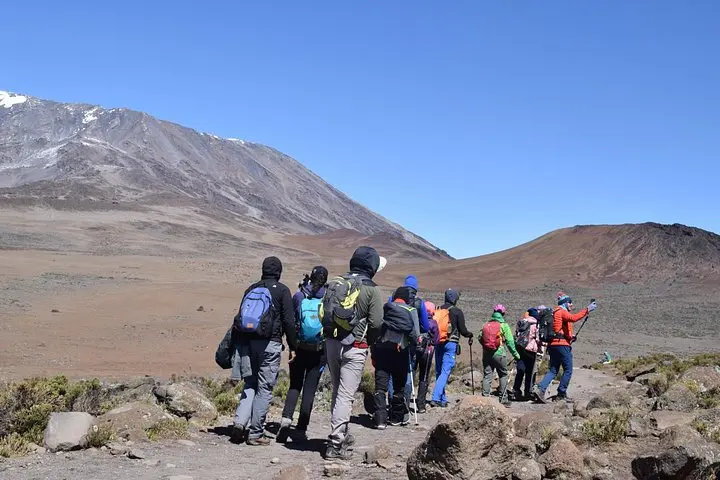
You start before dawn, on the humid edge of the rain forest where the trail slips between moss-dark trunks and the air smells of damp loam. Porters move like quiet shadows, headlamps bobbing; guides check boots and crampons while the mountain waits, weathered and indifferent, its upper flanks already hiding in clouds. By the time the trail punches above tree-line, the world opens—vast heath, wind-swept scree and a horizon bent by the cone of Kibo. The summit, Uhuru Peak at 5,895 meters, is small and hard-won, the final step across frozen volcanic sand more felt than seen.
Verified experiences and guided adventures in the surrounding area.
Operated by Zicasso Expeditions · Arusha, Kilimanjaro Region
You start before dawn, on the humid edge of the rain forest where the trail slips between moss-dark trunks and the air smells of damp loam. Porters move like quiet shadows, headlamps bobbing; guides check boots and crampons while the mountain waits, weathered and indifferent, its upper flanks already hiding in clouds. By the time the trail punches above tree-line, the world opens—vast heath, wind-swept scree and a horizon bent by the cone of Kibo. The summit, Uhuru Peak at 5,895 meters, is small and hard-won, the final step across frozen volcanic sand more felt than seen.
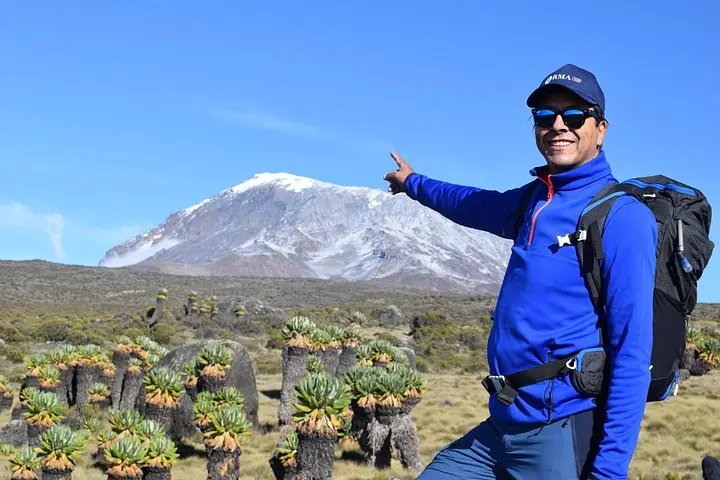
Geology and history sit close together here. Kilimanjaro is a stratovolcano made of three cones—Kibo, Mawenzi and Shira—its rock record a late-stage reminder of East Africa’s tectonic drama. The trail follows ecological bands: tropical rainforest, subalpine moorland, alpine desert and the icy rim. The Chagga people have farmed the mountain’s lower slopes for centuries; their terraced farms and coffee plantations around Moshi and Arusha are cultural touchpoints you pass on approach.
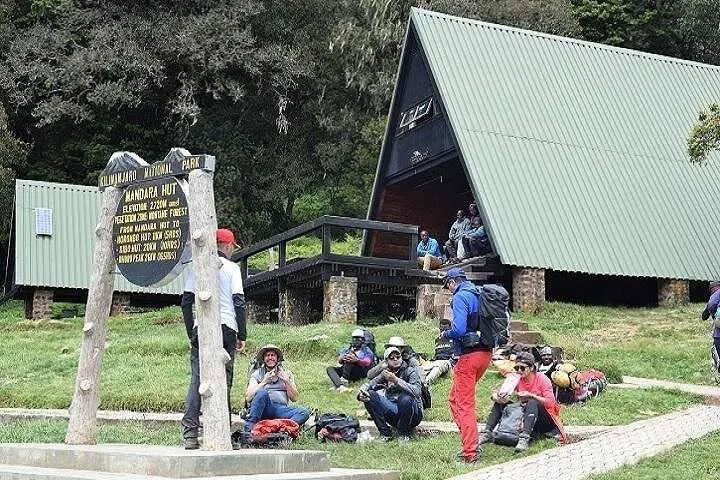
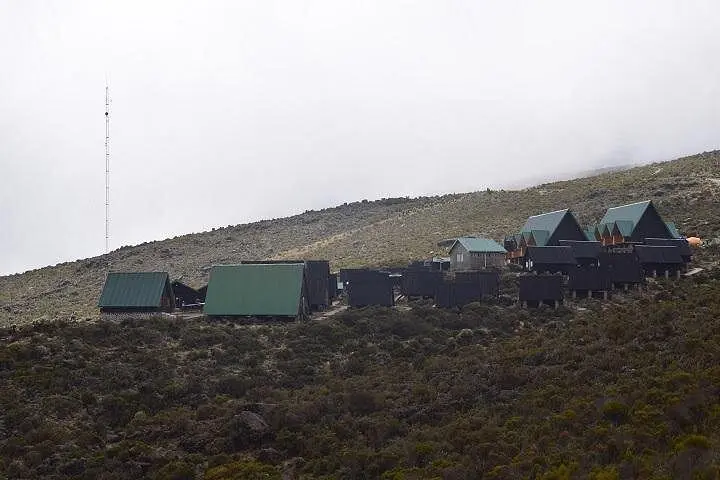
The Marangu Route is the classical, hut-based line up Kilimanjaro and is often chosen for its gradual profile and established camps: Mandara, Horombo and Kibo. Expect long days with steady uphill grades rather than technical climbing—this is primarily an altitude challenge. Acclimatization days, like the hike to Zebra Rocks and return to Horombo, are essential; they buy your body time to adapt and dramatically increase summit chances.
Practically, the climb is a logistical chain: private transfers from Kilimanjaro Airport to Arusha, park registration at Marangu Gate (1,860 m), and porters carrying group gear so you can carry a daypack. Nights in the huts reduce pack weight but don’t reduce the cold—summit night begins around midnight when temperatures drop sharply and the frozen volcanic ash makes footing firmer.
Plan for layered clothing, a reliable headlamp for the ascent, and boots with good ankle support. Hydration and slow pacing are non-negotiable; use the provided acclimatization windows and communicate openly with guides about headaches or nausea. Respect the mountain and its crew: tip porters appropriately and leave no trace—Kilimanjaro National Park enforces strict waste rules.
For travelers, the impression of Kilimanjaro is twofold: a physically exacting route through rapidly changing ecosystems, and an intimate encounter with East African mountain culture. Whether you’re tracking the sunrise across the saddle or standing on Uhuru Peak, the mountain will test rhythm, resolve and respect for altitude—and reward those who prepare.
No technical climbing skills are required; the route is a non-technical trek, but high-altitude fitness and experience on long ascents are important.
Dry seasons—January–March and June–October—offer more stable weather and clearer summit views; short rains in November and April–May can make trails muddy and visibility poor.
Yes, Marangu is the hut route and typically uses communal mountain huts at Mandara, Horombo and Kibo; bring a warm sleeping bag rated for cold temperatures.
Guides monitor symptoms, enforce rest and limited ascent when necessary; descending early is the primary treatment—carry personal medication if prescribed and communicate symptoms immediately.
Most visitors need a visa for Tanzania—check country-specific requirements. Routine vaccinations are recommended; consult a travel clinic for altitude and travel-specific advice.
Tipping is customary: plan approximately $15–25 per day for lead guides, $10–15 for assistant guides, and $5–10 per porter per day, adjusted for group size and service.
Zicasso Expeditions operates guided outdoor trips and adventures with an emphasis on safety, stewardship, and memorable experiences.
You start before dawn, on the humid edge of the rain forest where the trail slips between moss-dark trunks and the air smells of damp loam. Porters move like quiet shadows, headlamps bobbing; guides check boots and crampons while the mountain waits, weathered and indifferent, its upper flanks already hiding in clouds. By the time the trail punches above tree-line, the world opens—vast heath, wind-swept scree and a horizon bent by the cone of Kibo. The summit, Uhuru Peak at 5,895 meters, is small and hard-won, the final step across frozen volcanic sand more felt than seen.
You start before dawn, on the humid edge of the rain forest where the trail slips between moss-dark trunks and the air smells of damp loam. Porters move like quiet shadows, headlamps bobbing; guides check boots and crampons while the mountain waits, weathered and indifferent, its upper flanks already hiding in clouds. By the time the trail punches above tree-line, the world opens—vast heath, wind-swept scree and a horizon bent by the cone of Kibo. The summit, Uhuru Peak at 5,895 meters, is small and hard-won, the final step across frozen volcanic sand more felt than seen.
Geology and history sit close together here. Kilimanjaro is a stratovolcano made of three cones—Kibo, Mawenzi and Shira—its rock record a late-stage reminder of East Africa’s tectonic drama. The trail follows ecological bands: tropical rainforest, subalpine moorland, alpine desert and the icy rim. The Chagga people have farmed the mountain’s lower slopes for centuries; their terraced farms and coffee plantations around Moshi and Arusha are cultural touchpoints you pass on approach.
The Marangu Route is the classical, hut-based line up Kilimanjaro and is often chosen for its gradual profile and established camps: Mandara, Horombo and Kibo. Expect long days with steady uphill grades rather than technical climbing—this is primarily an altitude challenge. Acclimatization days, like the hike to Zebra Rocks and return to Horombo, are essential; they buy your body time to adapt and dramatically increase summit chances.
Practically, the climb is a logistical chain: private transfers from Kilimanjaro Airport to Arusha, park registration at Marangu Gate (1,860 m), and porters carrying group gear so you can carry a daypack. Nights in the huts reduce pack weight but don’t reduce the cold—summit night begins around midnight when temperatures drop sharply and the frozen volcanic ash makes footing firmer.
Plan for layered clothing, a reliable headlamp for the ascent, and boots with good ankle support. Hydration and slow pacing are non-negotiable; use the provided acclimatization windows and communicate openly with guides about headaches or nausea. Respect the mountain and its crew: tip porters appropriately and leave no trace—Kilimanjaro National Park enforces strict waste rules.
For travelers, the impression of Kilimanjaro is twofold: a physically exacting route through rapidly changing ecosystems, and an intimate encounter with East African mountain culture. Whether you’re tracking the sunrise across the saddle or standing on Uhuru Peak, the mountain will test rhythm, resolve and respect for altitude—and reward those who prepare.