THE ADVENTURE COLLECTIVE® · Independent discovery and booking for outdoor travel

A compact half-day that pairs the karst caves and pagodas of Marble Mountain with a guided walk through Hoi An’s UNESCO Old Town. Ideal for travelers who want geology, culture, and easy outdoor movement in a single morning or afternoon.
A compact half-day that pairs the karst caves and pagodas of Marble Mountain with a guided walk through Hoi An’s UNESCO Old Town. Ideal for travelers who want geology, culture, and easy outdoor movement in a single morning or afternoon.
You step out of a low-slung car and the first thing that grabs you is a vertical silhouette of limestone rising from rice fields and sand — Marble Mountain’s five peaks reach up like fingers pointing to Da Nang’s coastline. The elevator hums, the air smells faintly of incense, and the path winds into caves where sunlight slices through holes in the rock.
Verified experiences and guided adventures in the surrounding area.
Operated by Da Nang Hoi An Private Tours & Shore Excursion · Da Nang, Da Nang
You step out of a low-slung car and the first thing that grabs you is a vertical silhouette of limestone rising from rice fields and sand — Marble Mountain’s five peaks reach up like fingers pointing to Da Nang’s coastline. The elevator hums, the air smells faintly of incense, and the path winds into caves where sunlight slices through holes in the rock.
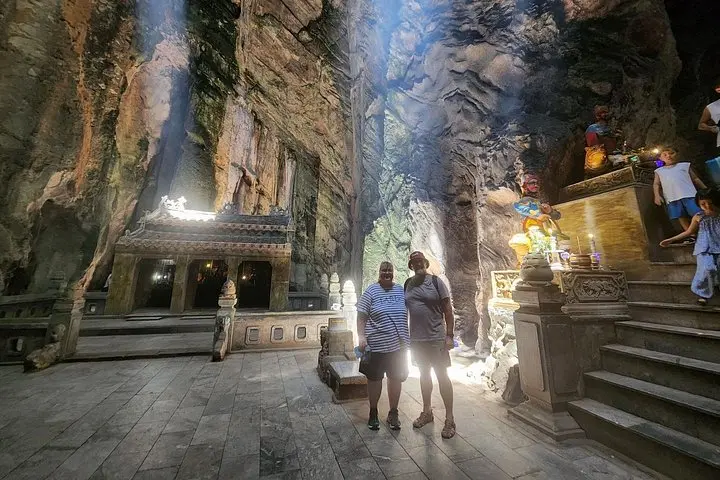
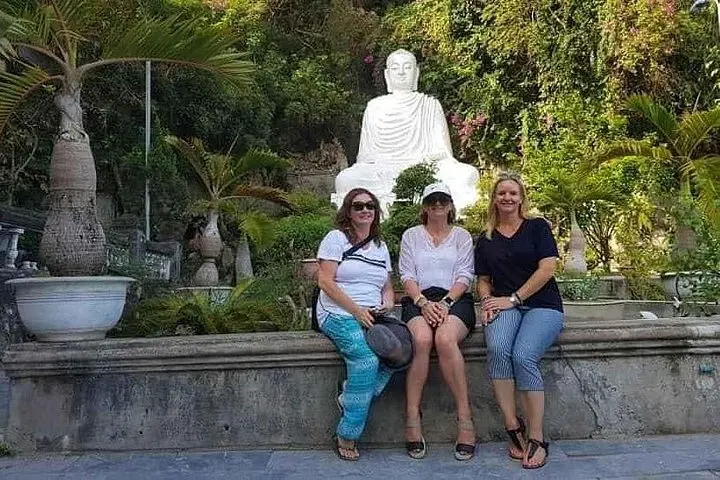
Marble Mountain (Ngu Hanh Son) is a cluster of karst hills formed from limestone and marble, shaped by millions of years of sea and tectonic activity. Pagodas cling to ledges; Huyen Khong cave served as a wartime field hospital and now holds lacquered altars and carved statues. Later, Hoi An’s Old Town stroll introduces red-tiled roofs, the 18th-century Japanese Covered Bridge, Chinese assembly halls, and merchant houses that trace the city’s role as a trading port on the South China Sea and a UNESCO World Heritage Site since 1999.
The tour balances compact outdoor scrambling — stone steps, short cave passages and cliffside lookouts — with a gentle cultural walk through narrow, lantern-lit lanes. Expect uneven steps, sticky humidity most of the year and frequent crowds at the main viewpoints.
Practical guidance: wear grippy shoes for stair climbs and cave floors, carry water and sunscreen, and plan morning or late-afternoon windows to avoid the midday heat. Bring small cash for temple donations or local snacks. If you want quieter photos, ask to linger at side grottos or explore Hoi An’s back alleys after the guided route. This half-day loop pairs natural karst geology with lived heritage — fast, accessible, and textured with local history and craft.
Typical pickup, Marble Mountain visit and the walking tour of Hoi An take about 5–6 hours total, timed as a morning or afternoon option.
Yes — the tour includes entrance tickets and the elevator to the Water Mountain area, as well as a licensed English-speaking guide and bottled water.
Children can participate but there are many stairs and uneven surfaces; those with limited mobility may find sections difficult despite elevator access.
Yes — both sites are open to independent visitors; the private tour simply combines transport, guide commentary, and a more efficient schedule.
Da Nang Hoi An Private Tours & Shore Excursion operates guided outdoor trips and adventures with an emphasis on safety, stewardship, and memorable experiences.


You step out of a low-slung car and the first thing that grabs you is a vertical silhouette of limestone rising from rice fields and sand — Marble Mountain’s five peaks reach up like fingers pointing to Da Nang’s coastline. The elevator hums, the air smells faintly of incense, and the path winds into caves where sunlight slices through holes in the rock.
You step out of a low-slung car and the first thing that grabs you is a vertical silhouette of limestone rising from rice fields and sand — Marble Mountain’s five peaks reach up like fingers pointing to Da Nang’s coastline. The elevator hums, the air smells faintly of incense, and the path winds into caves where sunlight slices through holes in the rock.
Marble Mountain (Ngu Hanh Son) is a cluster of karst hills formed from limestone and marble, shaped by millions of years of sea and tectonic activity. Pagodas cling to ledges; Huyen Khong cave served as a wartime field hospital and now holds lacquered altars and carved statues. Later, Hoi An’s Old Town stroll introduces red-tiled roofs, the 18th-century Japanese Covered Bridge, Chinese assembly halls, and merchant houses that trace the city’s role as a trading port on the South China Sea and a UNESCO World Heritage Site since 1999.
The tour balances compact outdoor scrambling — stone steps, short cave passages and cliffside lookouts — with a gentle cultural walk through narrow, lantern-lit lanes. Expect uneven steps, sticky humidity most of the year and frequent crowds at the main viewpoints.
Practical guidance: wear grippy shoes for stair climbs and cave floors, carry water and sunscreen, and plan morning or late-afternoon windows to avoid the midday heat. Bring small cash for temple donations or local snacks. If you want quieter photos, ask to linger at side grottos or explore Hoi An’s back alleys after the guided route. This half-day loop pairs natural karst geology with lived heritage — fast, accessible, and textured with local history and craft.