THE ADVENTURE COLLECTIVE® · Independent discovery and booking for outdoor travel

Combine Marble Mountain’s caves and pagodas with Hoi An’s lantern-lit streets on a single afternoon-to-evening tour. Expect karst viewpoints, a short sampan ride and a bustling night market framed by centuries-old architecture.
Combine Marble Mountain’s caves and pagodas with Hoi An’s lantern-lit streets on a single afternoon-to-evening tour. Expect karst viewpoints, a short sampan ride and a bustling night market framed by centuries-old architecture.
The afternoon light slides along limestone faces as you climb—or take the elevator—toward the peaks of Marble Mountain. Salt air from the nearby South China Sea mixes with incense from a hilltop pagoda; below, Da Nang’s skyline and the ocean edge stretch into a wide, luminous horizon.
Verified experiences and guided adventures in the surrounding area.
Operated by My Son Tours · Da Nang, Da Nang
The afternoon light slides along limestone faces as you climb—or take the elevator—toward the peaks of Marble Mountain. Salt air from the nearby South China Sea mixes with incense from a hilltop pagoda; below, Da Nang’s skyline and the ocean edge stretch into a wide, luminous horizon.
Marble Mountain (Ngu Hanh Son) is a cluster of five stone hills named after the classical elements—water, wood, metal, fire and earth—and its caves and pagodas were important spiritual sites long before the town of Hoi An rose as a trading port. During the 20th century some grottoes, like Huyen Khong, were pressed into wartime use as field hospitals, giving the site a layered human history alongside its karst geology.
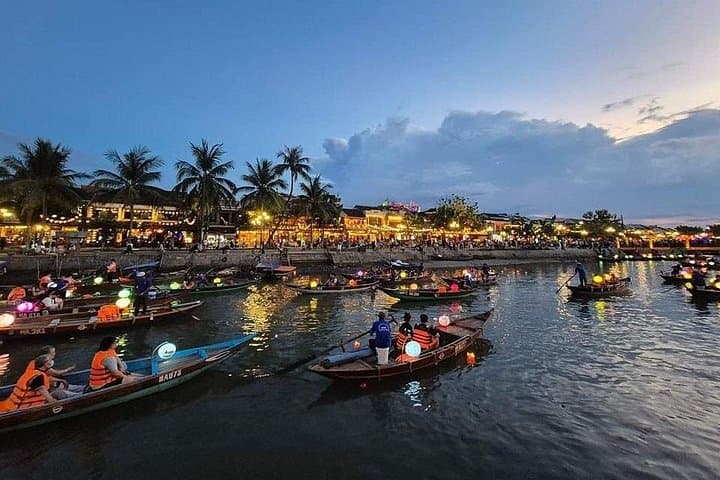
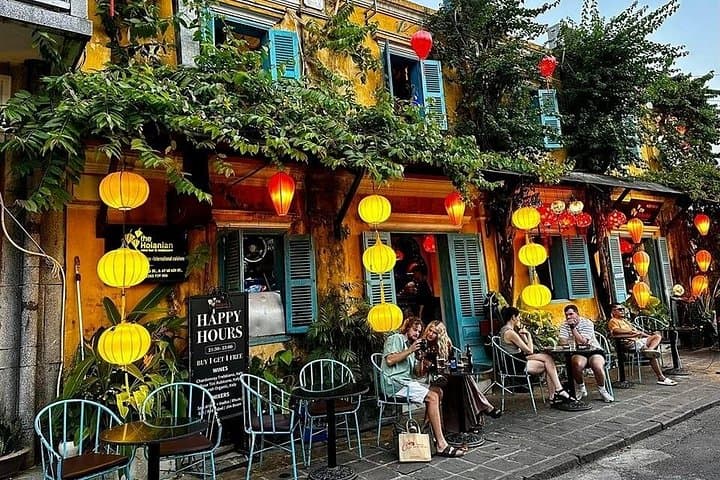
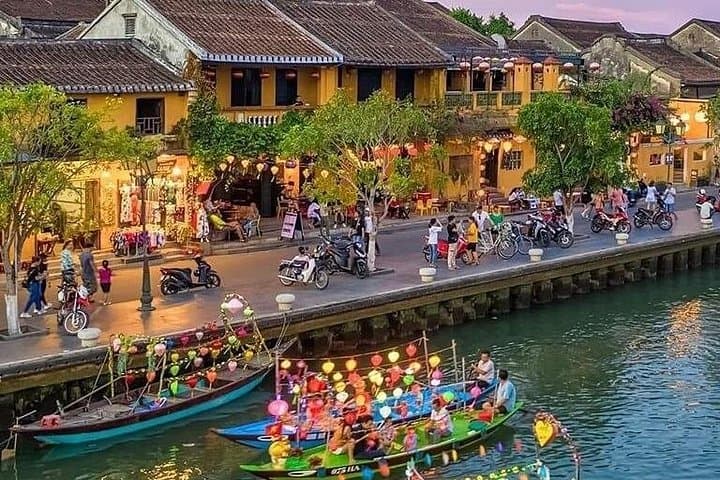
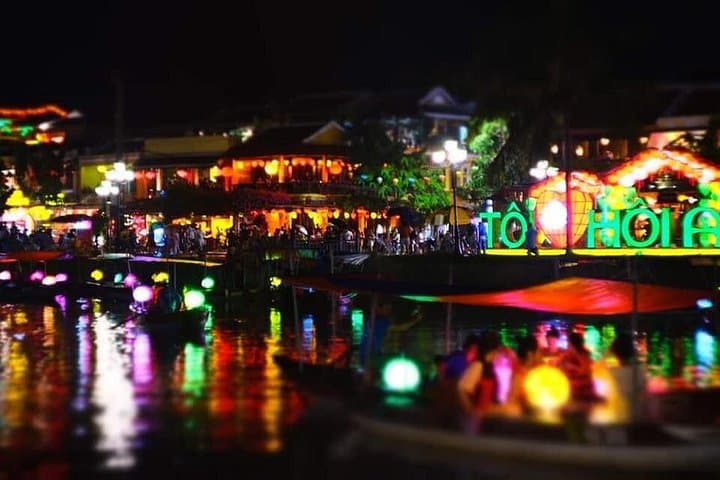
Hoi An’s Old Town is a compact walk through Chinese assembly halls, the Japanese Covered Bridge and narrow lanes that glow when lanterns are lit. A 20-minute sampan cruise along a tributary cuts through quieter riparian life—fishermen, houseboats and riverside markets—before the night market and lantern-lined streets invite sampling of street food and craft stalls.
Practical guidance: plan for uneven stone steps and short staircases inside caves; wear closed shoes and bring a light rain layer in wet months. Expect about seven hours for the combined itinerary, with moderate walking and short boat time. Carry small bills for market purchases, a bottle of water, and a camera with stabilized settings for low-light lantern scenes. The tour rewards travelers who want cultural context, accessible viewpoints and a compact mix of geology, history and riverine life in Central Vietnam.
The full tour takes about seven hours (afternoon to evening), including Marble Mountain, Hoi An walking, a 20-minute sampan ride, and time at the night market.
Yes—private pickup and drop-off from hotels in Da Nang or Hoi An are included in the tour.
Some areas have steep stairs and uneven surfaces; infants in strollers are possible for parts, but expect to carry children through stair sections and cave passages.
Bring small amounts of Vietnamese dong for market purchases and food; some venues accept cards, but many small vendors are cash-only.
My Son Tours operates guided outdoor trips and adventures with an emphasis on safety, stewardship, and memorable experiences.
The afternoon light slides along limestone faces as you climb—or take the elevator—toward the peaks of Marble Mountain. Salt air from the nearby South China Sea mixes with incense from a hilltop pagoda; below, Da Nang’s skyline and the ocean edge stretch into a wide, luminous horizon.
The afternoon light slides along limestone faces as you climb—or take the elevator—toward the peaks of Marble Mountain. Salt air from the nearby South China Sea mixes with incense from a hilltop pagoda; below, Da Nang’s skyline and the ocean edge stretch into a wide, luminous horizon.
Marble Mountain (Ngu Hanh Son) is a cluster of five stone hills named after the classical elements—water, wood, metal, fire and earth—and its caves and pagodas were important spiritual sites long before the town of Hoi An rose as a trading port. During the 20th century some grottoes, like Huyen Khong, were pressed into wartime use as field hospitals, giving the site a layered human history alongside its karst geology.
Hoi An’s Old Town is a compact walk through Chinese assembly halls, the Japanese Covered Bridge and narrow lanes that glow when lanterns are lit. A 20-minute sampan cruise along a tributary cuts through quieter riparian life—fishermen, houseboats and riverside markets—before the night market and lantern-lined streets invite sampling of street food and craft stalls.
Practical guidance: plan for uneven stone steps and short staircases inside caves; wear closed shoes and bring a light rain layer in wet months. Expect about seven hours for the combined itinerary, with moderate walking and short boat time. Carry small bills for market purchases, a bottle of water, and a camera with stabilized settings for low-light lantern scenes. The tour rewards travelers who want cultural context, accessible viewpoints and a compact mix of geology, history and riverine life in Central Vietnam.