THE ADVENTURE COLLECTIVE® · Independent discovery and booking for outdoor travel

Spend an afternoon sampling stone-carving workshops, climbing the Marble Mountains’ cave temples, then drift into Hoi An’s lantern-lit streets for a local dinner. This half-day to evening tour from Da Nang pairs geology, craft and UNESCO-level history in one accessible outing.
Spend an afternoon sampling stone-carving workshops, climbing the Marble Mountains’ cave temples, then drift into Hoi An’s lantern-lit streets for a local dinner. This half-day to evening tour from Da Nang pairs geology, craft and UNESCO-level history in one accessible outing.
The bus eases out of Da Nang as afternoon light flattens the coastline; by the time you reach Non Nuoc the stone workshops feel alive with the rhythm of chisels and sand. Climbing the Marble Mountains, you move through stairwells cut into limestone, pause at shrines where incense curls like a slow conversation, and step into caves where cool air replaces the day’s heat.
Verified experiences and guided adventures in the surrounding area.
Operated by Asia Package Travel · Da Nang, Da Nang
The bus eases out of Da Nang as afternoon light flattens the coastline; by the time you reach Non Nuoc the stone workshops feel alive with the rhythm of chisels and sand. Climbing the Marble Mountains, you move through stairwells cut into limestone, pause at shrines where incense curls like a slow conversation, and step into caves where cool air replaces the day’s heat.
Geologically the Marble Mountains (Ngu Hanh Son) are small limestone and marble outcrops—formed by faulting and uplift—that host cavernous passages and steep terraces. Historically the hills served as spiritual markers and flight paths for traders; nearby Hoi An, a UNESCO World Heritage port from the 15th–19th centuries, still shows Japanese, Chinese and Vietnamese architectural layers, most famously in the Japanese Covered Bridge.
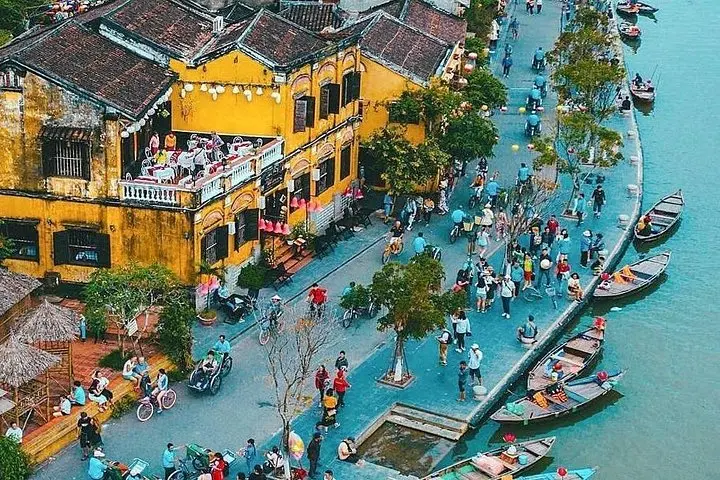
By evening the Hoai River guides you through Hoi An’s lantern-lit streets; sample cao lầu and cơm gà, then walk along riverfront stalls where paper lanterns bob like small moons.
Practical guidance: the tour runs about 5–6 hours with hotel pickup in Da Nang. Expect dozens of stone steps and uneven paths at Marble Mountains—comfortable, closed-toe shoes are essential. Bring a small flashlight if you plan to explore deeper cave mouths, and a light rain jacket in the wet season. The tour includes entrance fees, dinner and an English-speaking guide; it’s a compact mix of nature, craft demonstrations and historic streets best enjoyed at a steady pace.
Yes — the tour includes pickup and drop-off from most hotels in central Da Nang as stated on booking; confirm your pickup point at reservation.
The tour notes that entrance fees and a light Hoi An dinner are included; if you have dietary restrictions inform the operator in advance.
Expect multiple flights of stone stairs and uneven cave paths at Marble Mountains and a fair amount of walking on flat streets in Hoi An; the operator classifies the tour as suitable for all fitness levels but mobility limitations may be challenging.
Yes — families often join, but supervise children on steep steps and near temple ledges; some younger kids may find the stair climbs tiring.
Asia Package Travel operates guided outdoor trips and adventures with an emphasis on safety, stewardship, and memorable experiences.
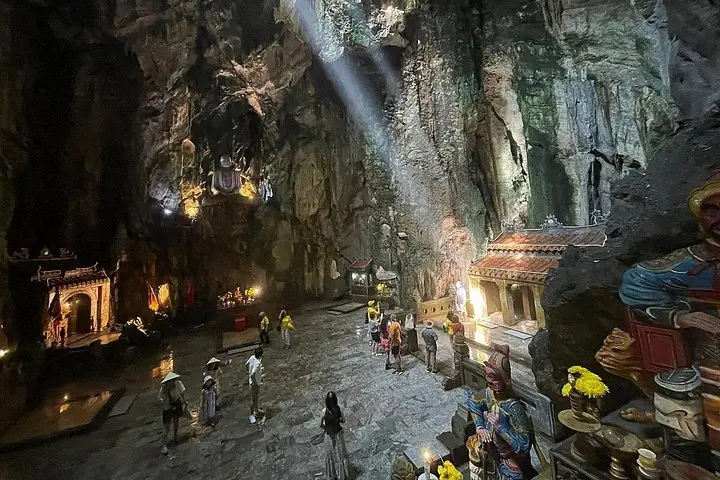

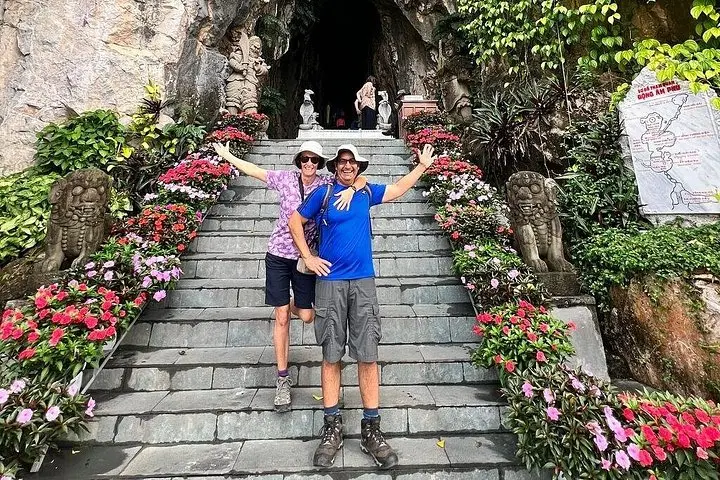
The bus eases out of Da Nang as afternoon light flattens the coastline; by the time you reach Non Nuoc the stone workshops feel alive with the rhythm of chisels and sand. Climbing the Marble Mountains, you move through stairwells cut into limestone, pause at shrines where incense curls like a slow conversation, and step into caves where cool air replaces the day’s heat.
The bus eases out of Da Nang as afternoon light flattens the coastline; by the time you reach Non Nuoc the stone workshops feel alive with the rhythm of chisels and sand. Climbing the Marble Mountains, you move through stairwells cut into limestone, pause at shrines where incense curls like a slow conversation, and step into caves where cool air replaces the day’s heat.
Geologically the Marble Mountains (Ngu Hanh Son) are small limestone and marble outcrops—formed by faulting and uplift—that host cavernous passages and steep terraces. Historically the hills served as spiritual markers and flight paths for traders; nearby Hoi An, a UNESCO World Heritage port from the 15th–19th centuries, still shows Japanese, Chinese and Vietnamese architectural layers, most famously in the Japanese Covered Bridge.
By evening the Hoai River guides you through Hoi An’s lantern-lit streets; sample cao lầu and cơm gà, then walk along riverfront stalls where paper lanterns bob like small moons.
Practical guidance: the tour runs about 5–6 hours with hotel pickup in Da Nang. Expect dozens of stone steps and uneven paths at Marble Mountains—comfortable, closed-toe shoes are essential. Bring a small flashlight if you plan to explore deeper cave mouths, and a light rain jacket in the wet season. The tour includes entrance fees, dinner and an English-speaking guide; it’s a compact mix of nature, craft demonstrations and historic streets best enjoyed at a steady pace.