THE ADVENTURE COLLECTIVE® · Independent discovery and booking for outdoor travel

Climb carved limestone steps at the Marble Mountains, then stroll Hoi An’s UNESCO-listed Old Town on a private half-day tour. Expect caves, pagodas, riverside lanes and a local meal—perfect for travelers who want culture and coastal views in one outing.
Climb carved limestone steps at the Marble Mountains, then stroll Hoi An’s UNESCO-listed Old Town on a private half-day tour. Expect caves, pagodas, riverside lanes and a local meal—perfect for travelers who want culture and coastal views in one outing.
You step out of the minivan and the heat changes—salt air from the East Sea, the hard white of limestone cliffs, and narrow stone steps that climb toward small pagodas and cavern mouths. The Marble Mountains rise like a scrim of carved stone against Da Nang’s skyline; below, ancient Hoi An waits along the Thu Bon River, its tiled roofs and lantern-lit alleys a quieter counterpoint to the coastal ridgeline.
Verified experiences and guided adventures in the surrounding area.
Operated by Andy hoi an online Tours · Hoi An, Quang Nam
You step out of the minivan and the heat changes—salt air from the East Sea, the hard white of limestone cliffs, and narrow stone steps that climb toward small pagodas and cavern mouths. The Marble Mountains rise like a scrim of carved stone against Da Nang’s skyline; below, ancient Hoi An waits along the Thu Bon River, its tiled roofs and lantern-lit alleys a quieter counterpoint to the coastal ridgeline.
Geology here is hands-on: five marble and limestone hills formed by uplift and erosion, each named after an element. Thuy Son, the central peak, is pocked with caves where Buddhist shrines sit beside wartime repairs—Huyen Khong cave was used as a field hospital during the Vietnam War. Hoi An’s Old Town speaks a different past: a once-busy trading port where Japanese merchants built a covered bridge and Chinese assembly halls anchor neighborhoods of timber-framed houses.
Expect steep carved steps, cool cave chambers with low light, and viewpoints that open to the city and the sea. The walking tour through Hoi An is mostly flat, best enjoyed in the morning or late afternoon when light softens the façades and the market hums with activity. Lunch or dinner at a local restaurant offers a concrete taste of central Vietnamese flavors—cao lầu, white rose dumplings, and fresh herbs.
Practical tip: wear grippy shoes for uneven stone stairways, bring sun protection, and carry a small daypack. Mobility varies: some caves and pagodas require stooping and stairs. Plan for 6–7 hours total: pickup, Marble Mountains exploration, a guided walk in Hoi An, and time for shopping or a riverside coffee.
The tour runs about 6–7 hours and includes private round-trip transfer from hotels in Da Nang or Hoi An.
Yes—entrance tickets for Marble Mountains and Hoi An plus a local lunch or dinner are included in the tour price.
Children can join but must be supervised; the tour involves many stairs and cave passages and is not recommended for travelers with limited mobility or serious cardiovascular conditions.
Yes—visits include the Non Nuoc marble carving village and free time in Hoi An’s Old Town for shopping at craft shops and tailors.
Andy hoi an online Tours operates guided outdoor trips and adventures with an emphasis on safety, stewardship, and memorable experiences.

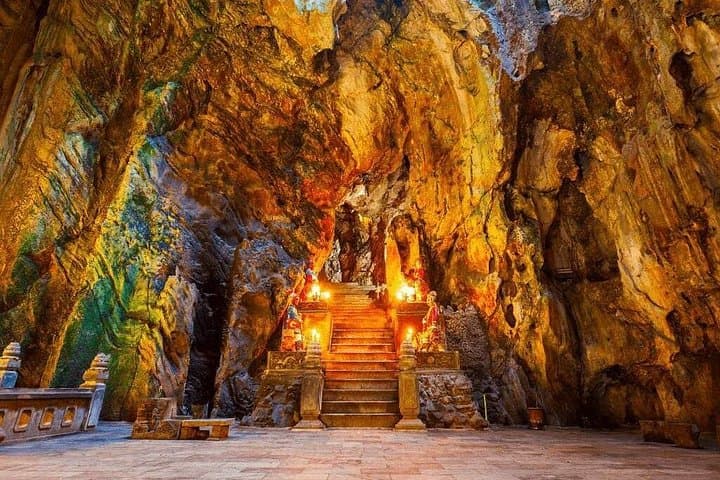


You step out of the minivan and the heat changes—salt air from the East Sea, the hard white of limestone cliffs, and narrow stone steps that climb toward small pagodas and cavern mouths. The Marble Mountains rise like a scrim of carved stone against Da Nang’s skyline; below, ancient Hoi An waits along the Thu Bon River, its tiled roofs and lantern-lit alleys a quieter counterpoint to the coastal ridgeline.
You step out of the minivan and the heat changes—salt air from the East Sea, the hard white of limestone cliffs, and narrow stone steps that climb toward small pagodas and cavern mouths. The Marble Mountains rise like a scrim of carved stone against Da Nang’s skyline; below, ancient Hoi An waits along the Thu Bon River, its tiled roofs and lantern-lit alleys a quieter counterpoint to the coastal ridgeline.
Geology here is hands-on: five marble and limestone hills formed by uplift and erosion, each named after an element. Thuy Son, the central peak, is pocked with caves where Buddhist shrines sit beside wartime repairs—Huyen Khong cave was used as a field hospital during the Vietnam War. Hoi An’s Old Town speaks a different past: a once-busy trading port where Japanese merchants built a covered bridge and Chinese assembly halls anchor neighborhoods of timber-framed houses.
Expect steep carved steps, cool cave chambers with low light, and viewpoints that open to the city and the sea. The walking tour through Hoi An is mostly flat, best enjoyed in the morning or late afternoon when light softens the façades and the market hums with activity. Lunch or dinner at a local restaurant offers a concrete taste of central Vietnamese flavors—cao lầu, white rose dumplings, and fresh herbs.
Practical tip: wear grippy shoes for uneven stone stairways, bring sun protection, and carry a small daypack. Mobility varies: some caves and pagodas require stooping and stairs. Plan for 6–7 hours total: pickup, Marble Mountains exploration, a guided walk in Hoi An, and time for shopping or a riverside coffee.