THE ADVENTURE COLLECTIVE® · Independent discovery and booking for outdoor travel

Climb carved marble steps, visit a towering Lady Buddha statue, and explore Cham sculptures on a single full-day loop from Da Nang. Expect stairs, coastal views, traditional stone-carving villages, and a lively market finish.
Climb carved marble steps, visit a towering Lady Buddha statue, and explore Cham sculptures on a single full-day loop from Da Nang. Expect stairs, coastal views, traditional stone-carving villages, and a lively market finish.
You start on stone steps hewn into marble, the wind carrying salt from the nearby sea and prayer incense from a hilltop pagoda. The climb up Marble Mountains pushes you through low caves and cliffside lookouts where the ocean pulls the horizon taut; at times the mountains seem to lean into the city, daring you to look back at Da Nang below.
Verified experiences and guided adventures in the surrounding area.
Operated by Simply Vietnam Travel · Da Nang, Da Nang
You start on stone steps hewn into marble, the wind carrying salt from the nearby sea and prayer incense from a hilltop pagoda. The climb up Marble Mountains pushes you through low caves and cliffside lookouts where the ocean pulls the horizon taut; at times the mountains seem to lean into the city, daring you to look back at Da Nang below.
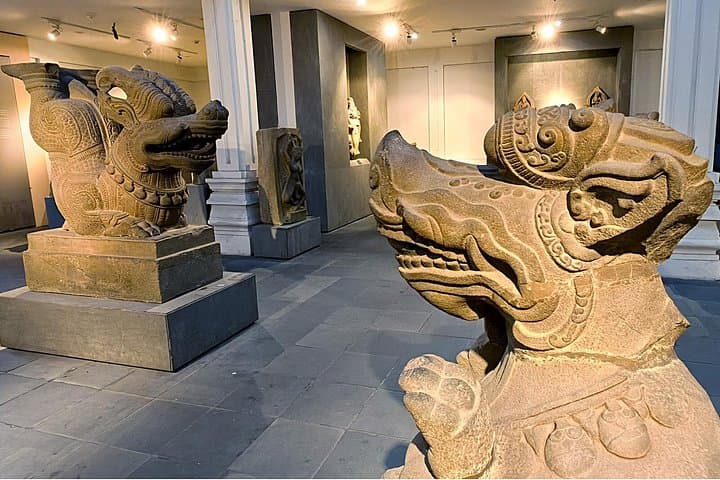
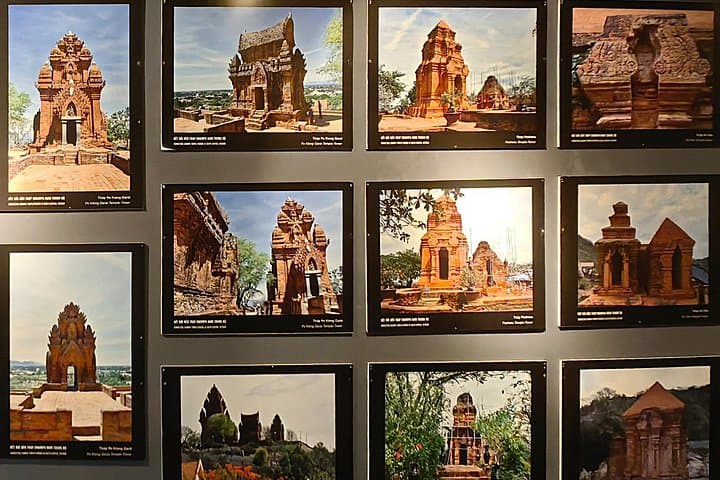
Geologically the five peaks of Ngu Hanh Son are marble and limestone, carved over millennia into caverns and grottoes that local Buddhists and Cham-era Hindu worshippers adapted as sacred spaces. The Cham Museum later houses sandstone reliefs and sculptures that trace coastal central Vietnam’s civilization from the 5th to 15th centuries. Nearby, Non Nuoc stone-carving villages keep a 300+-year craft alive—hands still coax figures from blocks of local marble.
Culturally this route stitches religious practice, artisan craft, and market life: Linh Ung Pagoda’s 67m Lady Buddha watches fishing boats and commuters alike, while Han Market launches a sensory assault of spices, silk, and bargaining rhythms.
Practical guidance: plan an early start to avoid midday heat; there are many stairs and uneven rock surfaces so wear sturdy closed shoes. Dress respectfully for pagodas (shoulders and knees covered), bring cash for market stalls and tips, and pack a refillable water bottle—the tour includes lunch but not constant shade. Cameras and a patient pace reward you with quiet shrine corners and sweeping views. Respect local worship rules, don’t feed monkeys, and leave no trace in caves: these fragile sites age quickly under tourist pressure.
Yes—pick up from Hoi An and Da Nang hotels is listed as included in the tour.
It’s rated easy but involves many stairs and uneven surfaces; those with limited mobility may find some sections difficult.
Entrance to Marble Mountains and the Cham Museum are included; check the operator details for any recent fee changes.
Yes—the itinerary typically allows about an hour at Han Market for souvenirs and snacks.
Simply Vietnam Travel operates guided outdoor trips and adventures with an emphasis on safety, stewardship, and memorable experiences.


You start on stone steps hewn into marble, the wind carrying salt from the nearby sea and prayer incense from a hilltop pagoda. The climb up Marble Mountains pushes you through low caves and cliffside lookouts where the ocean pulls the horizon taut; at times the mountains seem to lean into the city, daring you to look back at Da Nang below.
You start on stone steps hewn into marble, the wind carrying salt from the nearby sea and prayer incense from a hilltop pagoda. The climb up Marble Mountains pushes you through low caves and cliffside lookouts where the ocean pulls the horizon taut; at times the mountains seem to lean into the city, daring you to look back at Da Nang below.
Geologically the five peaks of Ngu Hanh Son are marble and limestone, carved over millennia into caverns and grottoes that local Buddhists and Cham-era Hindu worshippers adapted as sacred spaces. The Cham Museum later houses sandstone reliefs and sculptures that trace coastal central Vietnam’s civilization from the 5th to 15th centuries. Nearby, Non Nuoc stone-carving villages keep a 300+-year craft alive—hands still coax figures from blocks of local marble.
Culturally this route stitches religious practice, artisan craft, and market life: Linh Ung Pagoda’s 67m Lady Buddha watches fishing boats and commuters alike, while Han Market launches a sensory assault of spices, silk, and bargaining rhythms.
Practical guidance: plan an early start to avoid midday heat; there are many stairs and uneven rock surfaces so wear sturdy closed shoes. Dress respectfully for pagodas (shoulders and knees covered), bring cash for market stalls and tips, and pack a refillable water bottle—the tour includes lunch but not constant shade. Cameras and a patient pace reward you with quiet shrine corners and sweeping views. Respect local worship rules, don’t feed monkeys, and leave no trace in caves: these fragile sites age quickly under tourist pressure.