THE ADVENTURE COLLECTIVE® · Independent discovery and booking for outdoor travel

Climb marble stairs, enter shadowed caverns and stand beneath Lady Buddha on a focused private tour from Da Nang. This 4–5 hour experience pairs dramatic coastal views with Buddhist grottoes and local stone‑carving culture.
Climb marble stairs, enter shadowed caverns and stand beneath Lady Buddha on a focused private tour from Da Nang. This 4–5 hour experience pairs dramatic coastal views with Buddhist grottoes and local stone‑carving culture.
You step from a cool air‑conditioned van into humid sea air, the limestone slopes of the Marble Mountains rising like a small archipelago of stone between Da Nang and Hoi An. The walk begins with steps worn smooth by generations: stone stairs that climb through bonsai gardens and past weathered shrines until the city and coastline flatten into a coastal ribbon below.
Verified experiences and guided adventures in the surrounding area.
Operated by Local Tours Ha Giang · Da Nang, Da Nang
You step from a cool air‑conditioned van into humid sea air, the limestone slopes of the Marble Mountains rising like a small archipelago of stone between Da Nang and Hoi An. The walk begins with steps worn smooth by generations: stone stairs that climb through bonsai gardens and past weathered shrines until the city and coastline flatten into a coastal ribbon below.
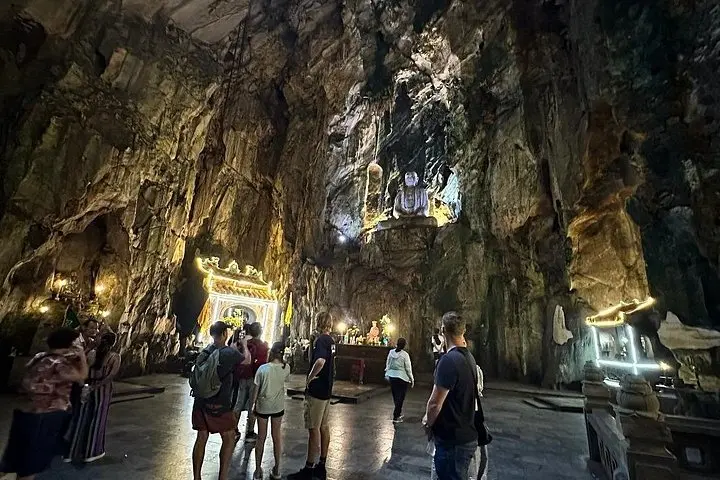
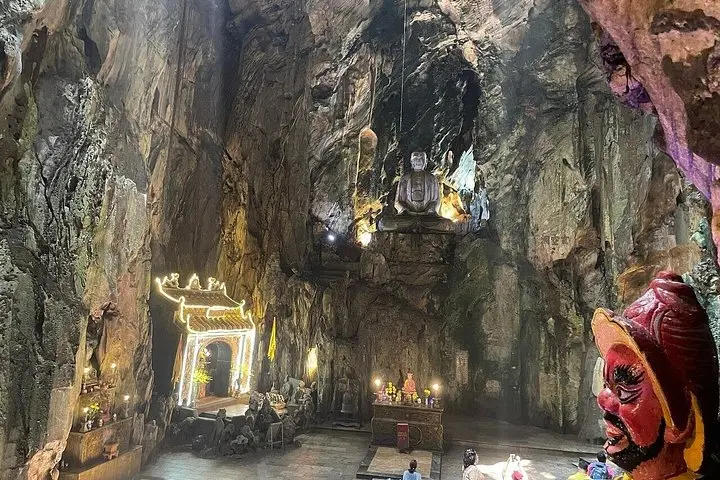
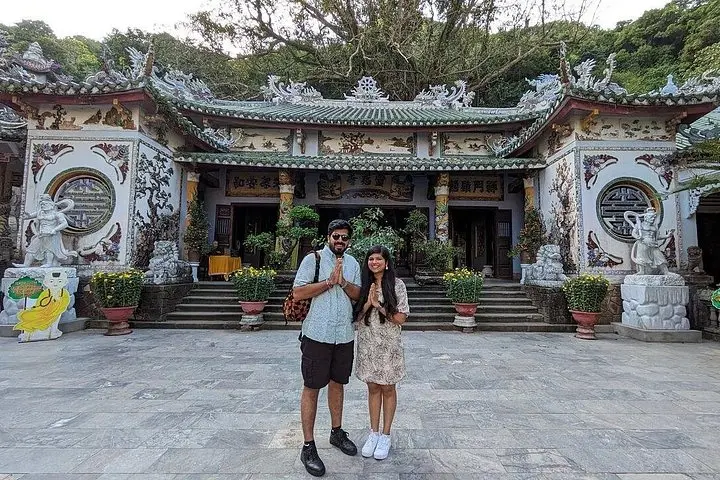
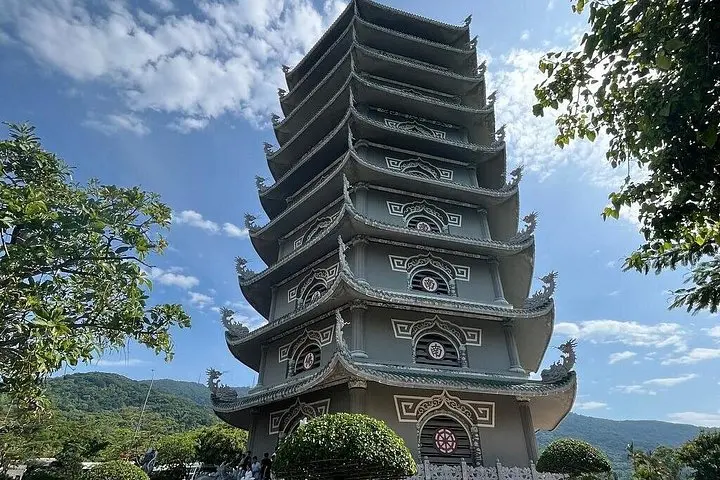
These five marble and limestone hills—Ngu Hanh Son—are geologically young karst but culturally old: Buddhist sanctuaries, Hindu grottoes and stone‑carving workshops have occupied the slopes for centuries. Am Phu (‘‘Hell Cave’’) is a low‑lit cavern of natural stalactites and carved altars where incense and geology share the same space, while Linh Ung Pagoda and the Lady Buddha on nearby Monkey Mountain present wide sea views and neatly tended temple grounds.
Expect roughly 100 m of elevation gain if you climb to the main viewpoints, and 100–200 uneven stone steps on the steeper routes; terrain alternates between paved terraces, narrow staircases and dim cave passages. The private tour covers transfers (about a 90 km round trip from central Da Nang/Hoi An), entrance fees and a guide, and typically runs 4–5 hours.
Practical edge: go in the morning to avoid heat and crowds, wear sturdy shoes for wet stone, carry water and a light cover for sudden tropical showers. Respect temple rules—remove hats and speak quietly—and leave space for local worship. The route rewards short climbs with panoramic coastal views and intimate encounters with centuries of craft and belief.
The private tour runs about 4–5 hours and typically includes hotel pickup/drop‑off, entrance fees for Marble Mountains and Am Phu Cave, an English‑speaking guide, and one bottle of water (plus lunch on morning departures as noted).
The route involves uneven steps and short climbs (about 100 m elevation gain to top viewpoints). It’s suitable for children who can manage stairs but not recommended for those with serious mobility or spine issues.
Yes—Non Nuoc village near the mountains has active marble‑carving workshops where you can watch artisans and buy local stone crafts; consider these purchases as direct support for local craft traditions.
Yes—the typical private itinerary covers Linh Ung Pagoda (Lady Buddha) on Monkey Mountain first, then Marble Mountains and Am Phu Cave; travel time is short by van between sites.
Local Tours Ha Giang operates guided outdoor trips and adventures with an emphasis on safety, stewardship, and memorable experiences.
You step from a cool air‑conditioned van into humid sea air, the limestone slopes of the Marble Mountains rising like a small archipelago of stone between Da Nang and Hoi An. The walk begins with steps worn smooth by generations: stone stairs that climb through bonsai gardens and past weathered shrines until the city and coastline flatten into a coastal ribbon below.
You step from a cool air‑conditioned van into humid sea air, the limestone slopes of the Marble Mountains rising like a small archipelago of stone between Da Nang and Hoi An. The walk begins with steps worn smooth by generations: stone stairs that climb through bonsai gardens and past weathered shrines until the city and coastline flatten into a coastal ribbon below.
These five marble and limestone hills—Ngu Hanh Son—are geologically young karst but culturally old: Buddhist sanctuaries, Hindu grottoes and stone‑carving workshops have occupied the slopes for centuries. Am Phu (‘‘Hell Cave’’) is a low‑lit cavern of natural stalactites and carved altars where incense and geology share the same space, while Linh Ung Pagoda and the Lady Buddha on nearby Monkey Mountain present wide sea views and neatly tended temple grounds.
Expect roughly 100 m of elevation gain if you climb to the main viewpoints, and 100–200 uneven stone steps on the steeper routes; terrain alternates between paved terraces, narrow staircases and dim cave passages. The private tour covers transfers (about a 90 km round trip from central Da Nang/Hoi An), entrance fees and a guide, and typically runs 4–5 hours.
Practical edge: go in the morning to avoid heat and crowds, wear sturdy shoes for wet stone, carry water and a light cover for sudden tropical showers. Respect temple rules—remove hats and speak quietly—and leave space for local worship. The route rewards short climbs with panoramic coastal views and intimate encounters with centuries of craft and belief.