THE ADVENTURE COLLECTIVE® · Independent discovery and booking for outdoor travel

Explore Da Nang’s coastal views, the marble caves of Ngũ Hành Sơn, and Hoi An’s lantern-lit streets in a full-day cultural loop. Expect temple terraces, artisan workshops, and an 8‑hour itinerary with moderate walking and stairs.
Explore Da Nang’s coastal views, the marble caves of Ngũ Hành Sơn, and Hoi An’s lantern-lit streets in a full-day cultural loop. Expect temple terraces, artisan workshops, and an 8‑hour itinerary with moderate walking and stairs.
You step off the air-conditioned van into humid sea air, palms brushing a cobalt skyline, and the first silhouette that grabs you is the white figure of Linh Ung—an imposing bodhisattva overlooking Da Nang Bay. The city slips away as you follow narrow flights of stone up to pagoda terraces, where prayer flags catch the salt breeze and views open toward the South China Sea.
Verified experiences and guided adventures in the surrounding area.
Operated by Best Vietnam Tours · Da Nang, Da Nang
You step off the air-conditioned van into humid sea air, palms brushing a cobalt skyline, and the first silhouette that grabs you is the white figure of Linh Ung—an imposing bodhisattva overlooking Da Nang Bay. The city slips away as you follow narrow flights of stone up to pagoda terraces, where prayer flags catch the salt breeze and views open toward the South China Sea.
Geology here is literal: the Marble Mountains (Ngũ Hành Sơn) are five marble and limestone outcrops that rise from lowland rice paddies, their caves and stairwells carved and repurposed over centuries. Artisans in Non Nuoc Village quarry and shape the same stone into household altars and delicate sculptures—craft that helped build the region’s reputation for stonework.
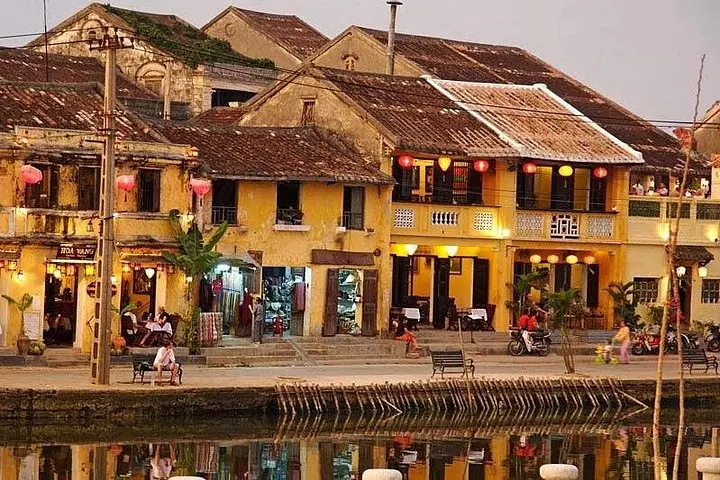
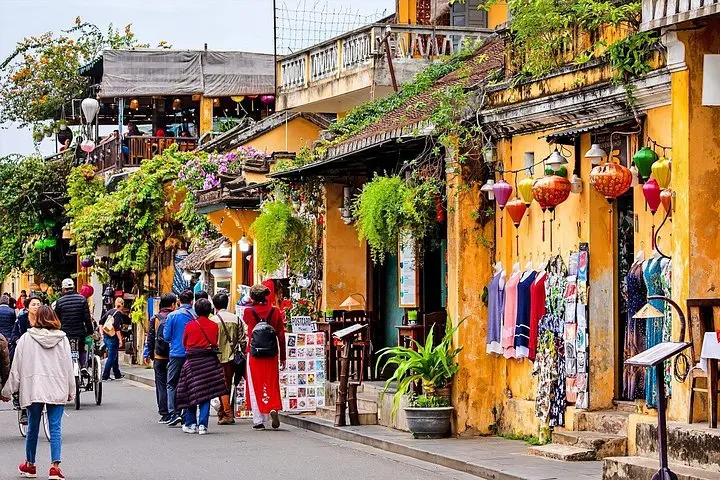
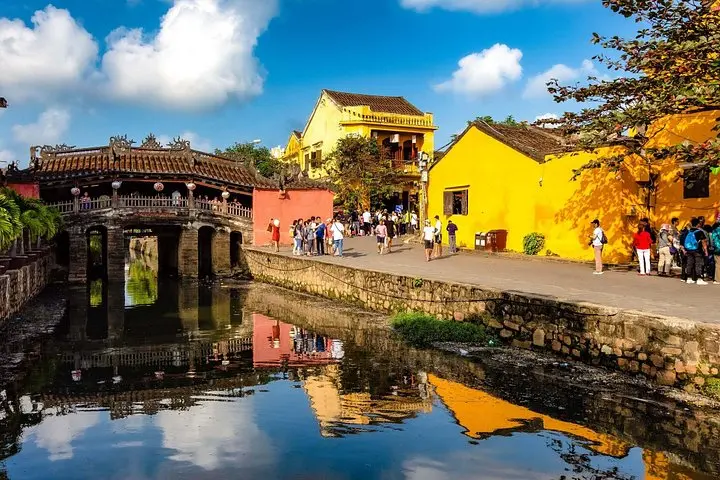
Hoi An’s old town offers a contrasting rhythm: timber shop-houses, the Japanese Covered Bridge, and lantern-lined canals that glow after dusk. From the 15th to 19th centuries this riverside port threaded Asia and Europe, and its preserved streets still read as living history.
Practical guide: expect roughly an 8-hour day with driving between sites, moderate walking on uneven steps and through caves, and temple etiquette (shoulders and knees covered). Bring a refillable water bottle—the tour includes a bottled water but you’ll want more—good grip shoes, and a light rain shell in the wet season. Photography is exceptional at golden hour in Hoi An and from the pagoda terraces at Linh Ung; aim to time your visit for late afternoon to avoid mid-day heat. This loop is accessible for most fitness levels but includes stair climbs and narrow cave passages—move deliberately, respect sacred spaces, and let the coast’s wind push you forward.
The tour runs about 8 hours (approximately 13:30–21:00 on the advertised schedule) with several short walks and stair climbs at each site and driving between locations.
Entrance fees listed in the itinerary are included and the tour provides transport in an air-conditioned vehicle; bottled water and an English-speaking guide are also provided.
The tour is family-friendly but includes steps and cave passages that may be difficult for mobility-impaired travelers; infants must sit on an adult’s lap during transport.
Late afternoon into early evening is ideal—softer light for Hoi An’s lanterns and cooler temperatures for climbing Marble Mountains.
Best Vietnam Tours operates guided outdoor trips and adventures with an emphasis on safety, stewardship, and memorable experiences.

You step off the air-conditioned van into humid sea air, palms brushing a cobalt skyline, and the first silhouette that grabs you is the white figure of Linh Ung—an imposing bodhisattva overlooking Da Nang Bay. The city slips away as you follow narrow flights of stone up to pagoda terraces, where prayer flags catch the salt breeze and views open toward the South China Sea.
You step off the air-conditioned van into humid sea air, palms brushing a cobalt skyline, and the first silhouette that grabs you is the white figure of Linh Ung—an imposing bodhisattva overlooking Da Nang Bay. The city slips away as you follow narrow flights of stone up to pagoda terraces, where prayer flags catch the salt breeze and views open toward the South China Sea.
Geology here is literal: the Marble Mountains (Ngũ Hành Sơn) are five marble and limestone outcrops that rise from lowland rice paddies, their caves and stairwells carved and repurposed over centuries. Artisans in Non Nuoc Village quarry and shape the same stone into household altars and delicate sculptures—craft that helped build the region’s reputation for stonework.
Hoi An’s old town offers a contrasting rhythm: timber shop-houses, the Japanese Covered Bridge, and lantern-lined canals that glow after dusk. From the 15th to 19th centuries this riverside port threaded Asia and Europe, and its preserved streets still read as living history.
Practical guide: expect roughly an 8-hour day with driving between sites, moderate walking on uneven steps and through caves, and temple etiquette (shoulders and knees covered). Bring a refillable water bottle—the tour includes a bottled water but you’ll want more—good grip shoes, and a light rain shell in the wet season. Photography is exceptional at golden hour in Hoi An and from the pagoda terraces at Linh Ung; aim to time your visit for late afternoon to avoid mid-day heat. This loop is accessible for most fitness levels but includes stair climbs and narrow cave passages—move deliberately, respect sacred spaces, and let the coast’s wind push you forward.