THE ADVENTURE COLLECTIVE® · Independent discovery and booking for outdoor travel

Half-day tour from Hoi An to Marble Mountains and Son Tra (Monkey Mountain) mixes short climbs, sacred grottoes, a centuries‑old marble village, and sweeping coastal views from Lady Buddha. Practical for travelers who want culture, geology, and panorama in one outing.
Half-day tour from Hoi An to Marble Mountains and Son Tra (Monkey Mountain) mixes short climbs, sacred grottoes, a centuries‑old marble village, and sweeping coastal views from Lady Buddha. Practical for travelers who want culture, geology, and panorama in one outing.
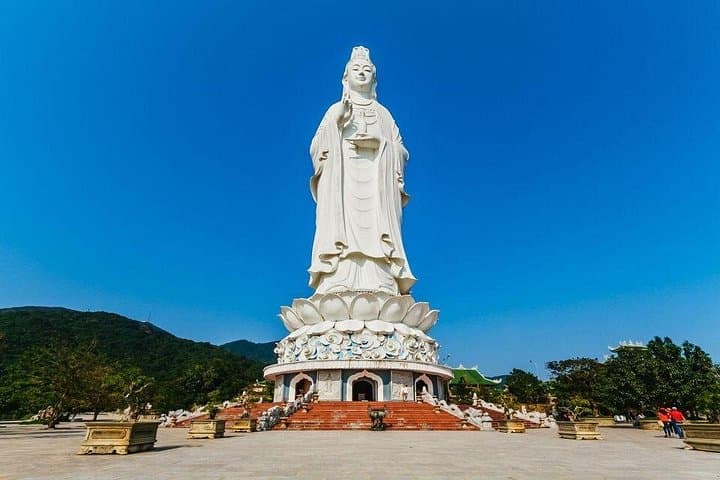
You step off the minivan into warm coastal air and a cluster of stone hills rising like broken teeth against the sea. Marble Mountain’s stairways cut through shadowed caverns where incense smoke still curls; later the road climbs Son Tra Peninsula and the Lady Buddha watches the city and ocean with a calm, 67-meter gaze.
Verified experiences and guided adventures in the surrounding area.
Operated by Bay Mau Tour · Da Nang, Da Nang
You step off the minivan into warm coastal air and a cluster of stone hills rising like broken teeth against the sea. Marble Mountain’s stairways cut through shadowed caverns where incense smoke still curls; later the road climbs Son Tra Peninsula and the Lady Buddha watches the city and ocean with a calm, 67-meter gaze.
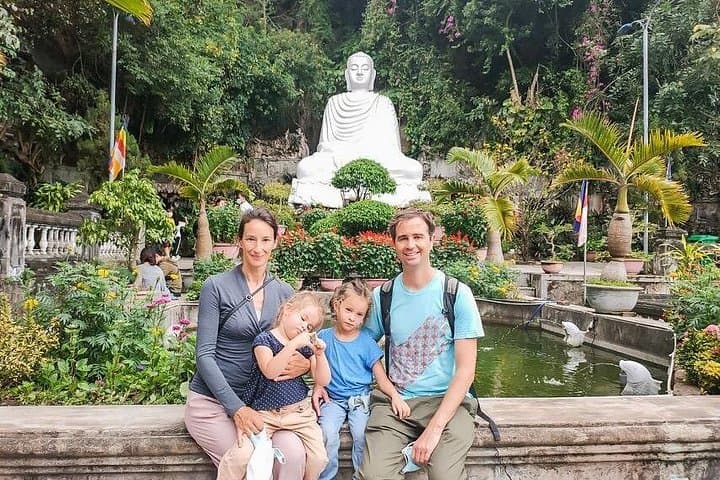
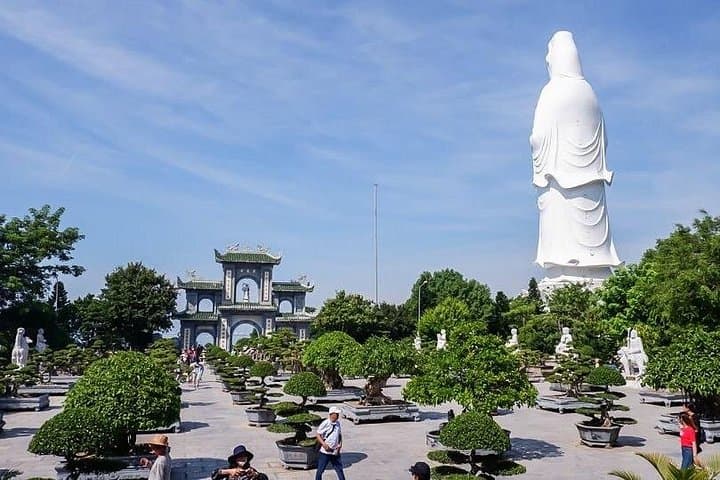
Marble Mountain (Ngu Hanh Son) is a compact complex of limestone and marble karst that bears Buddhist and Hindu grottoes carved over centuries. At the mountains’ base, a 300‑year marble village keeps traditional stone carving alive; on Son Tra the Linh Ung pagoda and Lady Buddha were constructed in recent decades but rest on a landscape shaped by erosion and coastal uplift. Am Phu Cave’s narrow galleries earned it the old name “Vietnamese Hell Cave,” a reminder of how people layered belief onto geology.
Expect stepped trails, carved niches, and packed stone stairways—some sections are steep but short. Monkeys frequent the higher pagoda grounds and the peninsula’s wind pushes ocean air through the trees, clearing the heat and your head. Photography windows are frequent: sunrise and late afternoon give the best light for coastal panoramas.
Practical guidance: wear grippy shoes for stairs, bring at least 1.5 L of water and sun protection, and dress respectfully for active places of worship (shoulders and knees covered). Allow five hours for hotel pickup, guided visits to Marble Mountain’s caves and craft village, then Son Tra’s viewpoints and Linh Ung pagoda before returning to Hoi An or Da Nang.
Yes—this tour includes hotel pickup and drop-off from Hoi An and central Da Nang; confirm your pickup point when booking.
Many caves and pagoda areas require climbing stairs and uneven pathways; the tour is listed as physically easy to moderate but is not fully wheelchair accessible.
Monkeys are commonly seen around Linh Ung pagoda and Son Tra; sightings aren’t guaranteed, and you should not feed or approach them.
A local lunch is included in the tour price, typically served at a nearby restaurant between visits.
Bay Mau Tour operates guided outdoor trips and adventures with an emphasis on safety, stewardship, and memorable experiences.
You step off the minivan into warm coastal air and a cluster of stone hills rising like broken teeth against the sea. Marble Mountain’s stairways cut through shadowed caverns where incense smoke still curls; later the road climbs Son Tra Peninsula and the Lady Buddha watches the city and ocean with a calm, 67-meter gaze.
You step off the minivan into warm coastal air and a cluster of stone hills rising like broken teeth against the sea. Marble Mountain’s stairways cut through shadowed caverns where incense smoke still curls; later the road climbs Son Tra Peninsula and the Lady Buddha watches the city and ocean with a calm, 67-meter gaze.
Marble Mountain (Ngu Hanh Son) is a compact complex of limestone and marble karst that bears Buddhist and Hindu grottoes carved over centuries. At the mountains’ base, a 300‑year marble village keeps traditional stone carving alive; on Son Tra the Linh Ung pagoda and Lady Buddha were constructed in recent decades but rest on a landscape shaped by erosion and coastal uplift. Am Phu Cave’s narrow galleries earned it the old name “Vietnamese Hell Cave,” a reminder of how people layered belief onto geology.
Expect stepped trails, carved niches, and packed stone stairways—some sections are steep but short. Monkeys frequent the higher pagoda grounds and the peninsula’s wind pushes ocean air through the trees, clearing the heat and your head. Photography windows are frequent: sunrise and late afternoon give the best light for coastal panoramas.
Practical guidance: wear grippy shoes for stairs, bring at least 1.5 L of water and sun protection, and dress respectfully for active places of worship (shoulders and knees covered). Allow five hours for hotel pickup, guided visits to Marble Mountain’s caves and craft village, then Son Tra’s viewpoints and Linh Ung pagoda before returning to Hoi An or Da Nang.