THE ADVENTURE COLLECTIVE® · Independent discovery and booking for outdoor travel

Trade Lima’s smog for an austere Andean plateau and a night under a sky that feels close enough to touch. This 2‑day hike to Marcahuasi combines a steep high‑altitude ascent, campfire dinners, and sunrise exploration of giant granite figures.
Trade Lima’s smog for an austere Andean plateau and a night under a sky that feels close enough to touch. This 2‑day hike to Marcahuasi combines a steep high‑altitude ascent, campfire dinners, and sunrise exploration of giant granite figures.
The bus hums away from Lima and the city smears into a horizon of terraces and low Andean peaks. Three hours later you step out in San Pedro de Casta (3,180 m) beneath a high, brittle sky—the kind of blue that pinches skin and sharpens breath. After a hot plate of local stew, the guide points up: a ragged line of granite silhouettes on the distant rim is Marcahuasi. By late afternoon you climb cobbled village paths that give way to tussock grass and stony switchbacks; the plateau waits at roughly 4,000 m, about 800–850 m above the trailhead.
Verified experiences and guided adventures in the surrounding area.
Operated by Inca Trilogy Tours · San Pedro de Casta, Lima
The bus hums away from Lima and the city smears into a horizon of terraces and low Andean peaks. Three hours later you step out in San Pedro de Casta (3,180 m) beneath a high, brittle sky—the kind of blue that pinches skin and sharpens breath. After a hot plate of local stew, the guide points up: a ragged line of granite silhouettes on the distant rim is Marcahuasi. By late afternoon you climb cobbled village paths that give way to tussock grass and stony switchbacks; the plateau waits at roughly 4,000 m, about 800–850 m above the trailhead.
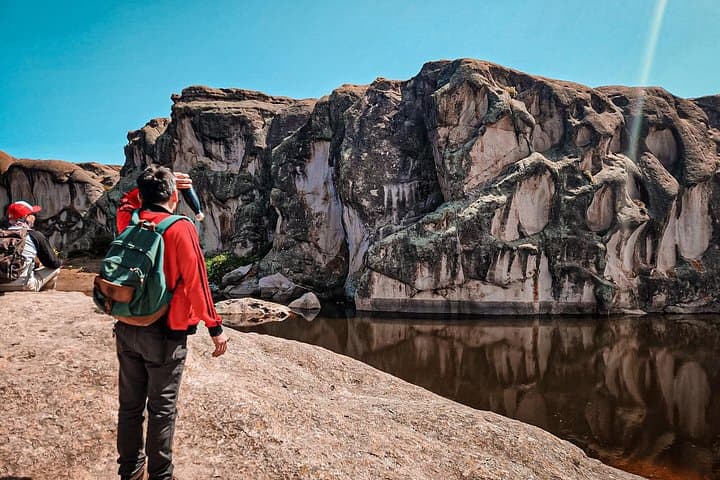
Marcahuasi’s giant stones are not sculpted by hands but by time. Wind, frost and thermal fracture have polished granite into towers and faces that local Quechua communities have long woven into origin stories. In the 1930s researcher Daniel Ruzo put Marcahuasi on the map for modern explorers, cataloguing figures like the “Face of the Inca” and the “Monument to Humanity.” Geologically it’s a granite outcrop of the Andean batholith—hard rock cracked into blocks that the elements pry apart.
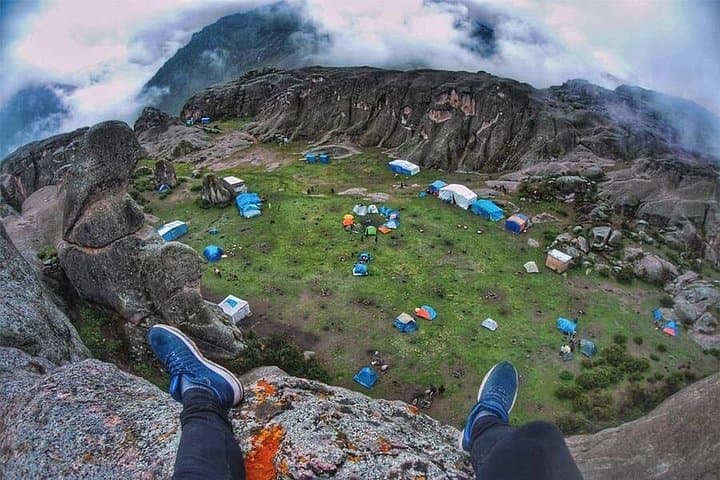
Culturally the place sits between pastoral life and pilgrimage: shepherds drive small alpaca herds across the puna, women sell coca and homemade snacks in San Pedro, and at night the high plain turns into a copper bowl of silence. The operators set camp among the stones—mid-mountain two-person tents, sleeping bags and foam mats are supplied—so you trade city light for a sky full of stars and, if the weather cooperates, a telescopic view of the Milky Way.
Practicals are straightforward but strict: expect 3–4 hours of uphill hiking on day one (roughly 6–8 km, 800–850 m elevation gain) and another 2 hours to descend on day two, plus a 3-hour drive each way from Lima. Terrain alternates cobbles, hard-packed dirt and rocky scrambles; poles help. The company provides a 4x4 transfer, first aid and oxygen, meals, firewood, and a certified guide.
Altitude is the limiting factor—this is a high-Andean outing, not a casual walk. Hydrate well in advance, avoid heavy alcohol the night before, and plan at least a day in Lima or a brief stop in the valley to reduce acute symptoms. Footwear should be solid mid-height hiking boots; layer for rapidly changing conditions: sun by day, bitter cold at night.
For photographers the light is blunt and contrasty—sunrise on the plateau carves depth into faces and monuments, while night offers dramatic starfields and campfire silhouettes. Leave no trace: the puna regenerates slowly, so carry out what you bring in and use provided campwood.
Marcahuasi is blunt and elemental—rocks that seem to watch you back, a sky that demands attention, and a two-day rhythm that returns you to something simpler. If you’re fit, prepared for altitude, and curious about landscapes that make their own stories, this trip delivers a memorable, starlit weekend.
Ascent to the Marcahuasi plateau takes about 3–4 hours (roughly 6–8 km, ~800–850 m gain); descent to San Pedro de Casta is about 2 hours.
Yes—two‑person mid‑mountain tents, sleeping bags, inflatable pillows, foam mats and basic utensils are supplied.
Guides carry first aid and oxygen and are trained to manage acute symptoms; however travelers with serious cardiovascular problems are advised not to join.
Two lunches, two breakfasts and one dinner are included, plus snacks and hot drinks; the first meal is typically in San Pedro de Casta.
Not recommended for young children due to high altitude and physical demands; the operator requests travelers have high fitness levels.
Pickups are arranged in Lima hotels; the same drop‑off point in Lima concludes the tour after return from San Pedro de Casta.
Inca Trilogy Tours operates guided outdoor trips and adventures with an emphasis on safety, stewardship, and memorable experiences.


The bus hums away from Lima and the city smears into a horizon of terraces and low Andean peaks. Three hours later you step out in San Pedro de Casta (3,180 m) beneath a high, brittle sky—the kind of blue that pinches skin and sharpens breath. After a hot plate of local stew, the guide points up: a ragged line of granite silhouettes on the distant rim is Marcahuasi. By late afternoon you climb cobbled village paths that give way to tussock grass and stony switchbacks; the plateau waits at roughly 4,000 m, about 800–850 m above the trailhead.
The bus hums away from Lima and the city smears into a horizon of terraces and low Andean peaks. Three hours later you step out in San Pedro de Casta (3,180 m) beneath a high, brittle sky—the kind of blue that pinches skin and sharpens breath. After a hot plate of local stew, the guide points up: a ragged line of granite silhouettes on the distant rim is Marcahuasi. By late afternoon you climb cobbled village paths that give way to tussock grass and stony switchbacks; the plateau waits at roughly 4,000 m, about 800–850 m above the trailhead.
Marcahuasi’s giant stones are not sculpted by hands but by time. Wind, frost and thermal fracture have polished granite into towers and faces that local Quechua communities have long woven into origin stories. In the 1930s researcher Daniel Ruzo put Marcahuasi on the map for modern explorers, cataloguing figures like the “Face of the Inca” and the “Monument to Humanity.” Geologically it’s a granite outcrop of the Andean batholith—hard rock cracked into blocks that the elements pry apart.
Culturally the place sits between pastoral life and pilgrimage: shepherds drive small alpaca herds across the puna, women sell coca and homemade snacks in San Pedro, and at night the high plain turns into a copper bowl of silence. The operators set camp among the stones—mid-mountain two-person tents, sleeping bags and foam mats are supplied—so you trade city light for a sky full of stars and, if the weather cooperates, a telescopic view of the Milky Way.
Practicals are straightforward but strict: expect 3–4 hours of uphill hiking on day one (roughly 6–8 km, 800–850 m elevation gain) and another 2 hours to descend on day two, plus a 3-hour drive each way from Lima. Terrain alternates cobbles, hard-packed dirt and rocky scrambles; poles help. The company provides a 4x4 transfer, first aid and oxygen, meals, firewood, and a certified guide.
Altitude is the limiting factor—this is a high-Andean outing, not a casual walk. Hydrate well in advance, avoid heavy alcohol the night before, and plan at least a day in Lima or a brief stop in the valley to reduce acute symptoms. Footwear should be solid mid-height hiking boots; layer for rapidly changing conditions: sun by day, bitter cold at night.
For photographers the light is blunt and contrasty—sunrise on the plateau carves depth into faces and monuments, while night offers dramatic starfields and campfire silhouettes. Leave no trace: the puna regenerates slowly, so carry out what you bring in and use provided campwood.
Marcahuasi is blunt and elemental—rocks that seem to watch you back, a sky that demands attention, and a two-day rhythm that returns you to something simpler. If you’re fit, prepared for altitude, and curious about landscapes that make their own stories, this trip delivers a memorable, starlit weekend.