THE ADVENTURE COLLECTIVE® · Independent discovery and booking for outdoor travel

A compact alternative to busier Annapurna routes, the Mardi Himal Trek climbs through rhododendron forests and alpine ridges to get you close to Annapurna vistas with teahouse comfort along the way. Plan for staged acclimatization, permit checks, and early-morning summit views.
A compact alternative to busier Annapurna routes, the Mardi Himal Trek climbs through rhododendron forests and alpine ridges to get you close to Annapurna vistas with teahouse comfort along the way. Plan for staged acclimatization, permit checks, and early-morning summit views.
Morning light slices the Annapurna massif as you step off the dusty trailhead at Phedi and into a corridor of rhododendron and pine. Each switchback climbs out of the Pokhara valley, the Fishtail peak keeping pace like a silent companion, until the trees thin and wind begins to test your balance on narrow ridgelines.
Verified experiences and guided adventures in the surrounding area.
Operated by himalayan sanctuary adventure private limited · Pokhara, Gandaki Province
Morning light slices the Annapurna massif as you step off the dusty trailhead at Phedi and into a corridor of rhododendron and pine. Each switchback climbs out of the Pokhara valley, the Fishtail peak keeping pace like a silent companion, until the trees thin and wind begins to test your balance on narrow ridgelines.
The route follows a relatively new corridor east of the Annapurna Base Camp trail, passing villages shaped by Gurung farming life and centuries of Himalayan geology—ancient uplifted seabed folded into grey cliffs and snow-capped summits. Local teahouses and homestays offer a window into village rituals and the mixed Hindu-Buddhist culture of the valley; the region has been managed under the Annapurna Conservation Area Project for decades, balancing access with protection.
Expect 8–11 days total (including transfers), roughly 35–40 km of walking round-trip with cumulative ascent around 2,800–3,200 m from Pokhara. Terrain moves from packed earth and stone steps through dense rhododendron to exposed alpine scree and narrow ridges near High Camp and the base camp.
Practical edge: acclimatize with staged sleeps up to 3,700–4,000 m, carry cash for teahouses, and plan for early starts to catch summit sunrises. Guides and porters are common and advisable; permits (ACAP, TIMS) are required. Footwear with good traction, layered insulation for cold nights, and hydration that treats local water will keep the trek rewarding rather than punishing. On clear mornings, the panorama—Annapurna I–IV, Hiunchuli, Machapuchare—rewards every step.
Yes—ACAP and TIMS permits are required for travel in the Annapurna Conservation Area; guides typically arrange these before departure.
Base camp sits around 4,000–4,500 m depending on route; staged nights at 2,500–3,700 m are included to support acclimatization and reduce altitude sickness risk.
Yes—this itinerary uses teahouses and lodges from Deurali through High Camp and Sidhing; expect basic rooms and shared bathrooms at higher elevations.
Yes—reputable operators include guides and porters in the package; hiring locally is possible but verify credentials, wages and insurance first.
himalayan sanctuary adventure private limited operates guided outdoor trips and adventures with an emphasis on safety, stewardship, and memorable experiences.

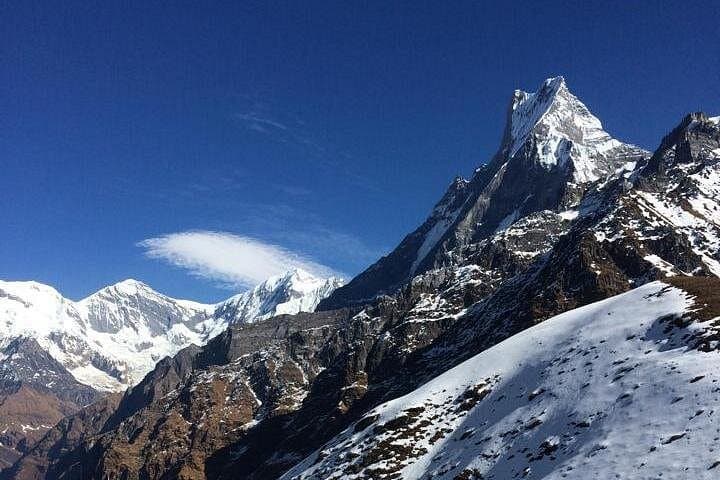


Morning light slices the Annapurna massif as you step off the dusty trailhead at Phedi and into a corridor of rhododendron and pine. Each switchback climbs out of the Pokhara valley, the Fishtail peak keeping pace like a silent companion, until the trees thin and wind begins to test your balance on narrow ridgelines.
Morning light slices the Annapurna massif as you step off the dusty trailhead at Phedi and into a corridor of rhododendron and pine. Each switchback climbs out of the Pokhara valley, the Fishtail peak keeping pace like a silent companion, until the trees thin and wind begins to test your balance on narrow ridgelines.
The route follows a relatively new corridor east of the Annapurna Base Camp trail, passing villages shaped by Gurung farming life and centuries of Himalayan geology—ancient uplifted seabed folded into grey cliffs and snow-capped summits. Local teahouses and homestays offer a window into village rituals and the mixed Hindu-Buddhist culture of the valley; the region has been managed under the Annapurna Conservation Area Project for decades, balancing access with protection.
Expect 8–11 days total (including transfers), roughly 35–40 km of walking round-trip with cumulative ascent around 2,800–3,200 m from Pokhara. Terrain moves from packed earth and stone steps through dense rhododendron to exposed alpine scree and narrow ridges near High Camp and the base camp.
Practical edge: acclimatize with staged sleeps up to 3,700–4,000 m, carry cash for teahouses, and plan for early starts to catch summit sunrises. Guides and porters are common and advisable; permits (ACAP, TIMS) are required. Footwear with good traction, layered insulation for cold nights, and hydration that treats local water will keep the trek rewarding rather than punishing. On clear mornings, the panorama—Annapurna I–IV, Hiunchuli, Machapuchare—rewards every step.