THE ADVENTURE COLLECTIVE® · Independent discovery and booking for outdoor travel

A compact five-day traverse through Annapurna’s forested ridges and Gurung villages, finishing with a sunrise at Poon Hill. Expect steep stone steps, teahouse nights and close-range Himalayan vistas.
A compact five-day traverse through Annapurna’s forested ridges and Gurung villages, finishing with a sunrise at Poon Hill. Expect steep stone steps, teahouse nights and close-range Himalayan vistas.
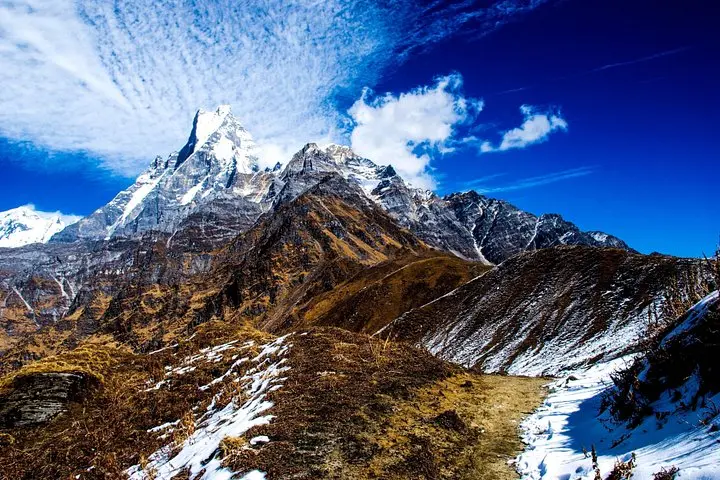
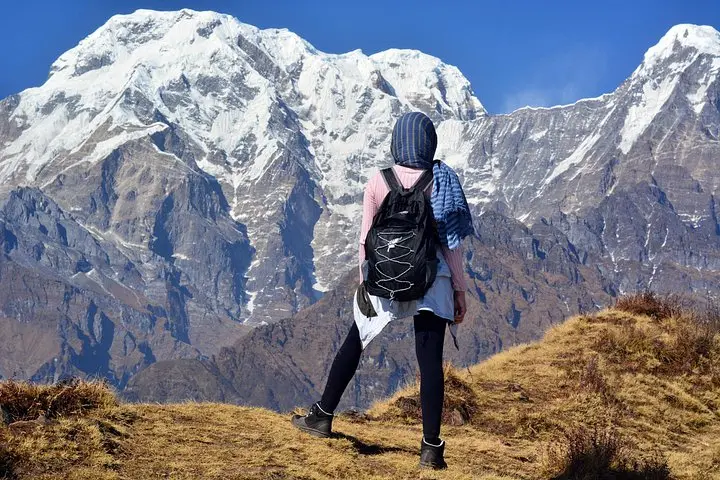
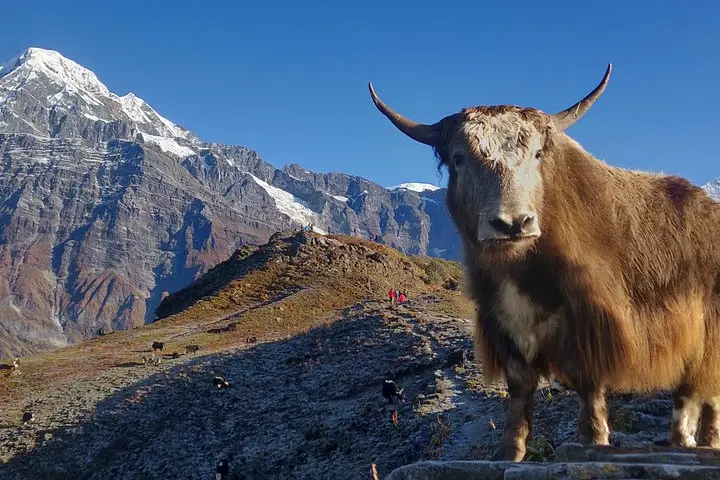
You step off the jeep at Nayapul and the valley exhales: terraced fields fall away, rhododendron and oak crowd the trail, and the route climbs into thin air where the peaks keep watch.
Verified experiences and guided adventures in the surrounding area.
Operated by Nepal Trekking Lover · Pokhara, Gandaki Province
You step off the jeep at Nayapul and the valley exhales: terraced fields fall away, rhododendron and oak crowd the trail, and the route climbs into thin air where the peaks keep watch.
Over five days the Mardi Himal itinerary threads classic Annapurna scenery with close-up village life. Expect steep stone steps through Ulleri, the red-bloom corridors of rhododendron en route to Ghorepani, and a dawn ascent to Poon Hill (3,210 m) that throws Annapurna, Dhaulagiri and Machapuchhre into sharp relief. The trail follows tributaries of the Modi Khola and crosses mixed farm and forest terrain before dropping to the Gurung village of Ghandruk, known for traditional dances and a small cultural museum.
Geologically you’re on the southern flank of the high Himalaya: young uplifted rock, frequent landslide-prone slopes and high-relief ridgelines. Culturally the Gurung people maintain dress, music and hospitality in teahouses that serve as night stops.
Practical guidance: daily hikes range 4–6 hours with repeated sustained climbs and descents—expect short steep pitches and stone staircases. Teahouse accommodation is basic but warm; cash and small change are useful. Acclimatize by moving slowly to Ghorepani and consider a rest at 2,600–2,800 m if needed. Bring layered insulation for pre-dawn photo runs and a headlamp for early starts. Hydrate and use trekking poles to ease descents. Guides and porters are standard in this region, helping preserve your energy for the viewpoints and village exchanges that make this trek memorable.
Yes—trekkers require ACAP (Annapurna Conservation Area) permit and TIMS; operators usually arrange these and include them in the package.
The trek is beginner-friendly compared with high Himalayan routes but still involves sustained uphill walking to 3,210 m; basic fitness training and pacing are advised.
Teahouse accommodation is simple: shared or small rooms, squat or western toilets varying by village, and communal dining with local food.
Guides are strongly recommended for navigation, local insight and safety; porters are common and useful—this operator provides one porter per two trekkers.
Nepal Trekking Lover operates guided outdoor trips and adventures with an emphasis on safety, stewardship, and memorable experiences.
You step off the jeep at Nayapul and the valley exhales: terraced fields fall away, rhododendron and oak crowd the trail, and the route climbs into thin air where the peaks keep watch.
You step off the jeep at Nayapul and the valley exhales: terraced fields fall away, rhododendron and oak crowd the trail, and the route climbs into thin air where the peaks keep watch.
Over five days the Mardi Himal itinerary threads classic Annapurna scenery with close-up village life. Expect steep stone steps through Ulleri, the red-bloom corridors of rhododendron en route to Ghorepani, and a dawn ascent to Poon Hill (3,210 m) that throws Annapurna, Dhaulagiri and Machapuchhre into sharp relief. The trail follows tributaries of the Modi Khola and crosses mixed farm and forest terrain before dropping to the Gurung village of Ghandruk, known for traditional dances and a small cultural museum.
Geologically you’re on the southern flank of the high Himalaya: young uplifted rock, frequent landslide-prone slopes and high-relief ridgelines. Culturally the Gurung people maintain dress, music and hospitality in teahouses that serve as night stops.
Practical guidance: daily hikes range 4–6 hours with repeated sustained climbs and descents—expect short steep pitches and stone staircases. Teahouse accommodation is basic but warm; cash and small change are useful. Acclimatize by moving slowly to Ghorepani and consider a rest at 2,600–2,800 m if needed. Bring layered insulation for pre-dawn photo runs and a headlamp for early starts. Hydrate and use trekking poles to ease descents. Guides and porters are standard in this region, helping preserve your energy for the viewpoints and village exchanges that make this trek memorable.