THE ADVENTURE COLLECTIVE® · Independent discovery and booking for outdoor travel

A compact 6-day trek from Pokhara that moves from rhododendron forest to high alpine ridges, Mardi Himal delivers intimate, close-up views of Annapurna and Machhapuchhre. Ideal for hikers who want big-mountain panoramas without extended expedition time.
A compact 6-day trek from Pokhara that moves from rhododendron forest to high alpine ridges, Mardi Himal delivers intimate, close-up views of Annapurna and Machhapuchhre. Ideal for hikers who want big-mountain panoramas without extended expedition time.
A cold blue hour on the ridge wakes you before the sun — sharp silhouettes of Annapurna South and Machhapuchhre (Fishtail) carve the sky while a thin path of packed earth leads upward. The trail moves from rhododendron-shaded forest to alpine meadow in a few days, and each bend opens a new, nearer view of rock and glacier.
Verified experiences and guided adventures in the surrounding area.
Operated by Himalayas On Foot - Day Tours · Pokhara, Gandaki Province
A cold blue hour on the ridge wakes you before the sun — sharp silhouettes of Annapurna South and Machhapuchhre (Fishtail) carve the sky while a thin path of packed earth leads upward. The trail moves from rhododendron-shaded forest to alpine meadow in a few days, and each bend opens a new, nearer view of rock and glacier.
This route climbs through the Annapurna Conservation Area, part of the Himalayan arc formed by colliding tectonic plates. Local Gurung and Magar villages dot the descent slopes; you’ll pass terraced fields and small gompas that reflect centuries of mountain life. Tea houses along the route still operate on kerosene stoves and community tourism supports local schools and trail maintenance.
Expect 5–6 days of hiking, roughly 8–12 km on summit days, with elevation gain from Kande (1,770 m) to a high point near Mardi Base (approx. 4,500 m). Trails alternate packed dirt, stone steps and loose scree above the tree line; weather can flip from sun to wind-driven cloud in minutes. Altitude is the variable — plan for slower miles, hydrate, and know acute mountain sickness symptoms.
Practical: carry layered insulation, a down jacket for pre-dawn views, and trekking boots with ankle support. ACAP permits are required; most itineraries include guide, lodging and meals in teahouses. Aim for clear-weather windows in spring or autumn for best views, or choose quieter shoulder seasons if you prefer fewer groups. With basic fitness and respect for altitude, the Mardi Himal trek is an accessible, high-impact Himalayan experience.
Yes — the Annapurna Conservation Area Permit (ACAP) is required; most guided trips include it in the package.
Spring (March–May) and autumn (Sept–Nov) offer the clearest views and stable weather; shoulder seasons are quieter but can be windier.
The highest point on many itineraries reaches ~4,500 m; altitude sickness is possible — ascend slowly, hydrate, and consult a guide if symptoms appear.
Teahouses provide basic private rooms and shared bathrooms, with cooked meals like dal bhat, soups and noodles; bring snacks if you have specific dietary needs.
Himalayas On Foot - Day Tours operates guided outdoor trips and adventures with an emphasis on safety, stewardship, and memorable experiences.
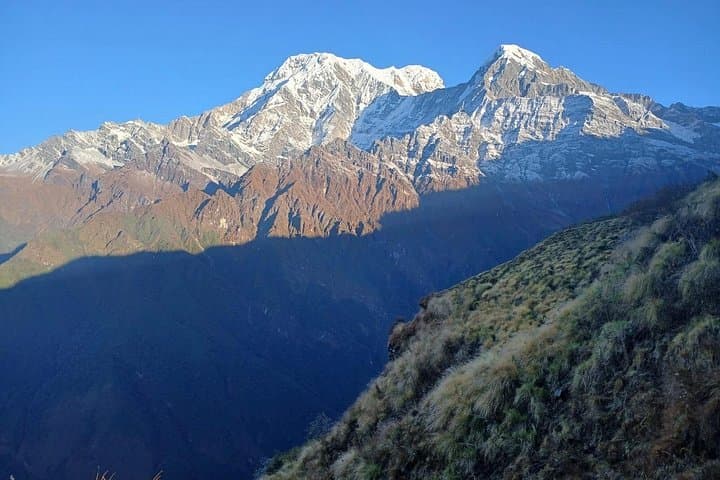

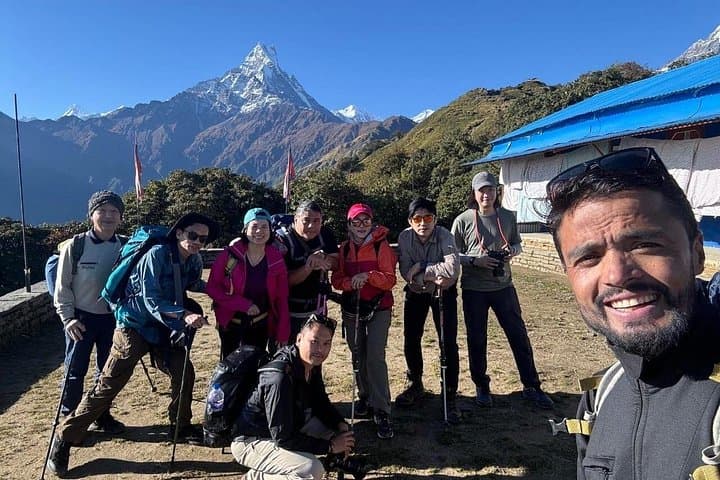
A cold blue hour on the ridge wakes you before the sun — sharp silhouettes of Annapurna South and Machhapuchhre (Fishtail) carve the sky while a thin path of packed earth leads upward. The trail moves from rhododendron-shaded forest to alpine meadow in a few days, and each bend opens a new, nearer view of rock and glacier.
A cold blue hour on the ridge wakes you before the sun — sharp silhouettes of Annapurna South and Machhapuchhre (Fishtail) carve the sky while a thin path of packed earth leads upward. The trail moves from rhododendron-shaded forest to alpine meadow in a few days, and each bend opens a new, nearer view of rock and glacier.
This route climbs through the Annapurna Conservation Area, part of the Himalayan arc formed by colliding tectonic plates. Local Gurung and Magar villages dot the descent slopes; you’ll pass terraced fields and small gompas that reflect centuries of mountain life. Tea houses along the route still operate on kerosene stoves and community tourism supports local schools and trail maintenance.
Expect 5–6 days of hiking, roughly 8–12 km on summit days, with elevation gain from Kande (1,770 m) to a high point near Mardi Base (approx. 4,500 m). Trails alternate packed dirt, stone steps and loose scree above the tree line; weather can flip from sun to wind-driven cloud in minutes. Altitude is the variable — plan for slower miles, hydrate, and know acute mountain sickness symptoms.
Practical: carry layered insulation, a down jacket for pre-dawn views, and trekking boots with ankle support. ACAP permits are required; most itineraries include guide, lodging and meals in teahouses. Aim for clear-weather windows in spring or autumn for best views, or choose quieter shoulder seasons if you prefer fewer groups. With basic fitness and respect for altitude, the Mardi Himal trek is an accessible, high-impact Himalayan experience.