THE ADVENTURE COLLECTIVE® · Independent discovery and booking for outdoor travel

Walk from Kande into a quieter flank of the Annapurna range on an 8-day Mardi Himal circuit. Expect forested ridgelines, teahouse stays, and high alpine viewpoints near 4,500 m—ideal for travelers with steady fitness seeking fewer crowds than the main Annapurna routes.
Walk from Kande into a quieter flank of the Annapurna range on an 8-day Mardi Himal circuit. Expect forested ridgelines, teahouse stays, and high alpine viewpoints near 4,500 m—ideal for travelers with steady fitness seeking fewer crowds than the main Annapurna routes.
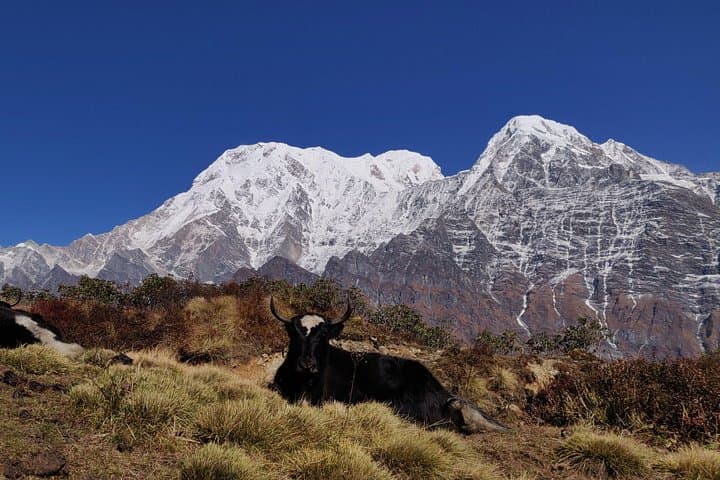
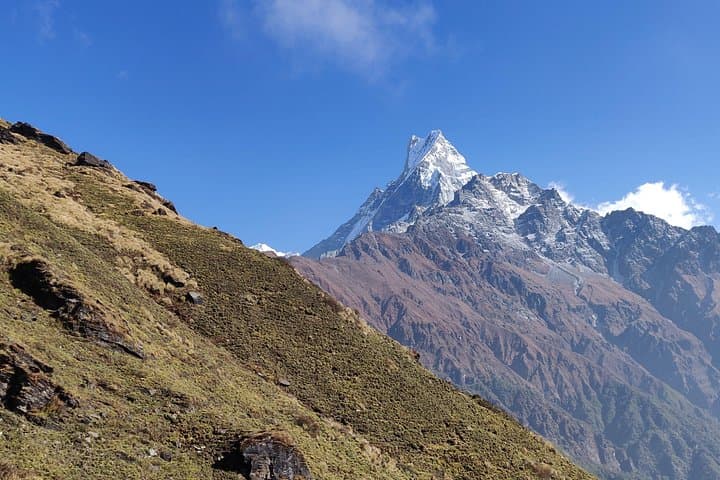
Dawn breaks over terraced fields outside Pokhara and the trailhead rises like a spine into cool cedar forest. On the first steps from Kande the world narrows to the rhythm of boots on dirt, rhododendron trunks and the first ragged edges of the Annapurna massif cutting the horizon. By the third day the trees thin, the air sharpens, and Machhapuchchhre (Fishtail) asserts itself as a constant companion.
Verified experiences and guided adventures in the surrounding area.
Operated by Altitude Himalaya · Pokhara, Gandaki Province
Dawn breaks over terraced fields outside Pokhara and the trailhead rises like a spine into cool cedar forest. On the first steps from Kande the world narrows to the rhythm of boots on dirt, rhododendron trunks and the first ragged edges of the Annapurna massif cutting the horizon. By the third day the trees thin, the air sharpens, and Machhapuchchhre (Fishtail) asserts itself as a constant companion.
The route itself is a modern addition to Annapurna’s network of teahouse trails, opened in recent decades as a quieter alternative to the main circuits. Geologically the trail follows uplifted sedimentary slices of the Lesser Himalaya, with layered cliffs giving way to moraine-smoothed valleys. Culturally the trek threads through Gurung villages where stone houses and prayer flags mark centuries of mountain livelihoods; teahouses serve local dal-bhat and hot cups of tea that keep walkers going.
Expect single-track trails, a steady 3–6 hour walking day on varied terrain, and a high point near 4,500 m at Mardi Himal base camp and upper viewpoints. Weather changes fast; mornings reward clear panoramas, afternoons can cloud in. Practical tips: ascend slowly, carry water purification, and book nights in teahouses—space is limited at High Camp.
The itinerary suits walkers with moderate fitness and some altitude experience. Bring a layered system, sturdy boots, trekking poles and a lightweight down jacket for pre-dawn summit pushes. When planned wisely, Mardi Himal delivers long alpine views and a quieter slice of Annapurna that still feels wild and immediate.
The route is suitable for hikers with average fitness; it’s non-technical but includes sustained climbs and a high point near 4,500 m—allow time for acclimatization.
Yes—trekkers require ACAP and TIMS permits to enter the Annapurna Conservation Area; guides usually arrange these before departure.
Yes, the itinerary relies on teahouse lodges from Deurali through High Camp, though services are basic and capacity is limited in high season.
Prepare for clear mornings and possible afternoon clouds; temperatures drop sharply at night and wind or snow can appear at higher camps, especially outside fall months.
Altitude Himalaya operates guided outdoor trips and adventures with an emphasis on safety, stewardship, and memorable experiences.
Dawn breaks over terraced fields outside Pokhara and the trailhead rises like a spine into cool cedar forest. On the first steps from Kande the world narrows to the rhythm of boots on dirt, rhododendron trunks and the first ragged edges of the Annapurna massif cutting the horizon. By the third day the trees thin, the air sharpens, and Machhapuchchhre (Fishtail) asserts itself as a constant companion.
Dawn breaks over terraced fields outside Pokhara and the trailhead rises like a spine into cool cedar forest. On the first steps from Kande the world narrows to the rhythm of boots on dirt, rhododendron trunks and the first ragged edges of the Annapurna massif cutting the horizon. By the third day the trees thin, the air sharpens, and Machhapuchchhre (Fishtail) asserts itself as a constant companion.
The route itself is a modern addition to Annapurna’s network of teahouse trails, opened in recent decades as a quieter alternative to the main circuits. Geologically the trail follows uplifted sedimentary slices of the Lesser Himalaya, with layered cliffs giving way to moraine-smoothed valleys. Culturally the trek threads through Gurung villages where stone houses and prayer flags mark centuries of mountain livelihoods; teahouses serve local dal-bhat and hot cups of tea that keep walkers going.
Expect single-track trails, a steady 3–6 hour walking day on varied terrain, and a high point near 4,500 m at Mardi Himal base camp and upper viewpoints. Weather changes fast; mornings reward clear panoramas, afternoons can cloud in. Practical tips: ascend slowly, carry water purification, and book nights in teahouses—space is limited at High Camp.
The itinerary suits walkers with moderate fitness and some altitude experience. Bring a layered system, sturdy boots, trekking poles and a lightweight down jacket for pre-dawn summit pushes. When planned wisely, Mardi Himal delivers long alpine views and a quieter slice of Annapurna that still feels wild and immediate.