THE ADVENTURE COLLECTIVE® · Independent discovery and booking for outdoor travel

A compact high-mountain trek that climbs from the forested foothills above Pokhara to an alpine ridge at 4,200 m. Expect rhododendron forests, traditional Gurung villages, and panoramic views of the Annapurna massif.
A compact high-mountain trek that climbs from the forested foothills above Pokhara to an alpine ridge at 4,200 m. Expect rhododendron forests, traditional Gurung villages, and panoramic views of the Annapurna massif.
You break dawn in Pokhara and the road slips away beneath the jeep as terraced fields and the Seti River recede. By the time you reach Phedi the forest is already awake — birds calling, the path soft with leaf mold — and the trail begins its steady climb into rhododendron and oak.
Verified experiences and guided adventures in the surrounding area.
Operated by Peregrine Treks and Tours · Pokhara, Gandaki Province
You break dawn in Pokhara and the road slips away beneath the jeep as terraced fields and the Seti River recede. By the time you reach Phedi the forest is already awake — birds calling, the path soft with leaf mold — and the trail begins its steady climb into rhododendron and oak.
The route threads historic villages like Dhampus and Pothana, traditional Gurung hamlets that have long been waystations for hill farmers and mule caravans. Geologically the trek climbs the southern flanks of the Annapurna massif: older metamorphic rocks give way to high alpine grasslands and glacially carved cirques as you approach the Mardi ridge. Culturally, you’ll pass mani walls, small shrines, and herders’ huts; local hospitality centres the trek, with family-run lodges providing most services.
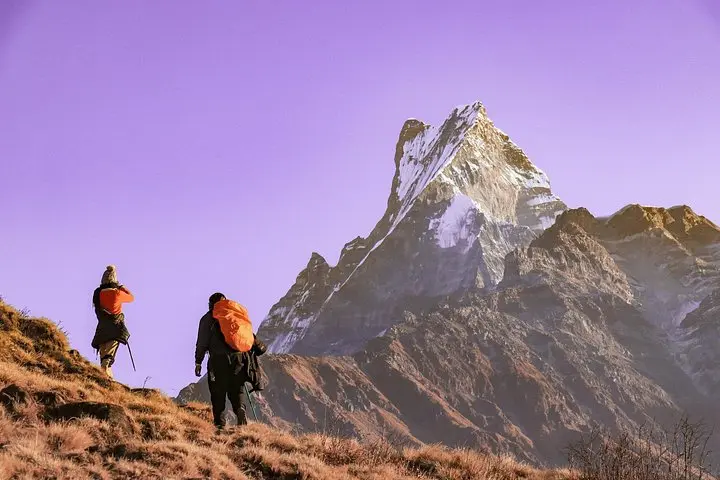
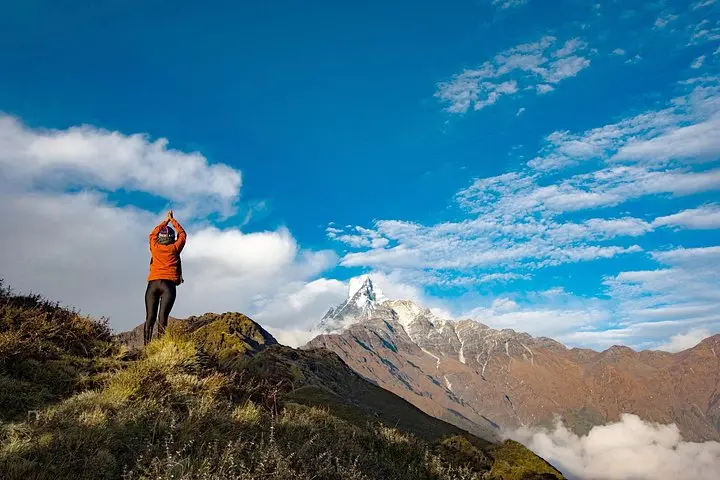
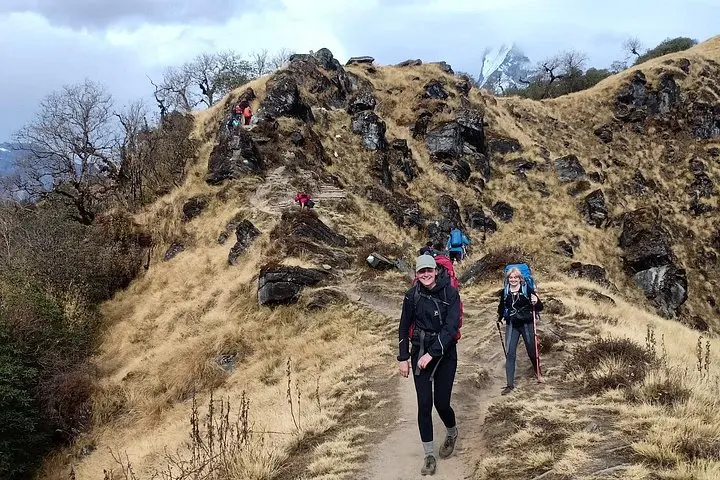
Expect an overall round-trip distance of roughly 35–40 km, a net ascent from the trailhead to the Upper Viewpoint near 4,200 m (about 2,500–2,700 m of cumulative gain over several days), and daily hiking windows of 3–6 hours on variable terrain — packed dirt, stone steps, and rocky alpine trails. The Upper Viewpoint rewards you with sweeping views of Annapurna South, Hiunchuli and Machhapuchhre; base-camp walkers can push to Mardi Base Camp when weather allows.
Practical notes: acclimatize gradually, carry layers for windy ridge conditions, and bring waterproofs for shoulder-season rain. Hydrate, use trekking poles for steep descents, and budget time for rest days in Pokhara before or after the trek.
Yes—trekkers need the Annapurna Conservation Area Project (ACAP) permit and a TIMS card; guides or operators typically arrange these before the trek.
The Upper Viewpoint is about 4,200 m above sea level; weather and fitness determine whether you reach Mardi Base Camp beyond that point.
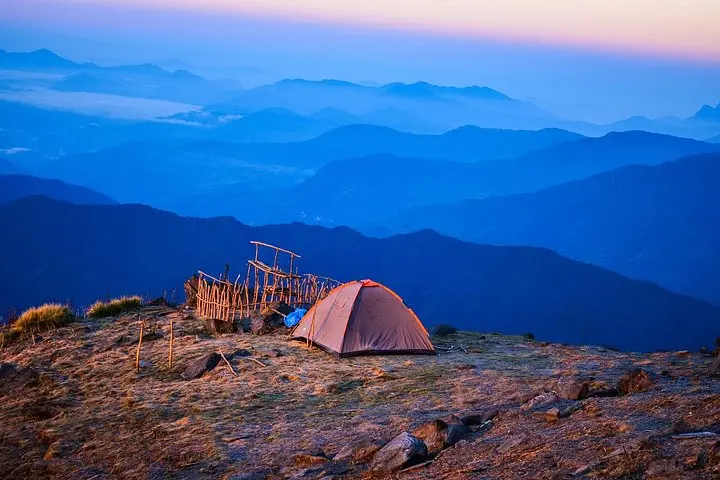
Accommodation is basic family-run teahouses and lodges with shared rooms and simple meals; hotter showers may be available at lower elevations and in larger lodges.
Yes—ascending above 3,000 m requires caution: monitor symptoms, maintain slow ascent rates, hydrate well and descend if severe symptoms appear.
Peregrine Treks and Tours operates guided outdoor trips and adventures with an emphasis on safety, stewardship, and memorable experiences.
You break dawn in Pokhara and the road slips away beneath the jeep as terraced fields and the Seti River recede. By the time you reach Phedi the forest is already awake — birds calling, the path soft with leaf mold — and the trail begins its steady climb into rhododendron and oak.
You break dawn in Pokhara and the road slips away beneath the jeep as terraced fields and the Seti River recede. By the time you reach Phedi the forest is already awake — birds calling, the path soft with leaf mold — and the trail begins its steady climb into rhododendron and oak.
The route threads historic villages like Dhampus and Pothana, traditional Gurung hamlets that have long been waystations for hill farmers and mule caravans. Geologically the trek climbs the southern flanks of the Annapurna massif: older metamorphic rocks give way to high alpine grasslands and glacially carved cirques as you approach the Mardi ridge. Culturally, you’ll pass mani walls, small shrines, and herders’ huts; local hospitality centres the trek, with family-run lodges providing most services.
Expect an overall round-trip distance of roughly 35–40 km, a net ascent from the trailhead to the Upper Viewpoint near 4,200 m (about 2,500–2,700 m of cumulative gain over several days), and daily hiking windows of 3–6 hours on variable terrain — packed dirt, stone steps, and rocky alpine trails. The Upper Viewpoint rewards you with sweeping views of Annapurna South, Hiunchuli and Machhapuchhre; base-camp walkers can push to Mardi Base Camp when weather allows.
Practical notes: acclimatize gradually, carry layers for windy ridge conditions, and bring waterproofs for shoulder-season rain. Hydrate, use trekking poles for steep descents, and budget time for rest days in Pokhara before or after the trek.