THE ADVENTURE COLLECTIVE® · Independent discovery and booking for outdoor travel

A quieter alternative to crowded Annapurna routes, the Mardi Himal trek climbs through rhododendron forests to high alpine ridgelines with sweeping views of Machhapuchhre and Annapurna. This 8–9 day itinerary links Kathmandu and Pokhara with lodge-based trekking and a summit-style push to Mardi Himal Base Camp.
A quieter alternative to crowded Annapurna routes, the Mardi Himal trek climbs through rhododendron forests to high alpine ridgelines with sweeping views of Machhapuchhre and Annapurna. This 8–9 day itinerary links Kathmandu and Pokhara with lodge-based trekking and a summit-style push to Mardi Himal Base Camp.
You step off the short flight into Pokhara and the air feels different—colder, thinner, edged with pine. From the lakeside bustle the journey tightens into terraced fields and forested switchbacks, and the south face of Mardi Himal begins to reveal itself: a rising wall of rock and ice that challenges your rhythm and rewards attention.
Verified experiences and guided adventures in the surrounding area.
Operated by Liberty Holidays · Pokhara, Gandaki Province
You step off the short flight into Pokhara and the air feels different—colder, thinner, edged with pine. From the lakeside bustle the journey tightens into terraced fields and forested switchbacks, and the south face of Mardi Himal begins to reveal itself: a rising wall of rock and ice that challenges your rhythm and rewards attention.
Mardi Himal is a newer, less-traveled spur of the Annapurna massif. Geologically the route moves from lower subtropical foothills through mid-elevation oaks and rhododendron, then into alpine scrub and moraine near High Camp. The trail threads through Gurung villages where traditional stone houses and slate roofs mark daily life; you’ll pass tea houses that have grown up to serve trekkers, and meet guides who know local customs and the mechanics of permits—the ACAP and TIMS that regulate this part of Annapurna.
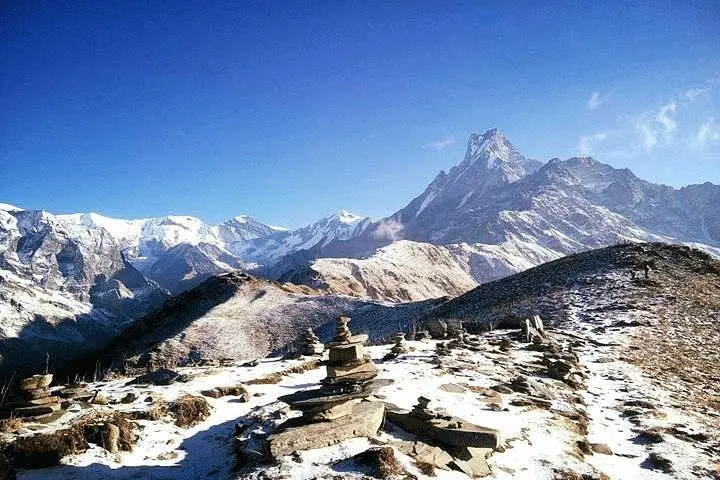
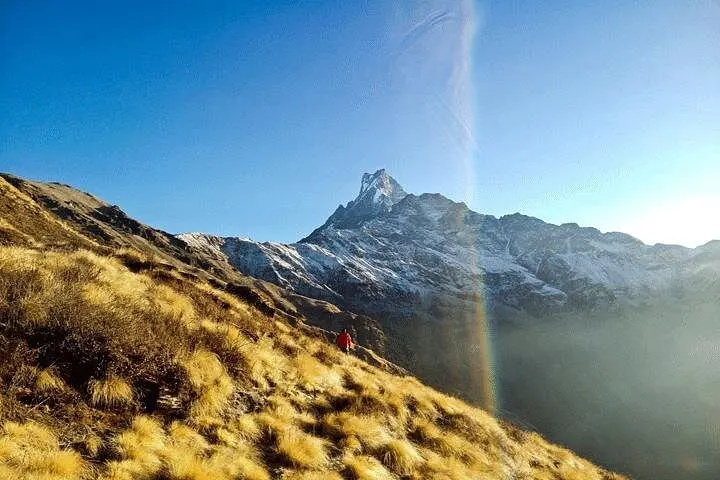
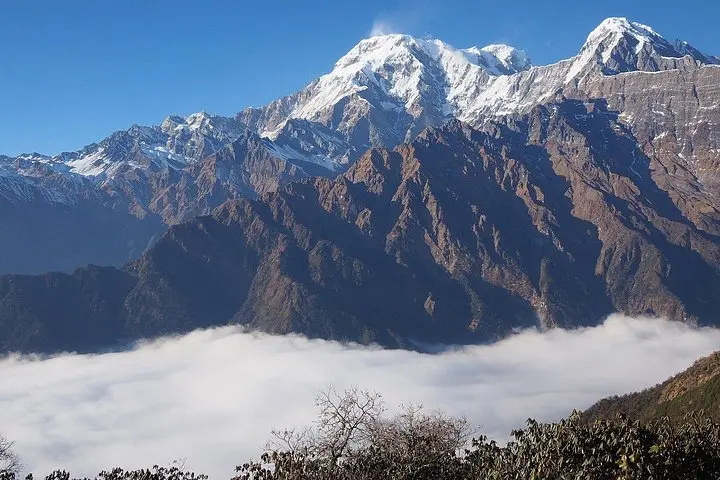
Expect clear Himalayan vistas of Machhapuchhre (Fishtail) and Annapurna South from several lookout points; mornings often give the best light. Wildlife is subtle—leaf litter, bird calls, the flash of a pheasant rather than large mammals.
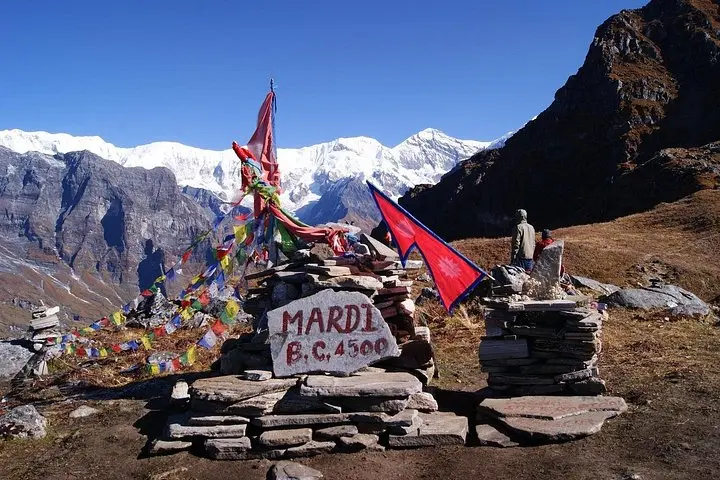
Practical edge: this itinerary includes hotel nights in Kathmandu and Pokhara, a scenic domestic flight option, and daily trekking segments of 3–6 hours with a summit-style push to 4,500 m at base camp. Acclimatize and monitor symptoms of altitude sickness; bring layered insulation, sun protection, and reliable footwear. Lodges provide meals, but water treatment and a headlamp are essential. Plan your pace to enjoy the landscape—Mardi rewards slow observation as much as steady legs.
Yes—ACAP (Annapurna Conservation Area) and TIMS permits are required; the tour handles permits, but bring passport copies to process them.
Base Camp sits around 4,500 m; the route to base camp is non-technical but steep in sections and exposed to weather—no mountaineering gear required for the normal route.
Lodge/tea-house accommodation is basic but comfortable—shared or private rooms with hot meals; facilities vary by site and get simpler at higher camps.
Local rules often require hiring porters for certain operators; this itinerary notes porter service is available for an extra cost—confirm when booking.
Liberty Holidays operates guided outdoor trips and adventures with an emphasis on safety, stewardship, and memorable experiences.
You step off the short flight into Pokhara and the air feels different—colder, thinner, edged with pine. From the lakeside bustle the journey tightens into terraced fields and forested switchbacks, and the south face of Mardi Himal begins to reveal itself: a rising wall of rock and ice that challenges your rhythm and rewards attention.
You step off the short flight into Pokhara and the air feels different—colder, thinner, edged with pine. From the lakeside bustle the journey tightens into terraced fields and forested switchbacks, and the south face of Mardi Himal begins to reveal itself: a rising wall of rock and ice that challenges your rhythm and rewards attention.
Mardi Himal is a newer, less-traveled spur of the Annapurna massif. Geologically the route moves from lower subtropical foothills through mid-elevation oaks and rhododendron, then into alpine scrub and moraine near High Camp. The trail threads through Gurung villages where traditional stone houses and slate roofs mark daily life; you’ll pass tea houses that have grown up to serve trekkers, and meet guides who know local customs and the mechanics of permits—the ACAP and TIMS that regulate this part of Annapurna.
Expect clear Himalayan vistas of Machhapuchhre (Fishtail) and Annapurna South from several lookout points; mornings often give the best light. Wildlife is subtle—leaf litter, bird calls, the flash of a pheasant rather than large mammals.
Practical edge: this itinerary includes hotel nights in Kathmandu and Pokhara, a scenic domestic flight option, and daily trekking segments of 3–6 hours with a summit-style push to 4,500 m at base camp. Acclimatize and monitor symptoms of altitude sickness; bring layered insulation, sun protection, and reliable footwear. Lodges provide meals, but water treatment and a headlamp are essential. Plan your pace to enjoy the landscape—Mardi rewards slow observation as much as steady legs.