THE ADVENTURE COLLECTIVE® · Independent discovery and booking for outdoor travel

A compact multi-day trek from Pokhara that climbs through rhododendron forests to a high viewpoint beneath Annapurna and Machapuchare. Ideal for hikers who want dramatic Himalayan panoramas without a long circuit.
A compact multi-day trek from Pokhara that climbs through rhododendron forests to a high viewpoint beneath Annapurna and Machapuchare. Ideal for hikers who want dramatic Himalayan panoramas without a long circuit.
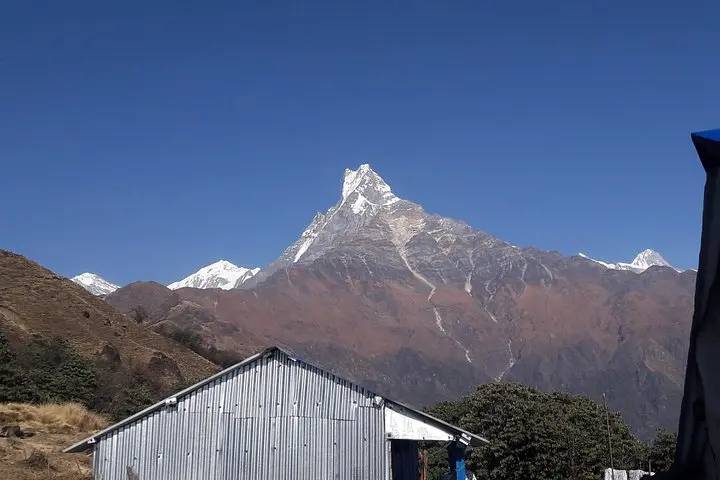
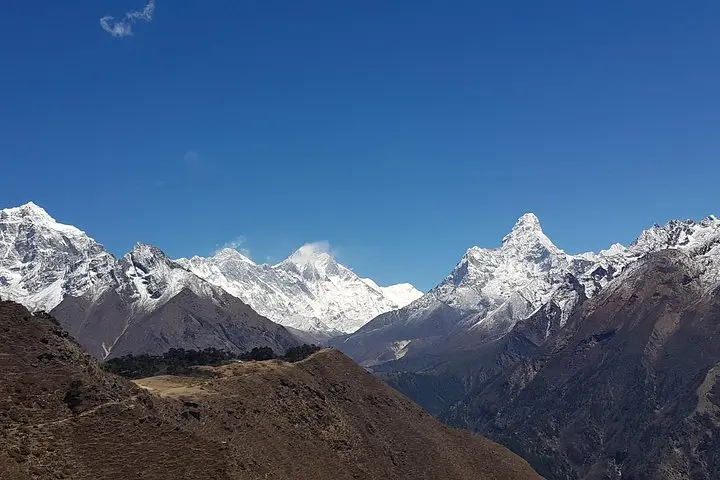
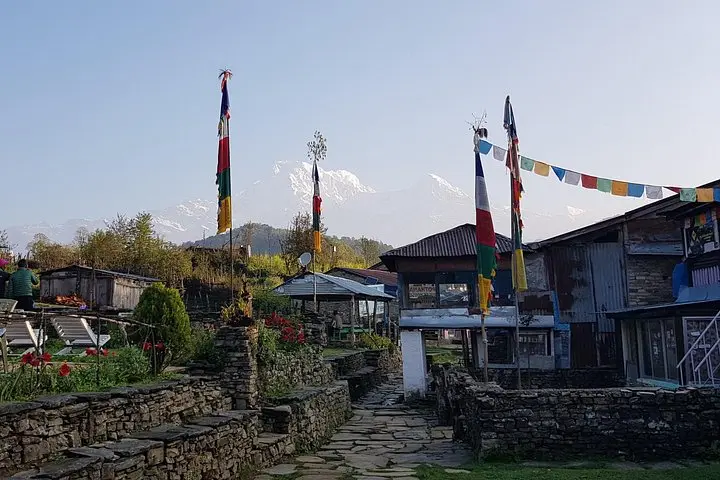
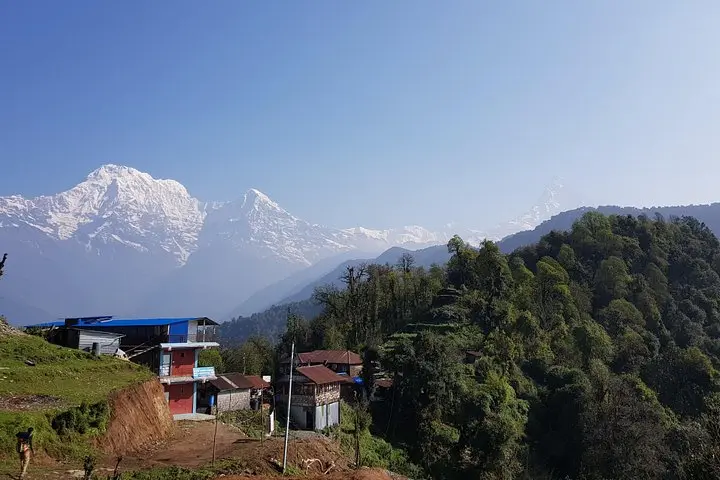
The trail opens with a breath of pine-scented air as you climb out of Pokhara’s valley and into a corridor of rhododendron and oak. Early steps wind past farm terraces and prayer flags; by mid-trek the path tightens into thin, stony switchbacks that point upward toward a skyline of white summits. Clouds peel away to reveal Annapurna South and Machapuchare—mountains that seem to change mood by the hour.
Verified experiences and guided adventures in the surrounding area.
Operated by Mosaic Adventure · Pokhara, Gandaki Province
The trail opens with a breath of pine-scented air as you climb out of Pokhara’s valley and into a corridor of rhododendron and oak. Early steps wind past farm terraces and prayer flags; by mid-trek the path tightens into thin, stony switchbacks that point upward toward a skyline of white summits. Clouds peel away to reveal Annapurna South and Machapuchare—mountains that seem to change mood by the hour.
This short Annapurna route follows old mule tracks and shepherd trails across land shaped by glaciation and seismic uplift. The ridge above Forest Camp is a lively zone for alpine flora; higher sections cross moraine and loose scree left behind by retreating ice. Local Gurung and Magar communities have lived here for generations, running teahouses and guiding visitors while keeping seasonal farming rhythms.
Expect teahouse nights, early starts to catch clear mornings, and a steady climb to the Mardi view point at roughly 4,500 m. Altitude and weather are the main challenges—snow and high winds can close the route outside the prime windows. The trek is compact: big mountain views for those with limited time in Nepal.
Practical notes: move slowly above 3,000 m, carry layers for wind and cold, and bring a basic first-aid kit and water treatment. Footwear with good ankle support will help on rocky descents. Aim for spring or autumn for the best visibility, and plan a buffer day in Pokhara for travel or acclimatization. With sensible pacing and respect for the elements, Mardi Himal delivers high-altitude panoramas without the logistics of longer Annapurna circuits.
The highest viewpoint on the itinerary reaches about 4,500 m (14,760 ft), though most nights are spent lower at teahouse camps around 2,900–3,580 m.
No technical experience is required, but prior multi-day trekking and good cardiovascular fitness help; acclimatization is important above 3,000 m.
Spring (March–May) and autumn (September–November) offer the clearest views and stable weather; shoulder seasons increase chances of rain or late snow.
Yes — the itinerary uses local teahouses for accommodation and meals, but expect basic facilities and limited hot water at higher camps.
Mosaic Adventure operates guided outdoor trips and adventures with an emphasis on safety, stewardship, and memorable experiences.
The trail opens with a breath of pine-scented air as you climb out of Pokhara’s valley and into a corridor of rhododendron and oak. Early steps wind past farm terraces and prayer flags; by mid-trek the path tightens into thin, stony switchbacks that point upward toward a skyline of white summits. Clouds peel away to reveal Annapurna South and Machapuchare—mountains that seem to change mood by the hour.
The trail opens with a breath of pine-scented air as you climb out of Pokhara’s valley and into a corridor of rhododendron and oak. Early steps wind past farm terraces and prayer flags; by mid-trek the path tightens into thin, stony switchbacks that point upward toward a skyline of white summits. Clouds peel away to reveal Annapurna South and Machapuchare—mountains that seem to change mood by the hour.
This short Annapurna route follows old mule tracks and shepherd trails across land shaped by glaciation and seismic uplift. The ridge above Forest Camp is a lively zone for alpine flora; higher sections cross moraine and loose scree left behind by retreating ice. Local Gurung and Magar communities have lived here for generations, running teahouses and guiding visitors while keeping seasonal farming rhythms.
Expect teahouse nights, early starts to catch clear mornings, and a steady climb to the Mardi view point at roughly 4,500 m. Altitude and weather are the main challenges—snow and high winds can close the route outside the prime windows. The trek is compact: big mountain views for those with limited time in Nepal.
Practical notes: move slowly above 3,000 m, carry layers for wind and cold, and bring a basic first-aid kit and water treatment. Footwear with good ankle support will help on rocky descents. Aim for spring or autumn for the best visibility, and plan a buffer day in Pokhara for travel or acclimatization. With sensible pacing and respect for the elements, Mardi Himal delivers high-altitude panoramas without the logistics of longer Annapurna circuits.