THE ADVENTURE COLLECTIVE® · Independent discovery and booking for outdoor travel

Spend a half-day from Sayulita cruising Banderas Bay to watch whales, study seabird colonies, and snorkel clear reefs near the UNESCO‑protected Marietas Islands. This practical guide outlines what to expect, how to prepare, and where to find quieter viewing spots.
Spend a half-day from Sayulita cruising Banderas Bay to watch whales, study seabird colonies, and snorkel clear reefs near the UNESCO‑protected Marietas Islands. This practical guide outlines what to expect, how to prepare, and where to find quieter viewing spots.
The boat slips away from Sayulita’s marina before dawn, and the Pacific opens like a moving plain that seems to test the hull with every swell. On this trip, the sea has its own agenda: whales that arch and exhale in foamy crescents, and rock islands that throw gulls and blue-footed boobies into the wind.
Verified experiences and guided adventures in the surrounding area.
Operated by SAYULITA ENTOURAGE · Sayulita, Nayarit
The boat slips away from Sayulita’s marina before dawn, and the Pacific opens like a moving plain that seems to test the hull with every swell. On this trip, the sea has its own agenda: whales that arch and exhale in foamy crescents, and rock islands that throw gulls and blue-footed boobies into the wind.
The Marietas Islands are a protected national park at the north end of Banderas Bay, a volcanic cluster that rose from Pacific eruptions and decades of ocean currents carving lava into caverns and cliffs. Jacques Cousteau helped put the islands on international radar; today the archipelago is UNESCO-recognized for its marine biodiversity and nesting seabirds. Local fishing towns like Sayulita and Punta de Mita historically used the bay for small-scale fishing and trade—now tourism and conservation share the shoreline conversation.
Expect a trip that combines wildlife viewing with optional snorkeling: whales on the transit to and from the islands, coastal cruising to inspect caves and nesting sites, and a guided snorkel at a sheltered reef or playa Nopalera. Guides point out geology, bird colonies, and marine life while giving practical safety briefings.
Plan for sun, spray, and movement: bring reef-safe sunscreen, a light wind shell, and a small dry bag for electronics. If prone to seasickness, pre-dose or choose a central seat. Timing matters—mornings are quieter for wildlife and calmer seas. The experience balances observational patience with active water time, offering both wild spectacle and grounded logistics for a half-day at sea.
The full tour is scheduled for about five hours total, with roughly three hours spent actively on the water for whale watching, island cruising, and snorkeling.
Sightings are common during peak season but cannot be guaranteed—guides choose routes to maximize chances based on daily conditions.
Yes, reputable operators supply masks, snorkels, and fins; confirm sizes when booking and bring your own if you prefer a personal fit.
Children are welcome but must be accompanied by an adult; operators typically require booking seats for all passengers and may have age or flotation rules.
SAYULITA ENTOURAGE operates guided outdoor trips and adventures with an emphasis on safety, stewardship, and memorable experiences.
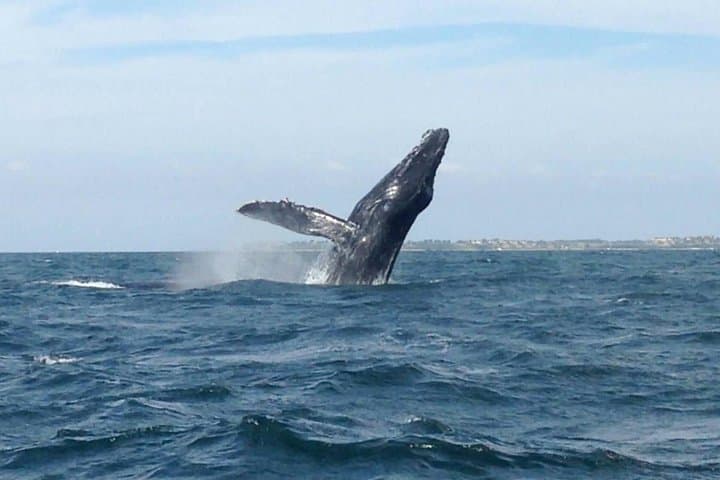


The boat slips away from Sayulita’s marina before dawn, and the Pacific opens like a moving plain that seems to test the hull with every swell. On this trip, the sea has its own agenda: whales that arch and exhale in foamy crescents, and rock islands that throw gulls and blue-footed boobies into the wind.
The boat slips away from Sayulita’s marina before dawn, and the Pacific opens like a moving plain that seems to test the hull with every swell. On this trip, the sea has its own agenda: whales that arch and exhale in foamy crescents, and rock islands that throw gulls and blue-footed boobies into the wind.
The Marietas Islands are a protected national park at the north end of Banderas Bay, a volcanic cluster that rose from Pacific eruptions and decades of ocean currents carving lava into caverns and cliffs. Jacques Cousteau helped put the islands on international radar; today the archipelago is UNESCO-recognized for its marine biodiversity and nesting seabirds. Local fishing towns like Sayulita and Punta de Mita historically used the bay for small-scale fishing and trade—now tourism and conservation share the shoreline conversation.
Expect a trip that combines wildlife viewing with optional snorkeling: whales on the transit to and from the islands, coastal cruising to inspect caves and nesting sites, and a guided snorkel at a sheltered reef or playa Nopalera. Guides point out geology, bird colonies, and marine life while giving practical safety briefings.
Plan for sun, spray, and movement: bring reef-safe sunscreen, a light wind shell, and a small dry bag for electronics. If prone to seasickness, pre-dose or choose a central seat. Timing matters—mornings are quieter for wildlife and calmer seas. The experience balances observational patience with active water time, offering both wild spectacle and grounded logistics for a half-day at sea.