THE ADVENTURE COLLECTIVE® · Independent discovery and booking for outdoor travel

A five-day route from Leh into the heart of Ladakh, the Markha Valley trek mixes glacial valleys, high pastures and remote villages. Expect long, high-altitude days, simple camps or homestays, and sweeping views of Kang Yatse.
A five-day route from Leh into the heart of Ladakh, the Markha Valley trek mixes glacial valleys, high pastures and remote villages. Expect long, high-altitude days, simple camps or homestays, and sweeping views of Kang Yatse.
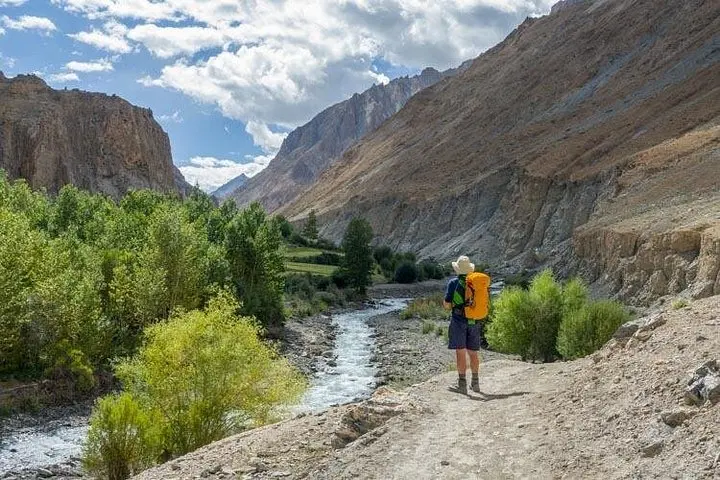
You leave Leh before dawn, the plate-glass light of the high plateau turning the brown roofs silver as the road drops toward the braided Zanskar. The first drive through Chilling delivers the river’s hush; by Skiu the trail narrows into pastures and wooden bridges that rattle with each crossing. The valley pulls you upward — a ribbon of dust and stone that opens into green bowls where yaks graze and wind-bent prayer flags snap like small alarms.
Verified experiences and guided adventures in the surrounding area.
Operated by Active Adventures · Leh, Ladakh
You leave Leh before dawn, the plate-glass light of the high plateau turning the brown roofs silver as the road drops toward the braided Zanskar. The first drive through Chilling delivers the river’s hush; by Skiu the trail narrows into pastures and wooden bridges that rattle with each crossing. The valley pulls you upward — a ribbon of dust and stone that opens into green bowls where yaks graze and wind-bent prayer flags snap like small alarms.
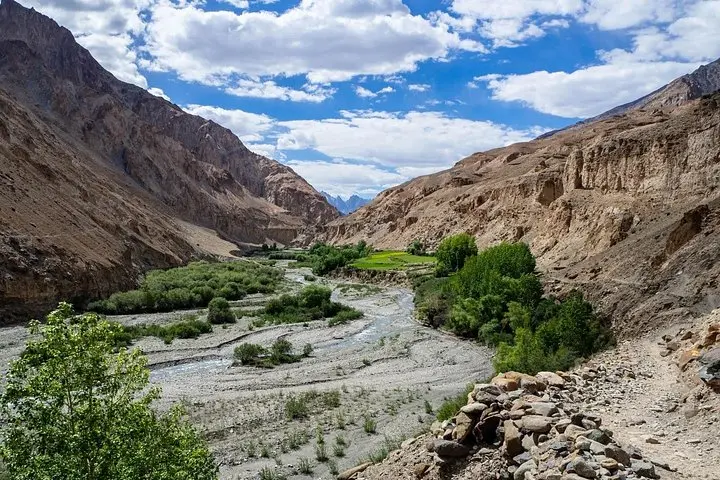
Geologically the Markha Valley is a glacially carved corridor between the Greater Himalaya and Zanskar range; you’ll cross moraines, glacial streams and scree slopes while contouring grassy benches. Culturally the route threads small Ladakhi villages, monasteries and barley fields; local homestays and simple tented camps share Himalayan tea and stories of Kang Yatse seen in the clear light.
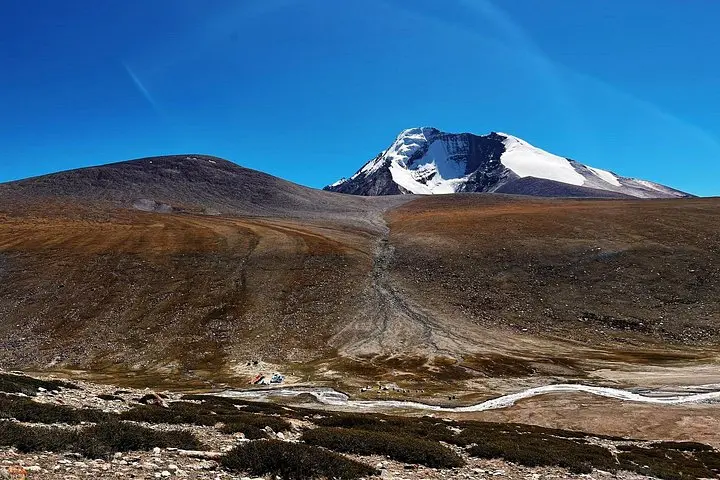
Expect long days: several stages run 10–18 km across mixed terrain — river flats, rocky trails and steeper ascents to passes near 5,200 m. Nimaling sits high and wide, where animals and summer pastures dominate; Kangmar La provides panoramic payoff but demands steady breathing and careful footing. Guides handle permits and logistics for most groups, though independent trekkers must register in Leh and plan extra acclimatization time.
Practical notes: prioritize acclimatization in Leh (2 nights), carry layered clothing for big diurnal swings, use trekking poles for stream crossings and scree, and pack high-calorie snacks and at least 3–4 liters of water-treatment options. Weather can shift quickly; move early in the day for stable skies and best views.
The main window is June through September when passes are clear and pastures at Nimaling are open; late spring can still hold snow at higher elevations and winter is impassable.
Local permits and registration are required; most operators handle permits, while independent trekkers should register in Leh with local authorities or the tourism office.
Expect daily distances of 10–18 km with sustained climbs; the highest point near Kangmar La reaches roughly 5,200 m, with Nimaling around 4,900 m, so altitude fitness is essential.
Experienced trekkers with permit knowledge can go independently, but most travelers choose guided groups for navigation, logistics, acclimatization management and local support.
Active Adventures operates guided outdoor trips and adventures with an emphasis on safety, stewardship, and memorable experiences.
You leave Leh before dawn, the plate-glass light of the high plateau turning the brown roofs silver as the road drops toward the braided Zanskar. The first drive through Chilling delivers the river’s hush; by Skiu the trail narrows into pastures and wooden bridges that rattle with each crossing. The valley pulls you upward — a ribbon of dust and stone that opens into green bowls where yaks graze and wind-bent prayer flags snap like small alarms.
You leave Leh before dawn, the plate-glass light of the high plateau turning the brown roofs silver as the road drops toward the braided Zanskar. The first drive through Chilling delivers the river’s hush; by Skiu the trail narrows into pastures and wooden bridges that rattle with each crossing. The valley pulls you upward — a ribbon of dust and stone that opens into green bowls where yaks graze and wind-bent prayer flags snap like small alarms.
Geologically the Markha Valley is a glacially carved corridor between the Greater Himalaya and Zanskar range; you’ll cross moraines, glacial streams and scree slopes while contouring grassy benches. Culturally the route threads small Ladakhi villages, monasteries and barley fields; local homestays and simple tented camps share Himalayan tea and stories of Kang Yatse seen in the clear light.
Expect long days: several stages run 10–18 km across mixed terrain — river flats, rocky trails and steeper ascents to passes near 5,200 m. Nimaling sits high and wide, where animals and summer pastures dominate; Kangmar La provides panoramic payoff but demands steady breathing and careful footing. Guides handle permits and logistics for most groups, though independent trekkers must register in Leh and plan extra acclimatization time.
Practical notes: prioritize acclimatization in Leh (2 nights), carry layered clothing for big diurnal swings, use trekking poles for stream crossings and scree, and pack high-calorie snacks and at least 3–4 liters of water-treatment options. Weather can shift quickly; move early in the day for stable skies and best views.