THE ADVENTURE COLLECTIVE® · Independent discovery and booking for outdoor travel

Three days from Marrakech to the dunes of Erg Chebbi combine High Atlas passes, UNESCO earthen ksars and a camel-led night under the stars. This guided itinerary balances cultural stops, canyon walks and an authentic Berber camp experience.
Three days from Marrakech to the dunes of Erg Chebbi combine High Atlas passes, UNESCO earthen ksars and a camel-led night under the stars. This guided itinerary balances cultural stops, canyon walks and an authentic Berber camp experience.
You crest the High Atlas under a pale-blue morning and the road drops away into ochre folds: palm-lined valleys give way to a broad plain, then the dunes of Erg Chebbi rise like a slow-moving ocean. By late afternoon the wind sculpts ripples on the sand and the camel caravan becomes a patient line against the horizon, the animals' steady rhythm setting the pace.
Verified experiences and guided adventures in the surrounding area.
Operated by Sahara cruiser · Merzouga, Drâa-Tafilalet
You crest the High Atlas under a pale-blue morning and the road drops away into ochre folds: palm-lined valleys give way to a broad plain, then the dunes of Erg Chebbi rise like a slow-moving ocean. By late afternoon the wind sculpts ripples on the sand and the camel caravan becomes a patient line against the horizon, the animals' steady rhythm setting the pace.
This three-day loop from Marrakech threads mountain passes (Tizi n’Tichka), the UNESCO ksar of Aït Ben Haddou, the Dades Valley’s kasbahs, and the narrow limestone walls of Todra Gorge before reaching Merzouga and the iconic orange sea of dunes. Geologically, Erg Chebbi is a mobile erg of wind-blown sand deposited over millennia; culturally, the route follows former caravan corridors that connected Saharan trade and Berber settlements.
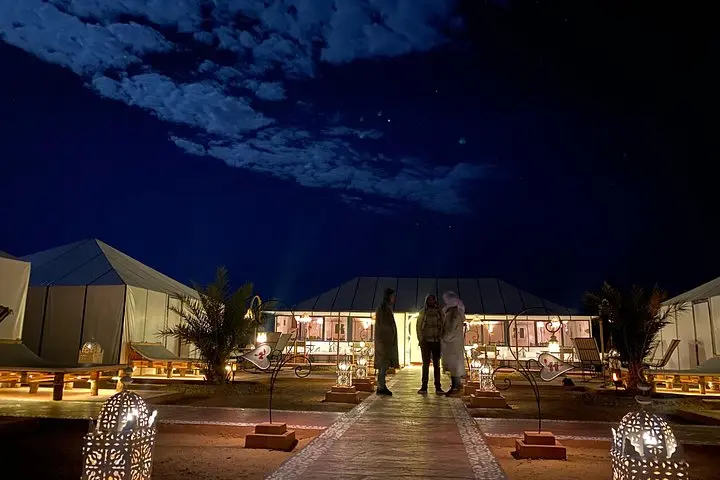
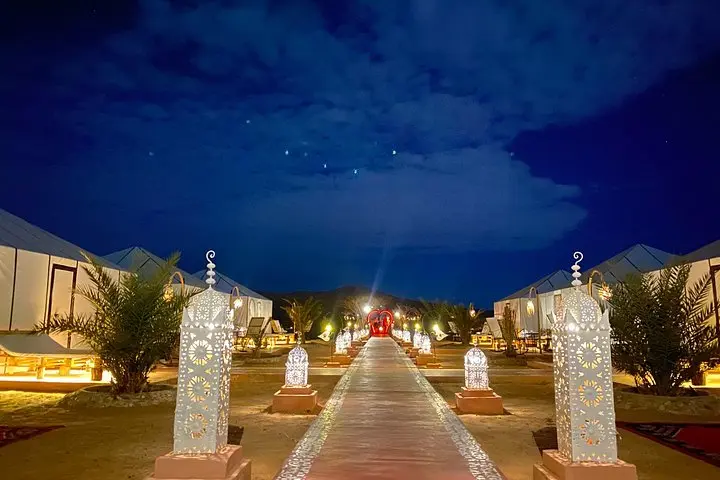
Expect hands-on cultural moments: earthen architecture at Aït Ben Haddou, Gnawa music in small desert villages, and an evening in a desert camp where tents and a cooking fire set the tempo. Nights are big—cold and star-dense—and days can swing hot.
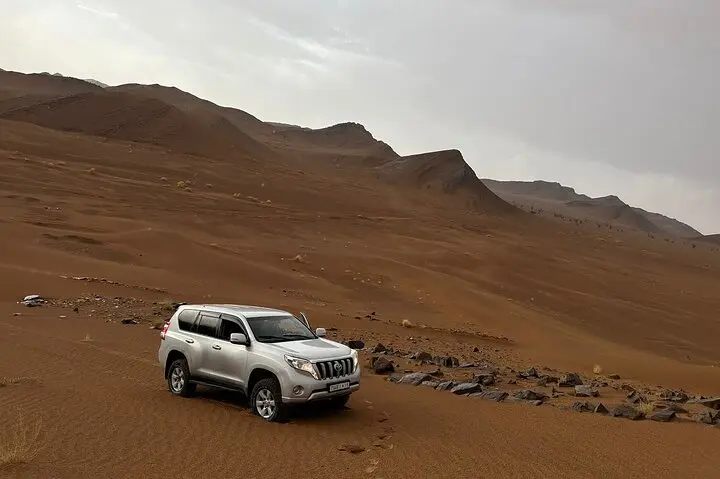
Practical guidance: travel is by modern, air-conditioned vehicle with long driving segments—pack motion-sickness remedies and layered clothing. Camel treks are gentle but require balance; wear closed-toe shoes and protect skin and eyes from sun and sand. Hydrate frequently and plan timing so dune walks occur at cooler dawn or dusk. The tour is paced for most travelers but brings extended transit; bring charged batteries, a refillable water bottle, and respect fragile desert ecology by minimizing waste.
Typical camel treks to the desert camp last 45–90 minutes one way, timed for sunset or sunrise; options vary by operator for longer walks.
You’ll stay in 3-star hotels or riads en route and a standard Berber desert camp with private tents and shared restrooms—basic but organized for comfort.
The tour is rated easy but includes camel rides and uneven surfaces; young children and those with serious mobility limits should consult the operator about specific needs.
Two dinners and two breakfasts plus bottled water are included; bring snacks for long drives and inform the operator about dietary needs when booking.
Sahara cruiser operates guided outdoor trips and adventures with an emphasis on safety, stewardship, and memorable experiences.
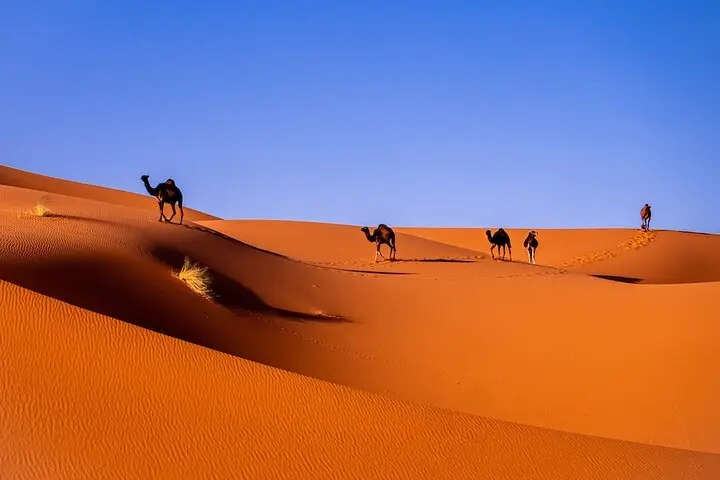
You crest the High Atlas under a pale-blue morning and the road drops away into ochre folds: palm-lined valleys give way to a broad plain, then the dunes of Erg Chebbi rise like a slow-moving ocean. By late afternoon the wind sculpts ripples on the sand and the camel caravan becomes a patient line against the horizon, the animals' steady rhythm setting the pace.
You crest the High Atlas under a pale-blue morning and the road drops away into ochre folds: palm-lined valleys give way to a broad plain, then the dunes of Erg Chebbi rise like a slow-moving ocean. By late afternoon the wind sculpts ripples on the sand and the camel caravan becomes a patient line against the horizon, the animals' steady rhythm setting the pace.
This three-day loop from Marrakech threads mountain passes (Tizi n’Tichka), the UNESCO ksar of Aït Ben Haddou, the Dades Valley’s kasbahs, and the narrow limestone walls of Todra Gorge before reaching Merzouga and the iconic orange sea of dunes. Geologically, Erg Chebbi is a mobile erg of wind-blown sand deposited over millennia; culturally, the route follows former caravan corridors that connected Saharan trade and Berber settlements.
Expect hands-on cultural moments: earthen architecture at Aït Ben Haddou, Gnawa music in small desert villages, and an evening in a desert camp where tents and a cooking fire set the tempo. Nights are big—cold and star-dense—and days can swing hot.
Practical guidance: travel is by modern, air-conditioned vehicle with long driving segments—pack motion-sickness remedies and layered clothing. Camel treks are gentle but require balance; wear closed-toe shoes and protect skin and eyes from sun and sand. Hydrate frequently and plan timing so dune walks occur at cooler dawn or dusk. The tour is paced for most travelers but brings extended transit; bring charged batteries, a refillable water bottle, and respect fragile desert ecology by minimizing waste.