THE ADVENTURE COLLECTIVE® · Independent discovery and booking for outdoor travel

Leave Marrakech for a day of cascading valleys, Berber village walks and a relaxed camel ride beneath the gaze of Mount Toubkal. This full-day trip pairs gentle mountain walking with cultural stops—argan co-ops, waterfalls and a home-cooked Berber lunch.
Leave Marrakech for a day of cascading valleys, Berber village walks and a relaxed camel ride beneath the gaze of Mount Toubkal. This full-day trip pairs gentle mountain walking with cultural stops—argan co-ops, waterfalls and a home-cooked Berber lunch.
A dust-sweet wind meets the morning shuttle out of Marrakech and the High Atlas rises like an old story—rock ribs and terraces catching the first light. Travelers leave the city’s ochre heat behind, climbing through argan-dotted foothills toward narrow valleys where mule tracks thread between stone villages. Camels wait at a shaded knoll; their slow sway becomes the day’s rhythm as guides point toward distant, snow-capped Toubkal (4,167 m), North Africa’s highest peak, watching over villages that have stepped lightly on these slopes for centuries.
Verified experiences and guided adventures in the surrounding area.
Operated by Tours From Marrakech · Marrakech, Marrakesh-Safi
A dust-sweet wind meets the morning shuttle out of Marrakech and the High Atlas rises like an old story—rock ribs and terraces catching the first light. Travelers leave the city’s ochre heat behind, climbing through argan-dotted foothills toward narrow valleys where mule tracks thread between stone villages. Camels wait at a shaded knoll; their slow sway becomes the day’s rhythm as guides point toward distant, snow-capped Toubkal (4,167 m), North Africa’s highest peak, watching over villages that have stepped lightly on these slopes for centuries.
Geologically, the High Atlas is young: uplift from the African and Eurasian plates created sharp ridgelines and quick elevation gain, carving waterfalls and terraces where seasonal streams dare the rock to hold them. Culturally, the valleys are Amazigh (Berber) country—homes of terraced gardens, argan cooperatives where women press oil by hand, and family houses that still serve tajine as a slow, social craft. The itinerary stitches short walks, a camel ride, visits to women’s argan cooperatives, and a home-cooked lunch with a Berber family—an accessible mix of gentle exertion and cultural exchange.
Practical guidance: start early to avoid midday heat; bring layered clothing for variable mountain sun and shade; wear sturdy walking shoes for rocky village paths; carry 1–2 liters of water and cash for small purchases and tips. Expect uneven surfaces, brief uphill stretches, and photo stops; altitudes are moderate but can feel sharp if you’re unused to hills. Respect local customs—ask before photographing people—and favor locally produced goods to support community income while minimizing environmental impact.
The excursion is a full-day tour (about 9 hours); most operators leave Marrakech in the morning—confirm your exact pickup time when booking.
Yes—short, supervised camel rides are included and generally suitable for children, though those with mobility concerns should check in advance.
A traditional lunch in a Berber family’s home is included; vegetarian options are available if requested at booking.
Yes—many stops include cooperative demonstrations and small shops; buying directly supports local women’s cooperatives but be prepared with cash.
Tours From Marrakech operates guided outdoor trips and adventures with an emphasis on safety, stewardship, and memorable experiences.
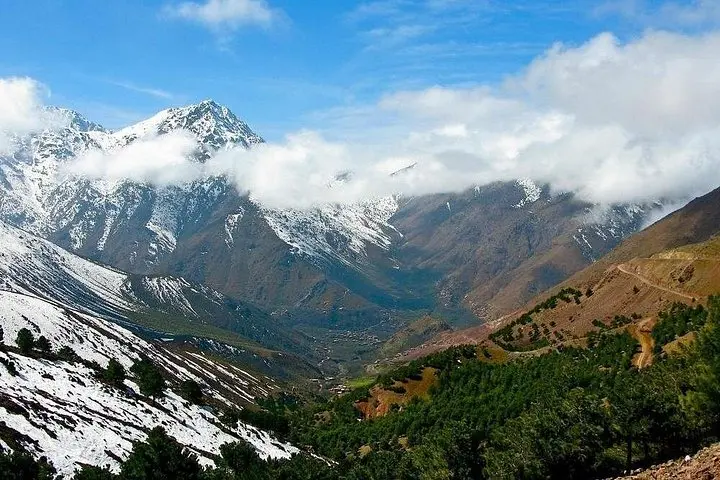
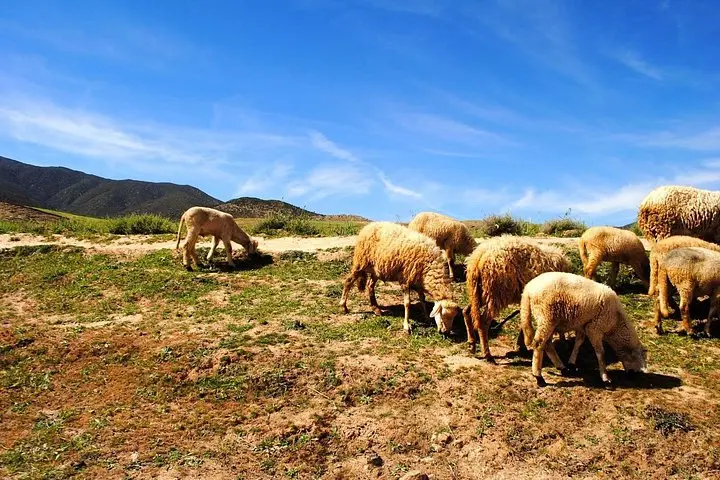
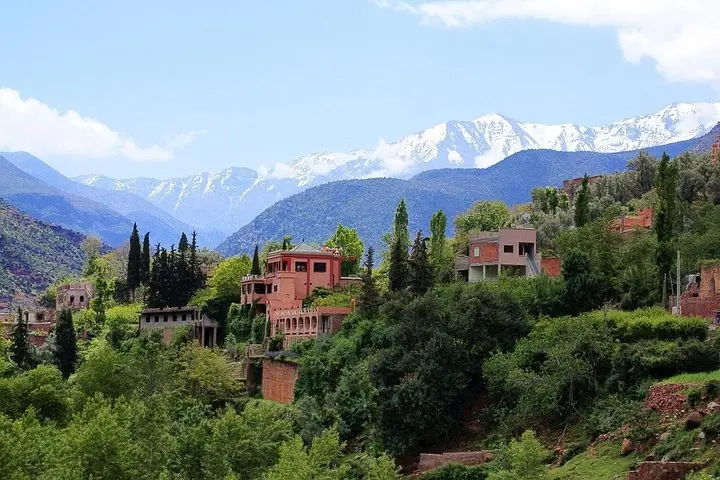
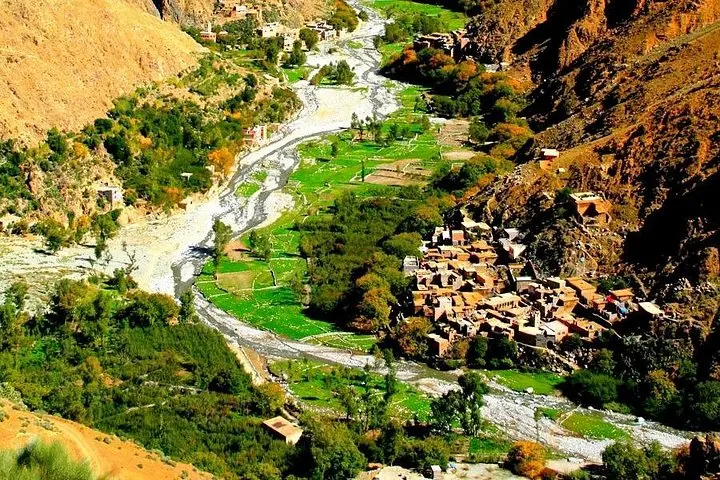
A dust-sweet wind meets the morning shuttle out of Marrakech and the High Atlas rises like an old story—rock ribs and terraces catching the first light. Travelers leave the city’s ochre heat behind, climbing through argan-dotted foothills toward narrow valleys where mule tracks thread between stone villages. Camels wait at a shaded knoll; their slow sway becomes the day’s rhythm as guides point toward distant, snow-capped Toubkal (4,167 m), North Africa’s highest peak, watching over villages that have stepped lightly on these slopes for centuries.
A dust-sweet wind meets the morning shuttle out of Marrakech and the High Atlas rises like an old story—rock ribs and terraces catching the first light. Travelers leave the city’s ochre heat behind, climbing through argan-dotted foothills toward narrow valleys where mule tracks thread between stone villages. Camels wait at a shaded knoll; their slow sway becomes the day’s rhythm as guides point toward distant, snow-capped Toubkal (4,167 m), North Africa’s highest peak, watching over villages that have stepped lightly on these slopes for centuries.
Geologically, the High Atlas is young: uplift from the African and Eurasian plates created sharp ridgelines and quick elevation gain, carving waterfalls and terraces where seasonal streams dare the rock to hold them. Culturally, the valleys are Amazigh (Berber) country—homes of terraced gardens, argan cooperatives where women press oil by hand, and family houses that still serve tajine as a slow, social craft. The itinerary stitches short walks, a camel ride, visits to women’s argan cooperatives, and a home-cooked lunch with a Berber family—an accessible mix of gentle exertion and cultural exchange.
Practical guidance: start early to avoid midday heat; bring layered clothing for variable mountain sun and shade; wear sturdy walking shoes for rocky village paths; carry 1–2 liters of water and cash for small purchases and tips. Expect uneven surfaces, brief uphill stretches, and photo stops; altitudes are moderate but can feel sharp if you’re unused to hills. Respect local customs—ask before photographing people—and favor locally produced goods to support community income while minimizing environmental impact.