THE ADVENTURE COLLECTIVE® · Independent discovery and booking for outdoor travel

Make the most of a port day with a full-day transfer from Agadir to Marrakech to see the Koutoubia, Bahia Palace and Saadian Tombs. This shore excursion pairs three hours of scenic driving with guided walking through Marrakech’s historic heart.
Make the most of a port day with a full-day transfer from Agadir to Marrakech to see the Koutoubia, Bahia Palace and Saadian Tombs. This shore excursion pairs three hours of scenic driving with guided walking through Marrakech’s historic heart.
You step off the ship before dawn and the Atlantic air gives way to a rising highway that pushes inland toward ochre walls and palm-lined avenues. The drive to Marrakech takes roughly three hours along a main coastal route that climbs toward the High Atlas foothills; vineyards and argan trees slide past the window as the city’s minarets appear on the horizon.
Verified experiences and guided adventures in the surrounding area.
You step off the ship before dawn and the Atlantic air gives way to a rising highway that pushes inland toward ochre walls and palm-lined avenues. The drive to Marrakech takes roughly three hours along a main coastal route that climbs toward the High Atlas foothills; vineyards and argan trees slide past the window as the city’s minarets appear on the horizon.
Marrakech’s urban core dates to the 11th century; its Koutoubia minaret (12th century) still marks the old medina. The Bahia Palace reflects 18th-century Moroccan court life with courtyards and carved cedar wood, while the Saadian Tombs provide a rare intact example of Saadian funerary art and mosaic work. Geologically, the region sits on sediments washed from the Atlas, giving the city its distinctive red-earth hue and sun-baked textures.
Expect a day split between comfortable road travel and moderate walking on paved and cobbled surfaces. You’ll encounter the cacophony of Jemaa el-Fnaa: snake charmers, food stalls and crowded souks—an active cultural environment where bargaining and situational awareness matter. Practical notes: carry water, wear closed-toe walking shoes for uneven alleys, and keep valuables secured. Respect prayer times and modest dress in religious sites; photography rules can vary.
Timing matters—arriving mid-morning lets you visit cooler palaces and tombs before market bustle; mid-afternoon is better for lingering over a mint tea. Whether you’re making a long port day worthwhile or squeezing a classic Moroccan highlight into a cruise itinerary, this excursion balances history, architecture and the sensory intensity of Marrakech into a single full day.
The excursion includes approximately a 3-hour one-way drive (around 250–300 km) depending on traffic and route.
Inclusions vary by operator—confirm at booking; many excursions include guide fees but not always entrance tickets or lunch.
Yes if participants can manage extended bus travel and moderate walking; ask about accessibility for mobility-impaired travelers before booking.
Most shore excursions allow limited free time in Jemaa el-Fnaa or the souks, but timetable is tight—expect guided windows plus short independent periods.
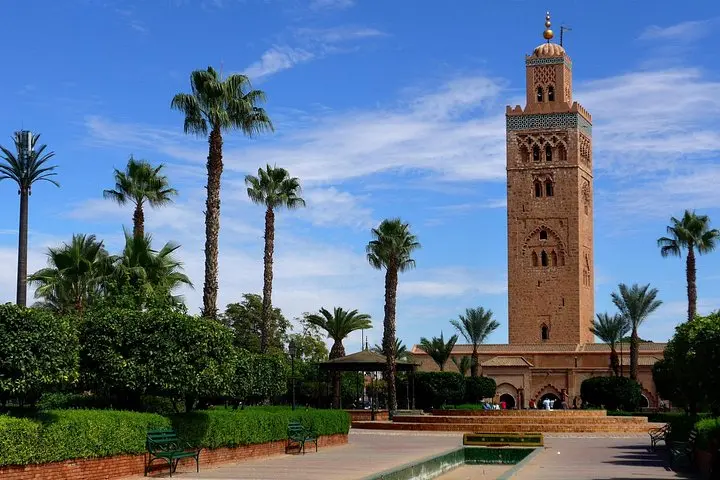
You step off the ship before dawn and the Atlantic air gives way to a rising highway that pushes inland toward ochre walls and palm-lined avenues. The drive to Marrakech takes roughly three hours along a main coastal route that climbs toward the High Atlas foothills; vineyards and argan trees slide past the window as the city’s minarets appear on the horizon.
You step off the ship before dawn and the Atlantic air gives way to a rising highway that pushes inland toward ochre walls and palm-lined avenues. The drive to Marrakech takes roughly three hours along a main coastal route that climbs toward the High Atlas foothills; vineyards and argan trees slide past the window as the city’s minarets appear on the horizon.
Marrakech’s urban core dates to the 11th century; its Koutoubia minaret (12th century) still marks the old medina. The Bahia Palace reflects 18th-century Moroccan court life with courtyards and carved cedar wood, while the Saadian Tombs provide a rare intact example of Saadian funerary art and mosaic work. Geologically, the region sits on sediments washed from the Atlas, giving the city its distinctive red-earth hue and sun-baked textures.
Expect a day split between comfortable road travel and moderate walking on paved and cobbled surfaces. You’ll encounter the cacophony of Jemaa el-Fnaa: snake charmers, food stalls and crowded souks—an active cultural environment where bargaining and situational awareness matter. Practical notes: carry water, wear closed-toe walking shoes for uneven alleys, and keep valuables secured. Respect prayer times and modest dress in religious sites; photography rules can vary.
Timing matters—arriving mid-morning lets you visit cooler palaces and tombs before market bustle; mid-afternoon is better for lingering over a mint tea. Whether you’re making a long port day worthwhile or squeezing a classic Moroccan highlight into a cruise itinerary, this excursion balances history, architecture and the sensory intensity of Marrakech into a single full day.