THE ADVENTURE COLLECTIVE® · Independent discovery and booking for outdoor travel

Move through Marrakech’s ochre lanes with a licensed guide in a focused 3–4 hour tour. Visit Koutoubia, Saadian tombs, Bahia Palace and the sprawling markets of Jemaa el-Fna while learning the city’s layered history and practical travel tips.
Move through Marrakech’s ochre lanes with a licensed guide in a focused 3–4 hour tour. Visit Koutoubia, Saadian tombs, Bahia Palace and the sprawling markets of Jemaa el-Fna while learning the city’s layered history and practical travel tips.
The morning air in Marrakech has a dry clarity that instantly sharpens the senses: light hits the ochre walls, the call to prayer threads through alleys, and the minaret of Koutoubia stakes a straightforward silhouette against the sky. A half-day guided tour moves at this same purposeful pace—three to four hours of plazas, palaces and souks that sketch the city’s public life.
Verified experiences and guided adventures in the surrounding area.
Operated by Morocco Global Adventures · Marrakech, Marrakesh-Safi
The morning air in Marrakech has a dry clarity that instantly sharpens the senses: light hits the ochre walls, the call to prayer threads through alleys, and the minaret of Koutoubia stakes a straightforward silhouette against the sky. A half-day guided tour moves at this same purposeful pace—three to four hours of plazas, palaces and souks that sketch the city’s public life.
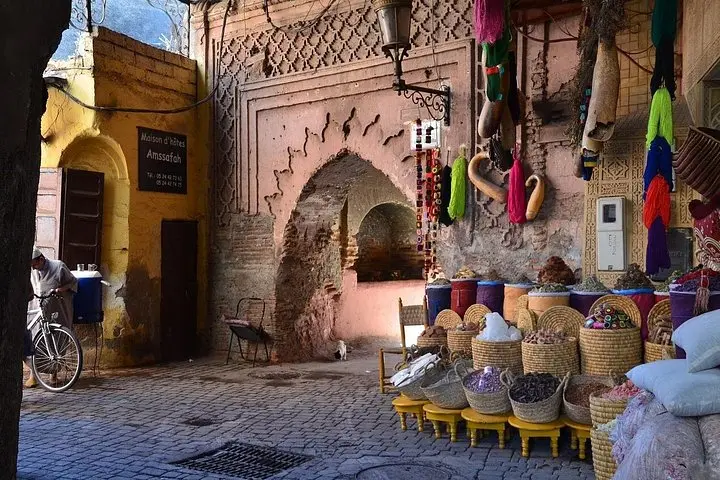
History here is tangible. Marrakech was founded by the Almoravids in the 11th century and later reshaped by Almohad and Saadian rulers; their marks remain in the geometry of Koutoubia’s minaret, the tilework of the Saadian tombs and the carved cedar of Bahia Palace. Geologically, the city’s ochre comes from red clay soils of the Haouz plain, giving buildings their distinctive tone that changes with the sun.
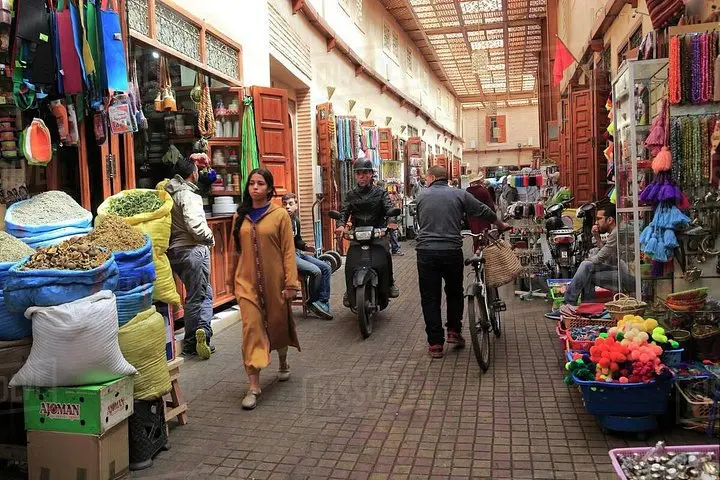
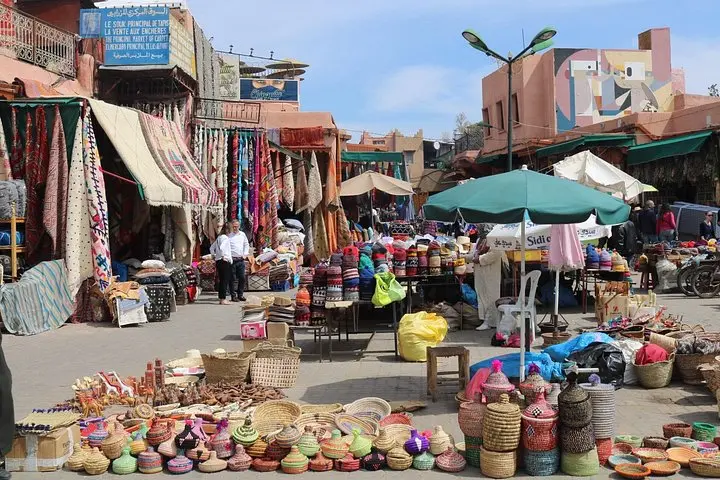
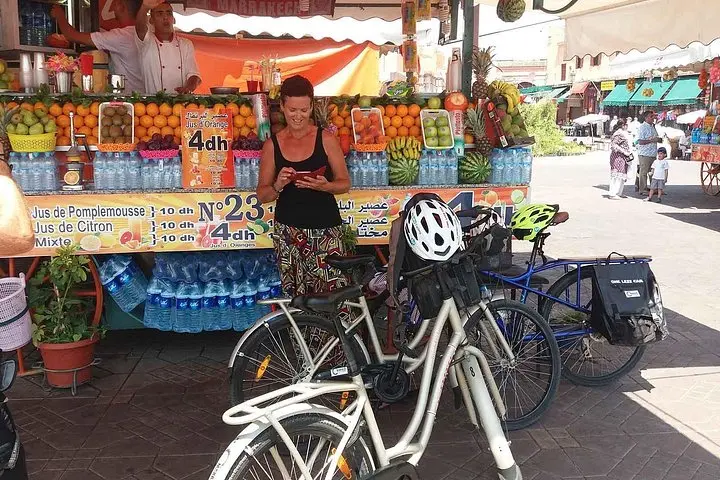
Culturally, the medina is living commerce: spice vendors, craft ateliers and juice stalls orbit Jemaa el-Fna, where performance and trade mix. Local guides—often licensed art historians—translate motifs, point out craftsmanship techniques and explain ritual uses of space.
Practical guidance: expect mostly paved and compacted alleyways, short stair sections and crowded passages; comfortable walking shoes and a lightweight scarf for mosque visits and sun protection are recommended. Start in the morning to avoid midday crowds and heat, carry water, and allow your guide to handle ticket queues to maximize time.
This tour suits travelers who want a focused introduction to Marrakech’s architectural highlights, layered history and everyday rhythms without committing to a full-day itinerary.
The tour runs about 3–4 hours and typically includes Koutoubia mosque (exterior), Saadian tombs, Bahia Palace and time in the medina and Jemaa el-Fna.
Some major entrances (noted by the operator) may be included; check booking details or ask your guide about any optional admissions like Bahia Palace during the tour.
Yes—this tour notes stroller accessibility, though some alleys can be narrow; infant seats are available if needed.
Guides are typically licensed and may offer tours in several languages; shared tours are capped at around 12 travelers—confirm language availability at booking.
Morocco Global Adventures operates guided outdoor trips and adventures with an emphasis on safety, stewardship, and memorable experiences.
The morning air in Marrakech has a dry clarity that instantly sharpens the senses: light hits the ochre walls, the call to prayer threads through alleys, and the minaret of Koutoubia stakes a straightforward silhouette against the sky. A half-day guided tour moves at this same purposeful pace—three to four hours of plazas, palaces and souks that sketch the city’s public life.
The morning air in Marrakech has a dry clarity that instantly sharpens the senses: light hits the ochre walls, the call to prayer threads through alleys, and the minaret of Koutoubia stakes a straightforward silhouette against the sky. A half-day guided tour moves at this same purposeful pace—three to four hours of plazas, palaces and souks that sketch the city’s public life.
History here is tangible. Marrakech was founded by the Almoravids in the 11th century and later reshaped by Almohad and Saadian rulers; their marks remain in the geometry of Koutoubia’s minaret, the tilework of the Saadian tombs and the carved cedar of Bahia Palace. Geologically, the city’s ochre comes from red clay soils of the Haouz plain, giving buildings their distinctive tone that changes with the sun.
Culturally, the medina is living commerce: spice vendors, craft ateliers and juice stalls orbit Jemaa el-Fna, where performance and trade mix. Local guides—often licensed art historians—translate motifs, point out craftsmanship techniques and explain ritual uses of space.
Practical guidance: expect mostly paved and compacted alleyways, short stair sections and crowded passages; comfortable walking shoes and a lightweight scarf for mosque visits and sun protection are recommended. Start in the morning to avoid midday crowds and heat, carry water, and allow your guide to handle ticket queues to maximize time.
This tour suits travelers who want a focused introduction to Marrakech’s architectural highlights, layered history and everyday rhythms without committing to a full-day itinerary.