THE ADVENTURE COLLECTIVE® · Independent discovery and booking for outdoor travel

Walk the heartbeat of Marrakech in a compact 3–4 hour tour that links Djemaa el-Fna with Bahia Palace, Badi Palace and the Majorelle Garden. Expect narrow alleys, ornate courtyards, and practical tips for tickets, dress and timing.
Walk the heartbeat of Marrakech in a compact 3–4 hour tour that links Djemaa el-Fna with Bahia Palace, Badi Palace and the Majorelle Garden. Expect narrow alleys, ornate courtyards, and practical tips for tickets, dress and timing.
You step from the hush of an air-conditioned minivan into a current of heat and sound: vendors calling, spices bright as paint, and the plaza of Djemaa el-Fna pulsing like a living map. The guide steers you through alleys that narrow to the width of a shoulder, past bakeries sending up steam and tile-fronted riads that keep centuries of stories behind wooden doors.
Verified experiences and guided adventures in the surrounding area.
Operated by Visit Marrakech Official · Marrakech, Marrakesh-Safi
You step from the hush of an air-conditioned minivan into a current of heat and sound: vendors calling, spices bright as paint, and the plaza of Djemaa el-Fna pulsing like a living map. The guide steers you through alleys that narrow to the width of a shoulder, past bakeries sending up steam and tile-fronted riads that keep centuries of stories behind wooden doors.
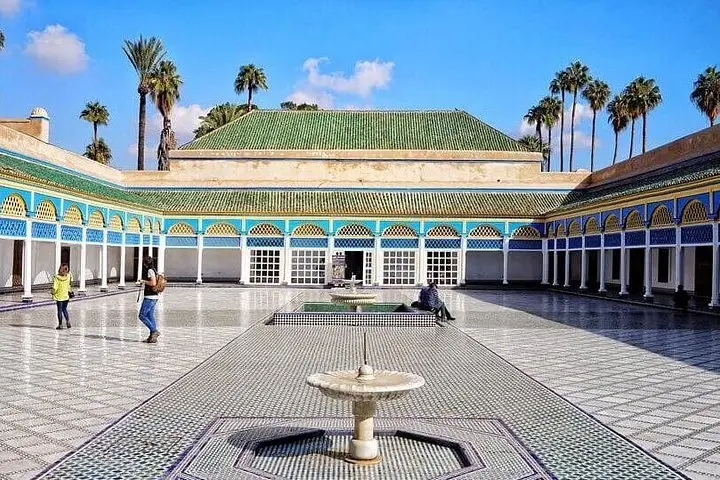
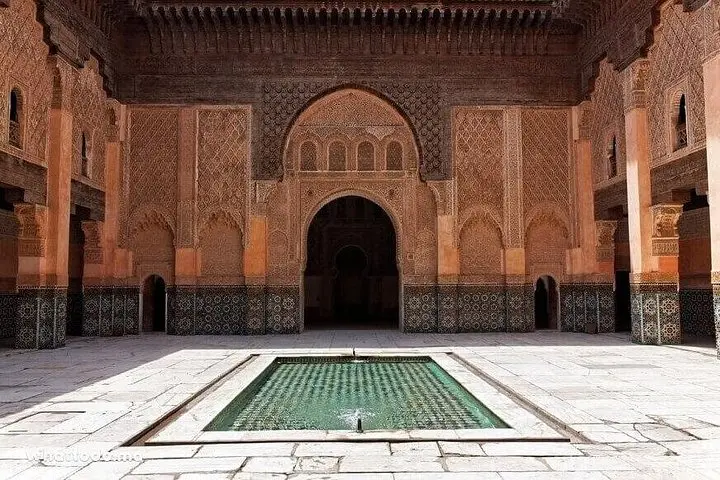
This half-day route threads three palaces and the famed Majorelle Garden, touching layers of Marrakech history: 16th–17th century Saadian and Alaouite court life at Bahia and Badi, and Yves Saint Laurent’s 20th-century refuge transformed into an artful botanical compound. The city sits on the High Atlas foothills; the red earth that colors Marrakech comes from iron-rich soils and alluvial deposits carried down by ancient rivers—stone and tile here bear that mineral warmth.
Culturally, the medina is a trade network alive since the caravan era; artisans, spice merchants and photographers keep the tradition moving. Practically, expect 3–4 hours of steady walking on cobbles and paved lanes, brief courtyard climbs and steps inside palaces. Groups are small (max 10), and Majorelle often requires advance tickets—buy online to guarantee entry.
Bring sun protection, comfortable shoes and a light scarf for respectful coverage. Hydrate before you arrive and plan for short, photo-friendly stops rather than long rests. The tour is both an orientation to Marrakech’s living center and an efficient way to see major cultural sites in a single morning or afternoon.
No; the tour price typically excludes entrance fees. Majorelle Garden requires a separate timed ticket—buy it online in advance to ensure entry.
Yes for children; the operator allows kids and offers infant seats. Strollers can be difficult on narrow streets—consider a carrier for very young children.
A conservative dress code is recommended—cover shoulders and knees as a sign of respect in traditional areas.
Yes, hotel pickup and drop-off are included and conducted by air-conditioned minivan, per the tour listing.
Visit Marrakech Official operates guided outdoor trips and adventures with an emphasis on safety, stewardship, and memorable experiences.
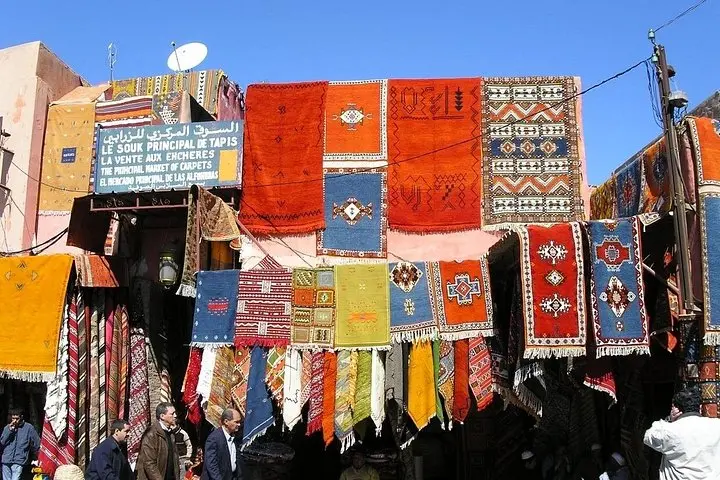
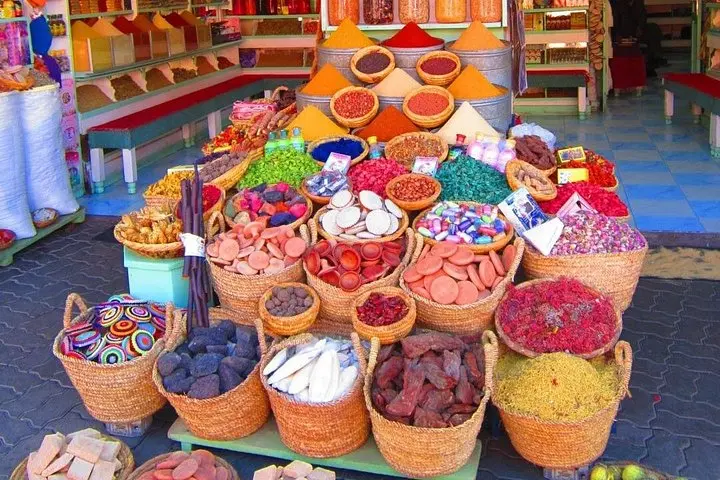
You step from the hush of an air-conditioned minivan into a current of heat and sound: vendors calling, spices bright as paint, and the plaza of Djemaa el-Fna pulsing like a living map. The guide steers you through alleys that narrow to the width of a shoulder, past bakeries sending up steam and tile-fronted riads that keep centuries of stories behind wooden doors.
You step from the hush of an air-conditioned minivan into a current of heat and sound: vendors calling, spices bright as paint, and the plaza of Djemaa el-Fna pulsing like a living map. The guide steers you through alleys that narrow to the width of a shoulder, past bakeries sending up steam and tile-fronted riads that keep centuries of stories behind wooden doors.
This half-day route threads three palaces and the famed Majorelle Garden, touching layers of Marrakech history: 16th–17th century Saadian and Alaouite court life at Bahia and Badi, and Yves Saint Laurent’s 20th-century refuge transformed into an artful botanical compound. The city sits on the High Atlas foothills; the red earth that colors Marrakech comes from iron-rich soils and alluvial deposits carried down by ancient rivers—stone and tile here bear that mineral warmth.
Culturally, the medina is a trade network alive since the caravan era; artisans, spice merchants and photographers keep the tradition moving. Practically, expect 3–4 hours of steady walking on cobbles and paved lanes, brief courtyard climbs and steps inside palaces. Groups are small (max 10), and Majorelle often requires advance tickets—buy online to guarantee entry.
Bring sun protection, comfortable shoes and a light scarf for respectful coverage. Hydrate before you arrive and plan for short, photo-friendly stops rather than long rests. The tour is both an orientation to Marrakech’s living center and an efficient way to see major cultural sites in a single morning or afternoon.