THE ADVENTURE COLLECTIVE® · Independent discovery and booking for outdoor travel

Escape Marrakech for a day and follow a mountain river into the Atlas foothills. Hike to Setti Fatma’s waterfalls, visit a Berber household and argan cooperative, and savor a riverside lunch on a varied, accessible outing.
Escape Marrakech for a day and follow a mountain river into the Atlas foothills. Hike to Setti Fatma’s waterfalls, visit a Berber household and argan cooperative, and savor a riverside lunch on a varied, accessible outing.
The bus eases out of Marrakech and, within an hour, the city’s stone and stucco give way to the rising ribs of the Atlas foothills.
Verified experiences and guided adventures in the surrounding area.
Operated by Marrakesh Tours by Mustapha · Setti Fatma, Marrakech-Safi
The bus eases out of Marrakech and, within an hour, the city’s stone and stucco give way to the rising ribs of the Atlas foothills.
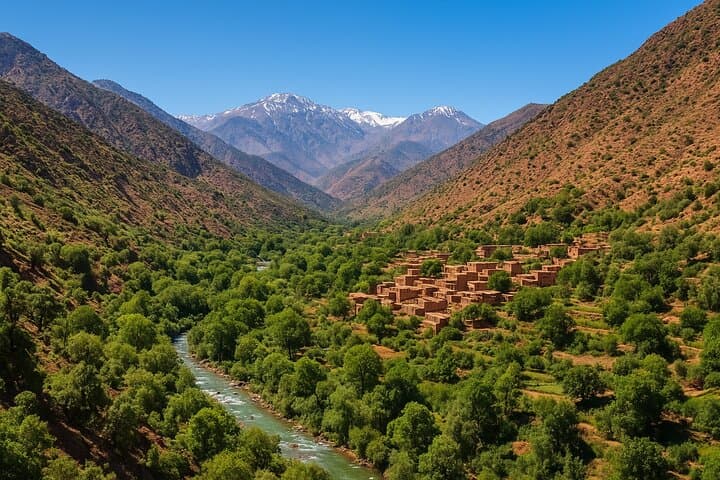
Olive terraces and flat-roofed Berber houses appear like punctuation along narrow roads; the air smells of dust, herbs, and the faint nutty tang of argan. At a local cooperative, women demonstrate hand-pressed argan oil while older stone walls keep their geometry from a long human history of mountain agriculture.
Geologically, the High Atlas is young and rugged—folded sedimentary layers thrust upward by tectonic collision—so the Ourika valley channels fast streams that cut clear ravines and feed the cascades at Setti Fatma. Culturally, this is Amazigh country: traditions of weaving, goat herding, and communal olive working persist alongside modest tourism.
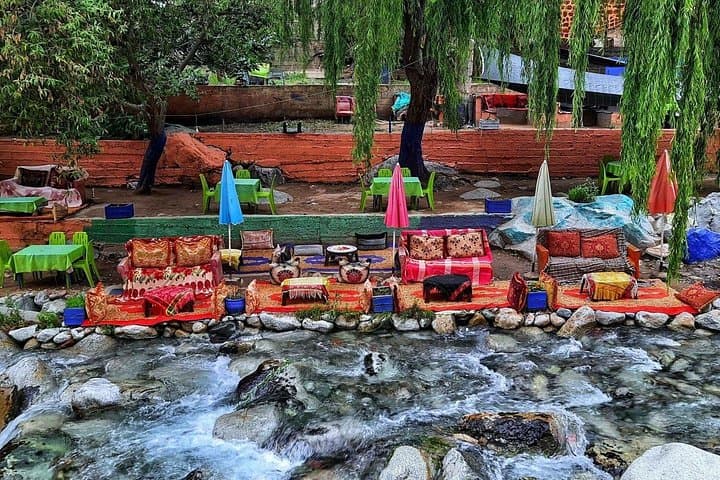
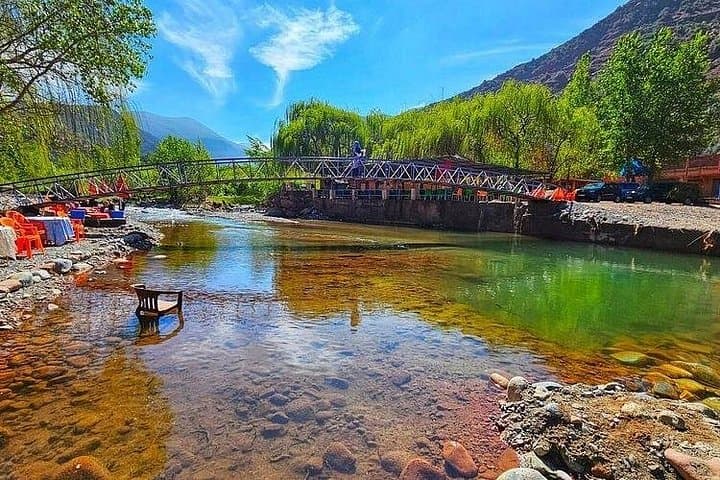
The guided segment includes a riverside hike to several waterfalls—light, rocky trails with short steeper sections—and a relaxed riverside lunch at a family-run restaurant. Expect roughly 1–2 hours of walking on uneven ground, photo stops in the foothills, and time to browse the cooperative’s natural products.
Practical notes: start early to avoid midday heat and crowds, bring layered clothing for shade-to-elevation changes, and carry cash for small purchases. Respect private property in villages and ask before photographing people.
This day trip balances easy adventure and cultural immersion: it’s accessible for most travelers but rewards basic preparation—good footwear, sun protection, and a curiosity about local life.
The guided hike to the main waterfalls takes about 1–2 hours round-trip, depending on pace and how many cascades you stop to see.
Yes—most operators include hotel pickup and drop-off in Marrakech in an air-conditioned vehicle; check your booking form for exact pickup details.
Yes, the itinerary stops at a women’s cooperative where you can see production and purchase argan oil and local crafts—bring cash and inspect packaging for purity.
The tour is family-friendly but the waterfall trail involves uneven surfaces and short steep sections; it may be challenging for travelers with limited mobility or very young children.
Marrakesh Tours by Mustapha operates guided outdoor trips and adventures with an emphasis on safety, stewardship, and memorable experiences.

The bus eases out of Marrakech and, within an hour, the city’s stone and stucco give way to the rising ribs of the Atlas foothills.
The bus eases out of Marrakech and, within an hour, the city’s stone and stucco give way to the rising ribs of the Atlas foothills.
Olive terraces and flat-roofed Berber houses appear like punctuation along narrow roads; the air smells of dust, herbs, and the faint nutty tang of argan. At a local cooperative, women demonstrate hand-pressed argan oil while older stone walls keep their geometry from a long human history of mountain agriculture.
Geologically, the High Atlas is young and rugged—folded sedimentary layers thrust upward by tectonic collision—so the Ourika valley channels fast streams that cut clear ravines and feed the cascades at Setti Fatma. Culturally, this is Amazigh country: traditions of weaving, goat herding, and communal olive working persist alongside modest tourism.
The guided segment includes a riverside hike to several waterfalls—light, rocky trails with short steeper sections—and a relaxed riverside lunch at a family-run restaurant. Expect roughly 1–2 hours of walking on uneven ground, photo stops in the foothills, and time to browse the cooperative’s natural products.
Practical notes: start early to avoid midday heat and crowds, bring layered clothing for shade-to-elevation changes, and carry cash for small purchases. Respect private property in villages and ask before photographing people.
This day trip balances easy adventure and cultural immersion: it’s accessible for most travelers but rewards basic preparation—good footwear, sun protection, and a curiosity about local life.