THE ADVENTURE COLLECTIVE® · Independent discovery and booking for outdoor travel

Escape Marrakech for an 8-hour journey into the Ourika Valley—hike to Setti Fatma’s waterfalls, visit female-run argan co-ops, and taste riverside cuisine. This guided day trip blends easy village walks with optional waterfall climbs and cultural stops.
Escape Marrakech for an 8-hour journey into the Ourika Valley—hike to Setti Fatma’s waterfalls, visit female-run argan co-ops, and taste riverside cuisine. This guided day trip blends easy village walks with optional waterfall climbs and cultural stops.
You step out of Marrakech’s heat into a corridor of green where the Ourika River dares you deeper into the High Atlas foothills. Olive and fig trees shade a narrow road that climbs toward Setti Fatma; the air cools, water chatter grows louder, and local women move between stalls selling argan oil and hand-thrown pottery.
Verified experiences and guided adventures in the surrounding area.
Operated by Trips From Marrakech · Setti Fatma, Marrakesh-Safi
You step out of Marrakech’s heat into a corridor of green where the Ourika River dares you deeper into the High Atlas foothills. Olive and fig trees shade a narrow road that climbs toward Setti Fatma; the air cools, water chatter grows louder, and local women move between stalls selling argan oil and hand-thrown pottery.
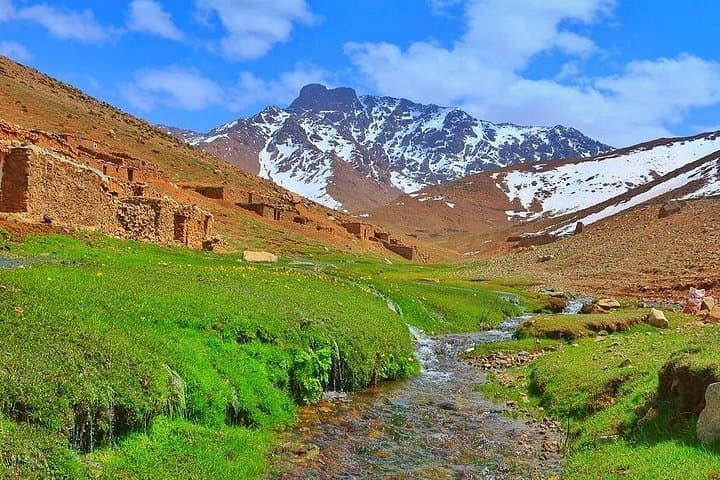
The valley has long been a summer refuge for Marrakechis and a living archive of Berber life. Geologically, the canyon owes its curves to millennia of seasonal runoff carving through sedimentary and volcanic layers; terraces and red clay pots along the route point to a farming tradition tuned to the slopes. Argan cooperatives run by local women provide both cultural insight and a chance to see traditional oil presses in action.
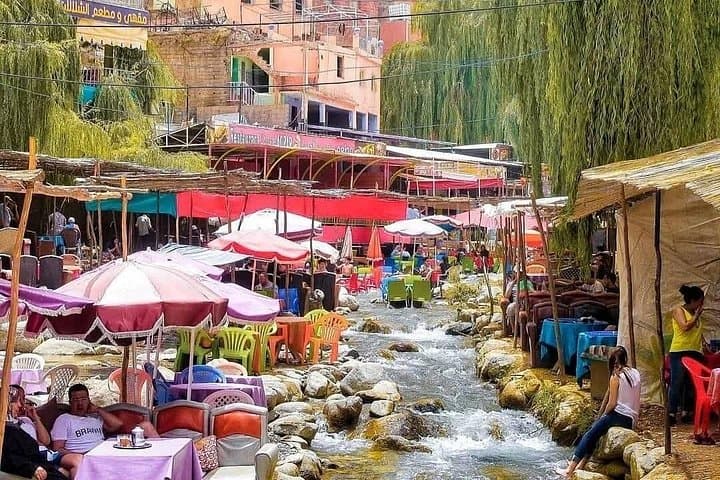
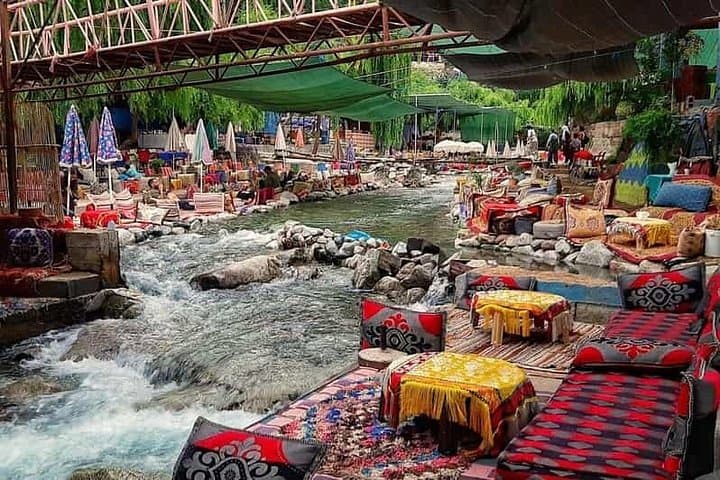
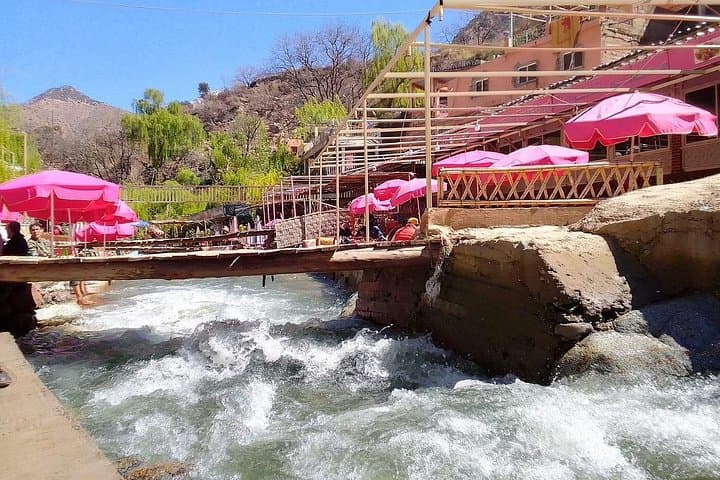
Expect a mix of short village walks, a riverside lunch at a restaurant that sometimes sets tables in the stream, and optional hikes up to Setti Fatma’s waterfalls. Trails range from easy riverside paths to steeper, rockier scrambles if you choose the waterfall climb with a local guide. The valley’s microclimate makes spring and autumn ideal for hiking, while summer brings hotter, busier conditions.
Practical: wear sturdy shoes, bring sun protection, and carry a refillable bottle—water sources can be limited. If you plan the waterfall ascent, choose closed-toe shoes with grip and consider a guide for route finding. Pickup from Marrakech is usually included; budget half a day and leave wiggle room for market browsing and photography.
Yes — standard tours include hotel pickup and drop-off in Marrakech; confirm your pickup point when booking.
The basic village walks are easy; the waterfall climb is a moderate scramble and requires good footwear and sure footing.
Many cooperatives are women-run and community-focused; look for transparent practices and avoid high-pressure purchases.
Families often join; the trip is suitable for children with supervision, though the waterfall ascent may be unsuitable for very young kids.
Trips From Marrakech operates guided outdoor trips and adventures with an emphasis on safety, stewardship, and memorable experiences.
You step out of Marrakech’s heat into a corridor of green where the Ourika River dares you deeper into the High Atlas foothills. Olive and fig trees shade a narrow road that climbs toward Setti Fatma; the air cools, water chatter grows louder, and local women move between stalls selling argan oil and hand-thrown pottery.
You step out of Marrakech’s heat into a corridor of green where the Ourika River dares you deeper into the High Atlas foothills. Olive and fig trees shade a narrow road that climbs toward Setti Fatma; the air cools, water chatter grows louder, and local women move between stalls selling argan oil and hand-thrown pottery.
The valley has long been a summer refuge for Marrakechis and a living archive of Berber life. Geologically, the canyon owes its curves to millennia of seasonal runoff carving through sedimentary and volcanic layers; terraces and red clay pots along the route point to a farming tradition tuned to the slopes. Argan cooperatives run by local women provide both cultural insight and a chance to see traditional oil presses in action.
Expect a mix of short village walks, a riverside lunch at a restaurant that sometimes sets tables in the stream, and optional hikes up to Setti Fatma’s waterfalls. Trails range from easy riverside paths to steeper, rockier scrambles if you choose the waterfall climb with a local guide. The valley’s microclimate makes spring and autumn ideal for hiking, while summer brings hotter, busier conditions.
Practical: wear sturdy shoes, bring sun protection, and carry a refillable bottle—water sources can be limited. If you plan the waterfall ascent, choose closed-toe shoes with grip and consider a guide for route finding. Pickup from Marrakech is usually included; budget half a day and leave wiggle room for market browsing and photography.