THE ADVENTURE COLLECTIVE® · Independent discovery and booking for outdoor travel

Wander Marrakech’s medina with a private guide over four hours to see Koutoubia, Saadian Tombs, Bahia Palace, herb shops and cooperative rug workshops. This walk blends history, craft demonstrations and souk bargaining with practical local insights.
Wander Marrakech’s medina with a private guide over four hours to see Koutoubia, Saadian Tombs, Bahia Palace, herb shops and cooperative rug workshops. This walk blends history, craft demonstrations and souk bargaining with practical local insights.
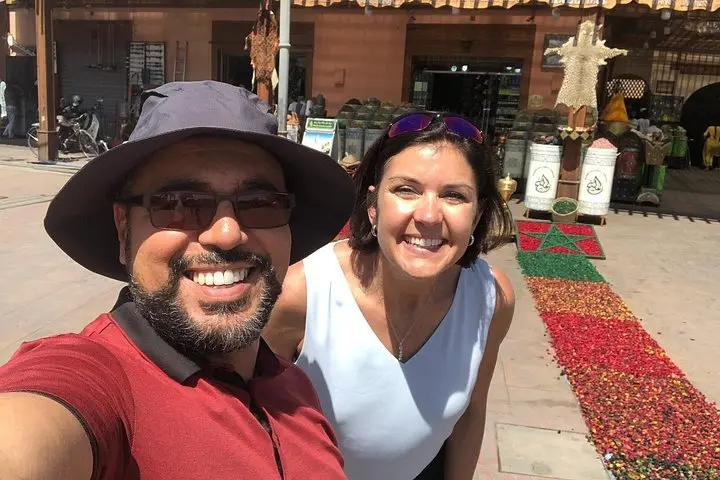
You step out of a cool riad courtyard into the medina’s narrow arteries: the sun slants across ochre walls, vendors call softly from shaded doorways, and the square of Jemaa el-Fna hums like a living room. A private guide threads history into each turn — from a minaret’s shadow to the spice-stained steps that lead into a herb shop.
Verified experiences and guided adventures in the surrounding area.
Operated by Marrakech-Tour-Guide · Marrakech, Marrakech-Safi
You step out of a cool riad courtyard into the medina’s narrow arteries: the sun slants across ochre walls, vendors call softly from shaded doorways, and the square of Jemaa el-Fna hums like a living room. A private guide threads history into each turn — from a minaret’s shadow to the spice-stained steps that lead into a herb shop.
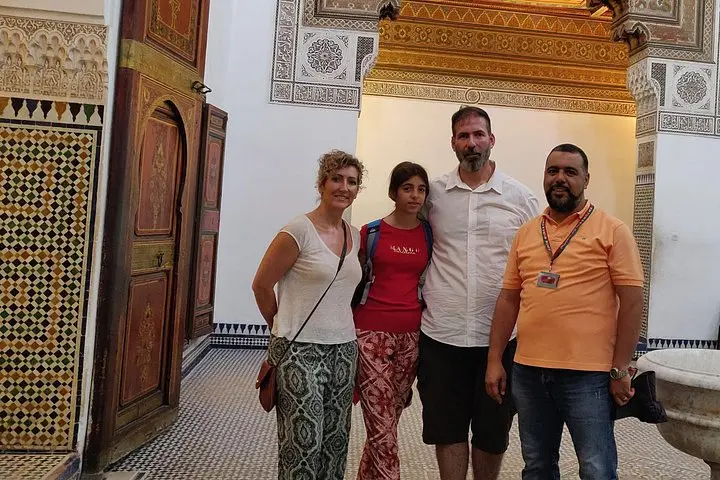
This four-hour walk covers Marrakech’s layered story. Founded in the 11th century, the city grew under Almoravid and Saadian dynasties; the Saadian Tombs and Bahia Palace show painstaking craftsmanship in carved cedar and zellij tile. Geologically, Marrakech sits on the northern edge of Morocco’s High Atlas watershed, its ochre clay buildings grown from local earth. Culturally, the medina remains a working quarter: cooperatives still weave Berber rugs, and souk workshops mix commerce with craft.
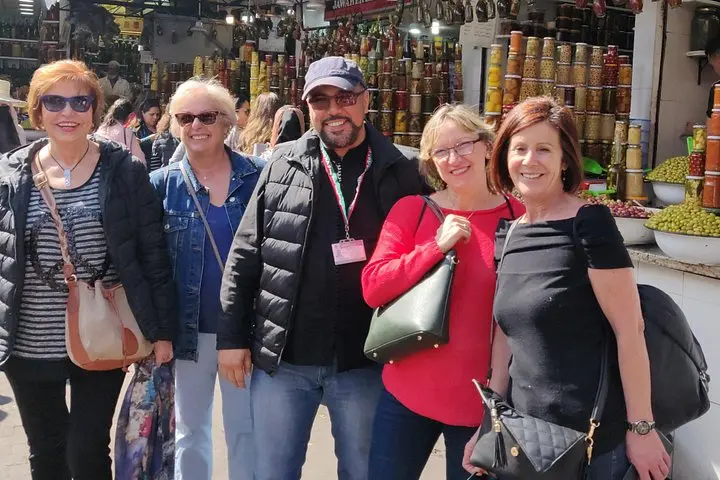
Expect tight alleys with cobbled or packed-earth surfaces, intermittent staircases, and crowded market lanes where motion slows to negotiation. Your guide will manage entrances and context: Koutoubia Mosque (outside view), Bab Agnaou gate, the herb shop, Jewish quarter lanes, Saadian Tombs, Bahia Palace, and cooperative rug workshops, finishing at Jemaa el-Fna.
Practical tips: start early to avoid peak heat and crowds; wear closed-toe shoes for uneven paving; carry water and a small hand towel; and keep modest clothing for mosque-adjacent sites. Plan for bargaining in the souks and set aside time to sit on a rooftop café for a sweeping view of the medina before you leave.
Meeting locations vary by operator; most start near Jemaa el-Fna or your riad — confirm the exact pickup point when you book.
The itinerary notes some admissions (Saadian Tombs, Bahia Palace) may require tickets; confirm with the provider whether entrance fees are included or paid on arrival.
The tour is listed as stroller-accessible for short distances, but expect narrow alleys and occasional steps—lightweight strollers work best and infants should sit on laps when crowded.
Private guides commonly speak English and French; specify language needs at booking to ensure a compatible guide.
Marrakech-Tour-Guide operates guided outdoor trips and adventures with an emphasis on safety, stewardship, and memorable experiences.
You step out of a cool riad courtyard into the medina’s narrow arteries: the sun slants across ochre walls, vendors call softly from shaded doorways, and the square of Jemaa el-Fna hums like a living room. A private guide threads history into each turn — from a minaret’s shadow to the spice-stained steps that lead into a herb shop.
You step out of a cool riad courtyard into the medina’s narrow arteries: the sun slants across ochre walls, vendors call softly from shaded doorways, and the square of Jemaa el-Fna hums like a living room. A private guide threads history into each turn — from a minaret’s shadow to the spice-stained steps that lead into a herb shop.
This four-hour walk covers Marrakech’s layered story. Founded in the 11th century, the city grew under Almoravid and Saadian dynasties; the Saadian Tombs and Bahia Palace show painstaking craftsmanship in carved cedar and zellij tile. Geologically, Marrakech sits on the northern edge of Morocco’s High Atlas watershed, its ochre clay buildings grown from local earth. Culturally, the medina remains a working quarter: cooperatives still weave Berber rugs, and souk workshops mix commerce with craft.
Expect tight alleys with cobbled or packed-earth surfaces, intermittent staircases, and crowded market lanes where motion slows to negotiation. Your guide will manage entrances and context: Koutoubia Mosque (outside view), Bab Agnaou gate, the herb shop, Jewish quarter lanes, Saadian Tombs, Bahia Palace, and cooperative rug workshops, finishing at Jemaa el-Fna.
Practical tips: start early to avoid peak heat and crowds; wear closed-toe shoes for uneven paving; carry water and a small hand towel; and keep modest clothing for mosque-adjacent sites. Plan for bargaining in the souks and set aside time to sit on a rooftop café for a sweeping view of the medina before you leave.