THE ADVENTURE COLLECTIVE® · Independent discovery and booking for outdoor travel

Condense Marrakech’s essential sights into a private guided route that starts at Jemaa el-Fna and moves through Koutoubia, Menara, Majorelle Garden and Bahia Palace. Expect about seven hours of guided walking, private transport, and insider context on history and local craft.
Condense Marrakech’s essential sights into a private guided route that starts at Jemaa el-Fna and moves through Koutoubia, Menara, Majorelle Garden and Bahia Palace. Expect about seven hours of guided walking, private transport, and insider context on history and local craft.
You step from the minivan into the heat and noise of Jemaa el-Fna — spices, call to prayer, storytellers weaving in the square’s open air. The plaza pulses and the guide points down a narrow alley; the medina rearranges itself around you, alleys opening into courtyards, roofs offering sudden skyline views toward the High Atlas.
Verified experiences and guided adventures in the surrounding area.
Operated by AbbasTours · Marrakech, Marrakech-Safi
You step from the minivan into the heat and noise of Jemaa el-Fna — spices, call to prayer, storytellers weaving in the square’s open air. The plaza pulses and the guide points down a narrow alley; the medina rearranges itself around you, alleys opening into courtyards, roofs offering sudden skyline views toward the High Atlas.
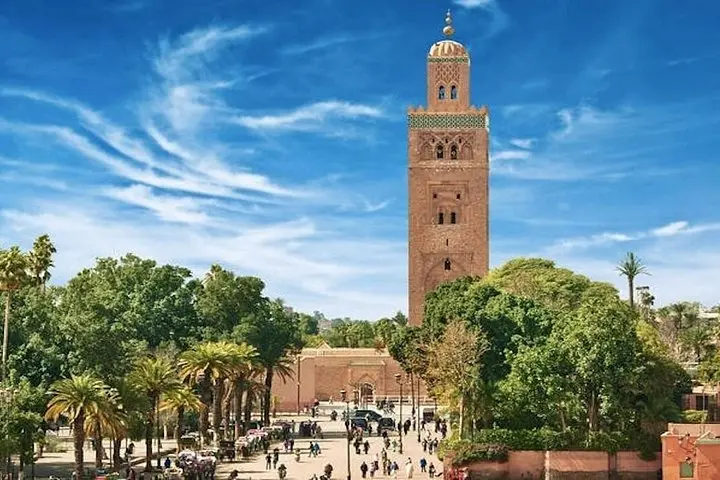
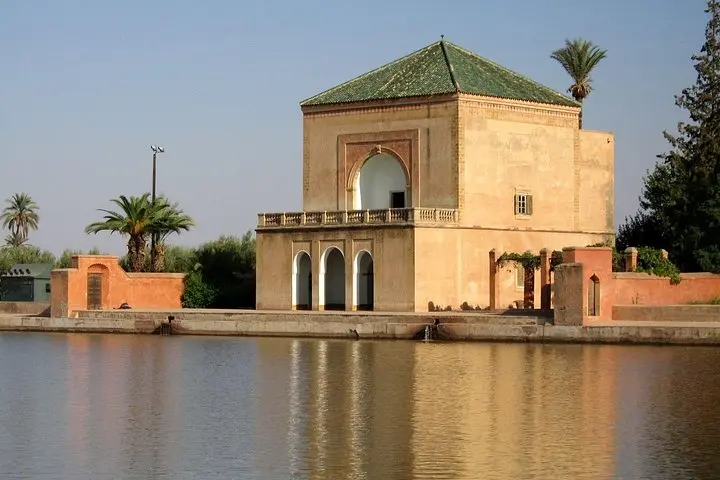
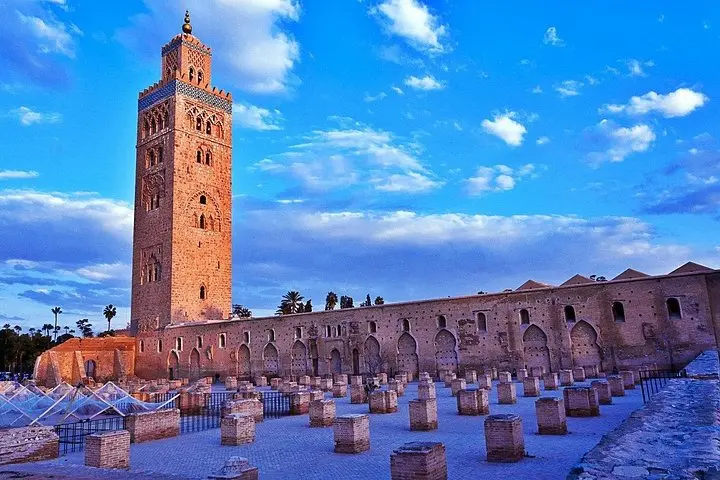
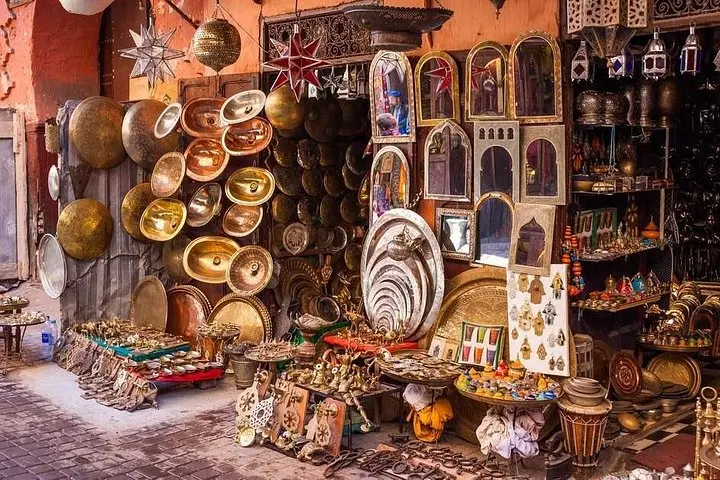
This private itinerary threads major Marrakech landmarks: the living theater of Jemaa el-Fna, the 12th‑century Koutoubia mosque whose minaret influenced Seville and Rabat, the reflective pool and olive groves of the Menara, the cobalt-blue calm of Majorelle Garden, and the ornate rooms of Bahia Palace. Geology matters here — Marrakech sits on a high plain with the Atlas to the south, whose winter snows shape local irrigation and seasonal markets. Culturally, the city is a blend of Almohad foundations, Andalusian influences, and Berber craft traditions you’ll encounter in the souks.
Practical guidance: the listed tour runs about seven hours and includes private transportation and a professional guide; admissions are typically not included, so carry cash for entrance fees and museum tickets. Wear sturdy walking shoes for cobblestones and short staircases, bring a refillable water bottle and sun protection, and plan visits to crowded sites early or late to avoid peak heat. Expect bargaining in markets and space for questions — the private format lets you prioritize photography, crafts, or food tastings. Respect mosque rules on entry and dress modestly in religious areas. With a bit of planning, this condensed route delivers a clear, navigable introduction to Marrakech’s history, architecture, and living streets.
The itinerary lists a total duration of approximately seven hours and covers multiple sites with private transport and a guide.
Admission to museums and gardens is generally not included; bring cash or confirm which sites will be covered when booking.
Private transportation is included; you’ll be asked to specify a pickup point during booking—confirm exact pickup details in advance.
The tour is described as suitable for all fitness levels, but the medina has uneven surfaces and stairs; notify the operator of mobility needs so they can adjust the pace or route.
AbbasTours operates guided outdoor trips and adventures with an emphasis on safety, stewardship, and memorable experiences.
You step from the minivan into the heat and noise of Jemaa el-Fna — spices, call to prayer, storytellers weaving in the square’s open air. The plaza pulses and the guide points down a narrow alley; the medina rearranges itself around you, alleys opening into courtyards, roofs offering sudden skyline views toward the High Atlas.
You step from the minivan into the heat and noise of Jemaa el-Fna — spices, call to prayer, storytellers weaving in the square’s open air. The plaza pulses and the guide points down a narrow alley; the medina rearranges itself around you, alleys opening into courtyards, roofs offering sudden skyline views toward the High Atlas.
This private itinerary threads major Marrakech landmarks: the living theater of Jemaa el-Fna, the 12th‑century Koutoubia mosque whose minaret influenced Seville and Rabat, the reflective pool and olive groves of the Menara, the cobalt-blue calm of Majorelle Garden, and the ornate rooms of Bahia Palace. Geology matters here — Marrakech sits on a high plain with the Atlas to the south, whose winter snows shape local irrigation and seasonal markets. Culturally, the city is a blend of Almohad foundations, Andalusian influences, and Berber craft traditions you’ll encounter in the souks.
Practical guidance: the listed tour runs about seven hours and includes private transportation and a professional guide; admissions are typically not included, so carry cash for entrance fees and museum tickets. Wear sturdy walking shoes for cobblestones and short staircases, bring a refillable water bottle and sun protection, and plan visits to crowded sites early or late to avoid peak heat. Expect bargaining in markets and space for questions — the private format lets you prioritize photography, crafts, or food tastings. Respect mosque rules on entry and dress modestly in religious areas. With a bit of planning, this condensed route delivers a clear, navigable introduction to Marrakech’s history, architecture, and living streets.