THE ADVENTURE COLLECTIVE® · Independent discovery and booking for outdoor travel

Walk the heart of Marrakech with a private guide and move from Koutoubia’s minaret to the buzzing Djemaa el Fna in one focused half-day. This tour packs history, architecture and local street life into an accessible four-hour route suitable for most fitness levels.
Walk the heart of Marrakech with a private guide and move from Koutoubia’s minaret to the buzzing Djemaa el Fna in one focused half-day. This tour packs history, architecture and local street life into an accessible four-hour route suitable for most fitness levels.
The morning air in Marrakech tastes of orange peel and spices; your guide leads you away from the open chaos of Djemaa el Fna into a shifting maze of alleys where sunlight slants between ochre walls.
Verified experiences and guided adventures in the surrounding area.
Operated by Deep South Travel Marrakech · Marrakech, Marrakech-Safi
The morning air in Marrakech tastes of orange peel and spices; your guide leads you away from the open chaos of Djemaa el Fna into a shifting maze of alleys where sunlight slants between ochre walls.
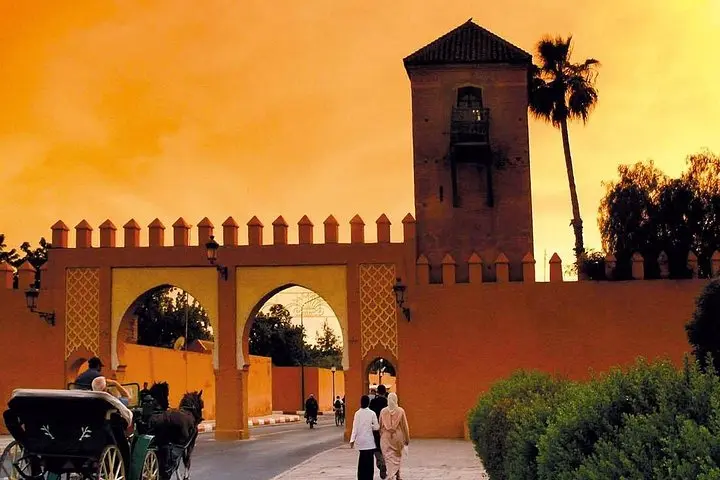
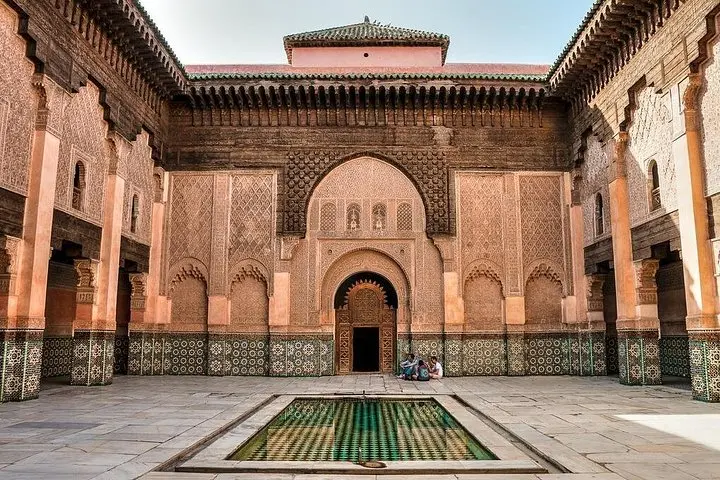
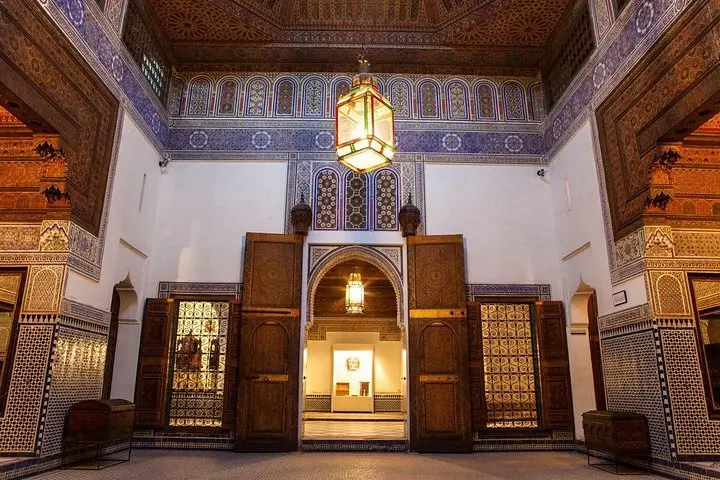
This half-day walking tour threads together the city’s key chapters: the 12th-century Koutoubia minaret rising like a compass point, the ornate rooms of Bahia Palace that reflect 19th-century aristocratic life, the rediscovered Saadian tombs from the 17th century, and the carved cedar and tile of the Ben Youssef Madrasa, once home to hundreds of students.
Geologically, Marrakech sits on the Haouz plain at the foot of the Atlas foothills, its red-earth pigments giving the medina its trademark hue. Culturally the streets are a living marketplace — leatherworkers, spice merchants and ensemble musicians recreate crafts and routines that have shaped Moroccan urban life for centuries.
Practical guidance: wear sturdy, breathable shoes for uneven stone and frequent steps; bring sun protection and a refillable water bottle — shade is intermittent. Plan mornings for cooler temperatures and quieter lanes; afternoons funnel you back to Djemaa el Fna where performers and vendors dominate the square.
Respect mosque sightlines and modest dress rules; camera etiquette matters in crowded alleys. Expect four hours of mostly flat walking with brief stair sections in historic sites; the pace is adjustable for private groups. This tour is ideal for travelers who want concentrated cultural context, close-up architecture, and an efficient orientation to the medina before striking out independently.
The meeting point is in front of Café France inside Jemaa el Fna square unless you arrange hotel pickup.
Yes; the pace is moderate and private guides adjust stops and timing to suit families and older travelers.
Most tours cover guiding only; confirm whether admission to sites like Bahia Palace or Ben Youssef Madrasa is included or paid on-site.
Licensed guides commonly speak multiple languages—confirm your preferred language at booking to ensure availability.
Deep South Travel Marrakech operates guided outdoor trips and adventures with an emphasis on safety, stewardship, and memorable experiences.
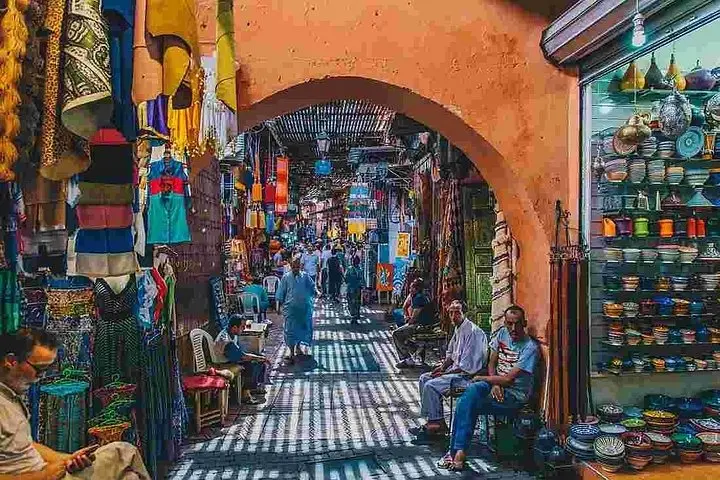
The morning air in Marrakech tastes of orange peel and spices; your guide leads you away from the open chaos of Djemaa el Fna into a shifting maze of alleys where sunlight slants between ochre walls.
The morning air in Marrakech tastes of orange peel and spices; your guide leads you away from the open chaos of Djemaa el Fna into a shifting maze of alleys where sunlight slants between ochre walls.
This half-day walking tour threads together the city’s key chapters: the 12th-century Koutoubia minaret rising like a compass point, the ornate rooms of Bahia Palace that reflect 19th-century aristocratic life, the rediscovered Saadian tombs from the 17th century, and the carved cedar and tile of the Ben Youssef Madrasa, once home to hundreds of students.
Geologically, Marrakech sits on the Haouz plain at the foot of the Atlas foothills, its red-earth pigments giving the medina its trademark hue. Culturally the streets are a living marketplace — leatherworkers, spice merchants and ensemble musicians recreate crafts and routines that have shaped Moroccan urban life for centuries.
Practical guidance: wear sturdy, breathable shoes for uneven stone and frequent steps; bring sun protection and a refillable water bottle — shade is intermittent. Plan mornings for cooler temperatures and quieter lanes; afternoons funnel you back to Djemaa el Fna where performers and vendors dominate the square.
Respect mosque sightlines and modest dress rules; camera etiquette matters in crowded alleys. Expect four hours of mostly flat walking with brief stair sections in historic sites; the pace is adjustable for private groups. This tour is ideal for travelers who want concentrated cultural context, close-up architecture, and an efficient orientation to the medina before striking out independently.