THE ADVENTURE COLLECTIVE® · Independent discovery and booking for outdoor travel

Swap Marrakech’s bustle for the rocky sweep of Agafay: a 45-minute drive, a sunset camel ride across stony plains, then a communal Berber dinner under desert stars. This evening tour pairs easy adventure with cultural music and local cuisine.
Swap Marrakech’s bustle for the rocky sweep of Agafay: a 45-minute drive, a sunset camel ride across stony plains, then a communal Berber dinner under desert stars. This evening tour pairs easy adventure with cultural music and local cuisine.
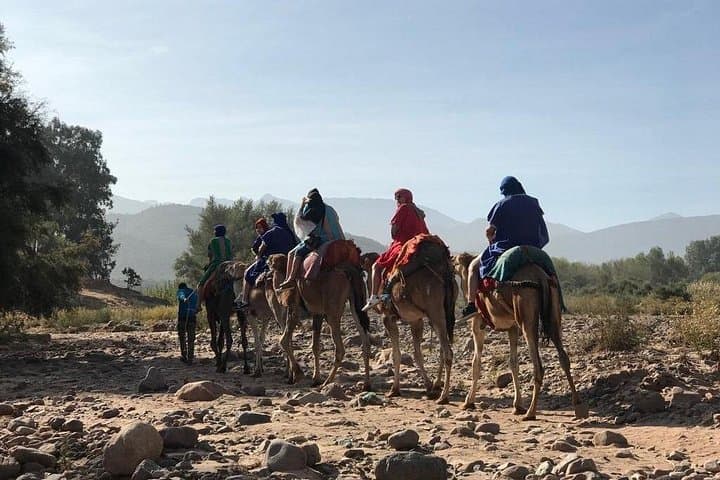
The late-afternoon road from Marrakech drops into a stony plain where the sun slants low and the Agafay Desert appears more granite moonscape than sand sea. Travelers arrive by air-conditioned van, sip mint tea beneath a low sky, then mount a camel column that moves like a slow, deliberate poem toward the rim where the day folds into color.
Verified experiences and guided adventures in the surrounding area.
Operated by Mountain Sahara Treks · Marrakech, Marrakech-Safi
The late-afternoon road from Marrakech drops into a stony plain where the sun slants low and the Agafay Desert appears more granite moonscape than sand sea. Travelers arrive by air-conditioned van, sip mint tea beneath a low sky, then mount a camel column that moves like a slow, deliberate poem toward the rim where the day folds into color.
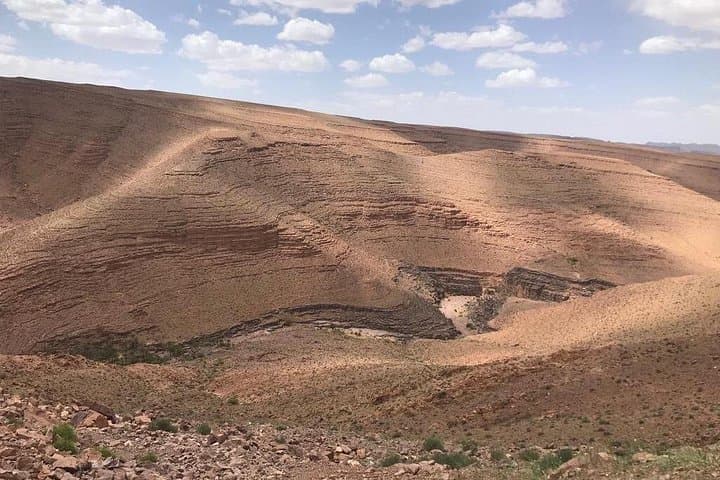
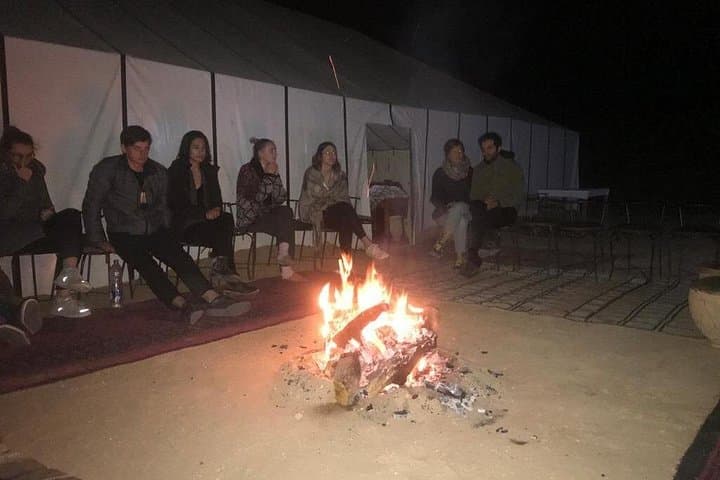
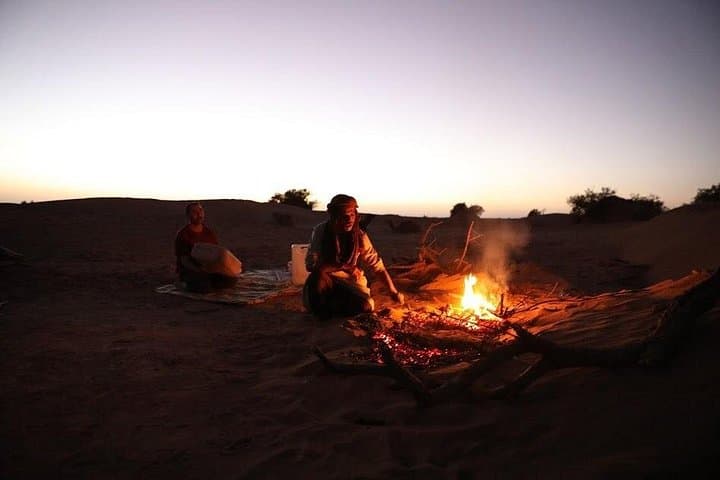
Geologically, Agafay is not Sahara dunes but a rocky, arid plateau of limestone and gneiss shaped by millennia of erosion and seasonal flash floods. Culturally the area sits on the edge of Marrakech’s trade orbit — Berber families have grazed and guided here for generations — and the evening’s tagine and live music are as much performance as hospitality: local cooks, oud players and percussion setting the tempo for sunset.
Expect an easy, low-altitude outing: a roughly 45-minute transfer from Marrakech, a 30–60 minute camel ride timed for sunset, then dinner in a desert camp before the return. The terrain is compact rock and dust; don’t expect sand dunes or long hiking. Photographers will find low-angle light and jagged silhouettes of the Atlas foothills on the horizon.
Practical guidance: wear closed-toe shoes for unstable ground, bring layered clothing (temperatures drop at night), sun protection and a reusable water bottle. Mobility can be limited mounting camels; the operator advises against this trip for pregnant guests or those with serious back or heart conditions. Book an evening slot for the best light and plan for a 5-hour round trip from Marrakech.
The transfer is about 40–50 minutes by air-conditioned vehicle depending on traffic and the exact meeting point in Marrakech.
Yes — the ride is gentle and short, but children should be supervised and both seniors and young children should be able to mount/dismount with assistance.
Most operators can accommodate basic dietary preferences if notified in advance during booking — mention restrictions when you reserve.
Photography is welcome; drone use may be restricted near camps and private property — check with the operator beforehand.
Mountain Sahara Treks operates guided outdoor trips and adventures with an emphasis on safety, stewardship, and memorable experiences.
The late-afternoon road from Marrakech drops into a stony plain where the sun slants low and the Agafay Desert appears more granite moonscape than sand sea. Travelers arrive by air-conditioned van, sip mint tea beneath a low sky, then mount a camel column that moves like a slow, deliberate poem toward the rim where the day folds into color.
The late-afternoon road from Marrakech drops into a stony plain where the sun slants low and the Agafay Desert appears more granite moonscape than sand sea. Travelers arrive by air-conditioned van, sip mint tea beneath a low sky, then mount a camel column that moves like a slow, deliberate poem toward the rim where the day folds into color.
Geologically, Agafay is not Sahara dunes but a rocky, arid plateau of limestone and gneiss shaped by millennia of erosion and seasonal flash floods. Culturally the area sits on the edge of Marrakech’s trade orbit — Berber families have grazed and guided here for generations — and the evening’s tagine and live music are as much performance as hospitality: local cooks, oud players and percussion setting the tempo for sunset.
Expect an easy, low-altitude outing: a roughly 45-minute transfer from Marrakech, a 30–60 minute camel ride timed for sunset, then dinner in a desert camp before the return. The terrain is compact rock and dust; don’t expect sand dunes or long hiking. Photographers will find low-angle light and jagged silhouettes of the Atlas foothills on the horizon.
Practical guidance: wear closed-toe shoes for unstable ground, bring layered clothing (temperatures drop at night), sun protection and a reusable water bottle. Mobility can be limited mounting camels; the operator advises against this trip for pregnant guests or those with serious back or heart conditions. Book an evening slot for the best light and plan for a 5-hour round trip from Marrakech.