THE ADVENTURE COLLECTIVE® · Independent discovery and booking for outdoor travel

Ride from Marrakech over the Tizi n'Tichka into palm-filled valleys and finally the dunes of Erg Chebbi. This seven-day road cycling tour mixes high mountain climbs, Kasbah visits, and a night in a desert camp.
Ride from Marrakech over the Tizi n'Tichka into palm-filled valleys and finally the dunes of Erg Chebbi. This seven-day road cycling tour mixes high mountain climbs, Kasbah visits, and a night in a desert camp.
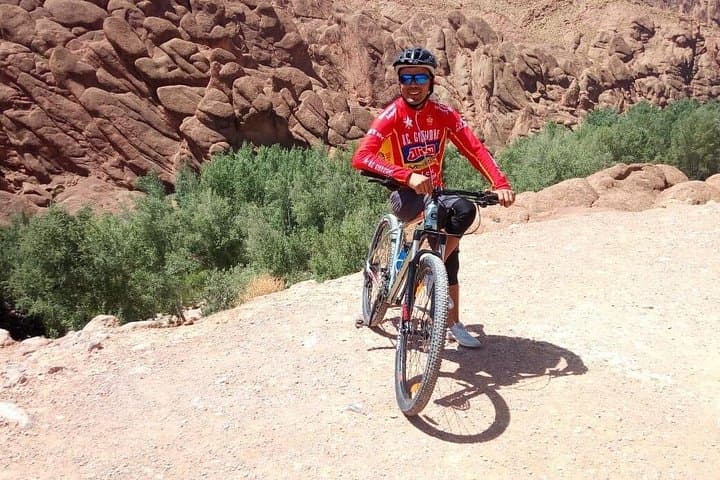
You start before dawn in Marrakech, the city’s pulse still slow, and pedal into a landscape that keeps changing like chapters flipping. The road climbs toward Tizi n'Tichka, tight hairpins carving up the High Atlas until the pass opens at about 2,260 m; the air is thin and the wind dares you to keep rhythm. By midday you’re coasting past mud-brick kasbahs, then descending into ochre valleys where irrigation channels glint like silver threads.
Verified experiences and guided adventures in the surrounding area.
Operated by Biking in Morocco day tours · Marrakech, Marrakech-Safi
You start before dawn in Marrakech, the city’s pulse still slow, and pedal into a landscape that keeps changing like chapters flipping. The road climbs toward Tizi n'Tichka, tight hairpins carving up the High Atlas until the pass opens at about 2,260 m; the air is thin and the wind dares you to keep rhythm. By midday you’re coasting past mud-brick kasbahs, then descending into ochre valleys where irrigation channels glint like silver threads.
This route follows old caravan corridors and modern film roads—Ouarzazate earned its nickname as Morocco’s cinema hub for a reason—then threads palm oases in Skoura and the fragrant terraces of Kelaa M'Gouna, the Valley of Roses. Geologically, you move from metamorphic High Atlas ridges into alluvial plains and finally the eroded dunes of Erg Chebbi, where sand pushes forward under your tires and the desert horizon swallows sound.
Culturally, expect Berber hospitality: riads and kasbahs, tagine shared with guides, and a night under canvas in a nomadic-style camp after a late-afternoon camel ride. Practical realities matter: plan for sustained climbs (daily road legs 55–75 km with stiff gradients), variable temperatures—hot in the lowlands, cold at altitude—and a support van on standby if you need to rest.
Bring layered clothing, reliable road tires, and hydration designed for long rides. Time rides for cooler morning hours, protect skin and equipment from sand, and leave space in your plans to stop at kasbahs and studio museums. The trip is equal parts endurance and slow travel: push the pedals, then listen when the desert answers.
You should be comfortable riding 55–75 km on consecutive days with climbs; participants need moderate to strong cycling endurance.
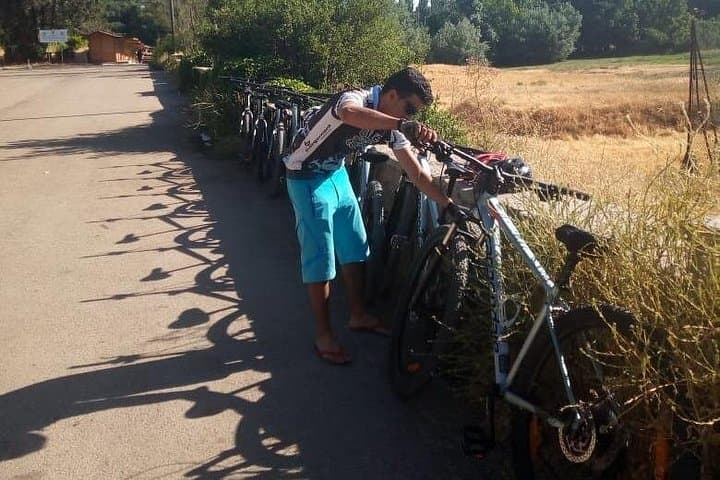
The tour notes include a bike and helmet—confirm frame sizes and mechanical support when you book.
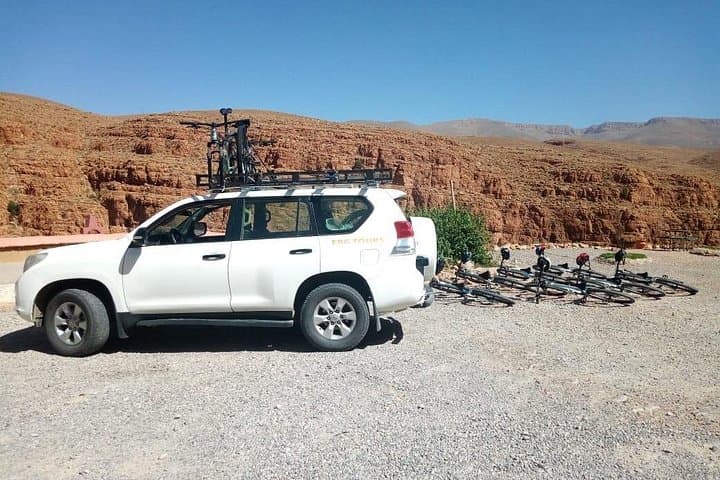
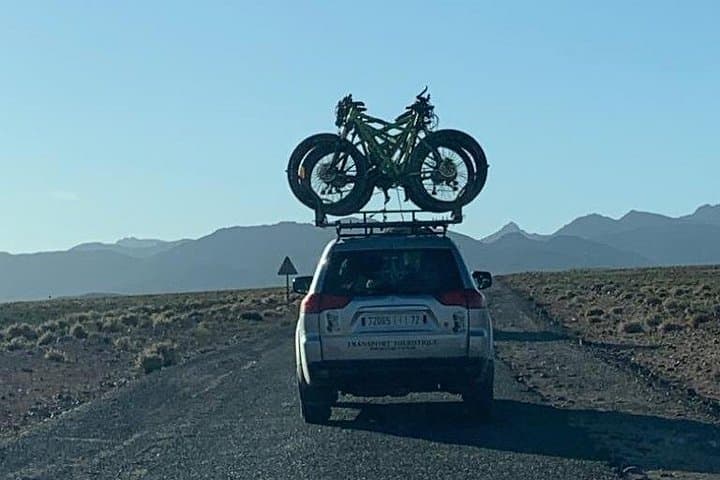
A support van follows the route and can transfer riders to the next overnight or assist with mechanical issues.
Camps are nomadic-style luxury tents with basic amenities—expect simple bathrooms and communal dining under the stars.
Biking in Morocco day tours operates guided outdoor trips and adventures with an emphasis on safety, stewardship, and memorable experiences.
You start before dawn in Marrakech, the city’s pulse still slow, and pedal into a landscape that keeps changing like chapters flipping. The road climbs toward Tizi n'Tichka, tight hairpins carving up the High Atlas until the pass opens at about 2,260 m; the air is thin and the wind dares you to keep rhythm. By midday you’re coasting past mud-brick kasbahs, then descending into ochre valleys where irrigation channels glint like silver threads.
You start before dawn in Marrakech, the city’s pulse still slow, and pedal into a landscape that keeps changing like chapters flipping. The road climbs toward Tizi n'Tichka, tight hairpins carving up the High Atlas until the pass opens at about 2,260 m; the air is thin and the wind dares you to keep rhythm. By midday you’re coasting past mud-brick kasbahs, then descending into ochre valleys where irrigation channels glint like silver threads.
This route follows old caravan corridors and modern film roads—Ouarzazate earned its nickname as Morocco’s cinema hub for a reason—then threads palm oases in Skoura and the fragrant terraces of Kelaa M'Gouna, the Valley of Roses. Geologically, you move from metamorphic High Atlas ridges into alluvial plains and finally the eroded dunes of Erg Chebbi, where sand pushes forward under your tires and the desert horizon swallows sound.
Culturally, expect Berber hospitality: riads and kasbahs, tagine shared with guides, and a night under canvas in a nomadic-style camp after a late-afternoon camel ride. Practical realities matter: plan for sustained climbs (daily road legs 55–75 km with stiff gradients), variable temperatures—hot in the lowlands, cold at altitude—and a support van on standby if you need to rest.
Bring layered clothing, reliable road tires, and hydration designed for long rides. Time rides for cooler morning hours, protect skin and equipment from sand, and leave space in your plans to stop at kasbahs and studio museums. The trip is equal parts endurance and slow travel: push the pedals, then listen when the desert answers.