THE ADVENTURE COLLECTIVE® · Independent discovery and booking for outdoor travel

Swap Marrakech’s ochre heat for Atlantic wind and cobbled alleys on a full-day drive to Essaouira. Explore fortified ramparts, a working fishing harbor, and lively souks with time for artisan shopping and seaside views.
Swap Marrakech’s ochre heat for Atlantic wind and cobbled alleys on a full-day drive to Essaouira. Explore fortified ramparts, a working fishing harbor, and lively souks with time for artisan shopping and seaside views.
A brisk Atlantic wind meets you at the city walls as the minivan hums into Essaouira, salt on the air and gulls circling the stone ramparts. You step onto cobbled lanes where fishermen mend nets and blue-painted doors frame galleries; the port’s colorful boats bob like punctuation marks against a wide, bristling surf.
Verified experiences and guided adventures in the surrounding area.
Operated by Explore Morocco Magic · Essaouira, Marrakesh-Safi
A brisk Atlantic wind meets you at the city walls as the minivan hums into Essaouira, salt on the air and gulls circling the stone ramparts. You step onto cobbled lanes where fishermen mend nets and blue-painted doors frame galleries; the port’s colorful boats bob like punctuation marks against a wide, bristling surf.
Essaouira—formerly Mogador—has a layered history of Berber, Portuguese and French influences visible in its 18th-century Skala fortifications and the compact Jewish Quarter (Mellah). Geologically the town sits on a windy shelf of pale coastal sands and ancient limestone; that exposed shoreline sculpts broad beaches and steady Atlantic swells that have long driven both trade and tradition.
Culture here is tactile: artisans carve thuya wood, argan oil women gather outside markets, and music spills from cafés that once drew Gnawa musicians and visiting artists. Practical edges matter on a day trip: expect roughly four hours of on-foot exploration in Essaouira itself within a 10-hour roundtrip from Marrakech, including highway driving across semi-arid plains.
Bring sturdy shoes for uneven stone, a windproof layer for the coastal breezes, and cash for small purchases in the souk. Aim for morning departures to avoid late-afternoon fatigue and to catch softer light for photography. Respect working harbor areas during visits and leave larger backpacks on the minivan to move faster through narrow alleys.
This itinerary balances relaxed cultural immersion with strategic planning—pack water, plan for wind, and give yourself time to linger at a seaside café before the return drive to Marrakech.
Expect roughly a 2.5–3 hour drive each way depending on traffic, making the full excursion about 10 hours including time in Essaouira.
Yes—this excursion is rated easy and suitable for all fitness levels; however, watch stairs and uneven surfaces in the medina and on ramparts.
Yes—the itinerary typically allows time for a relaxed meal in town; inform the operator of dietary needs in advance for recommendations.
Yes—you can view the harbor up close, but follow local guidance and respect working areas where nets and equipment are handled.
Explore Morocco Magic operates guided outdoor trips and adventures with an emphasis on safety, stewardship, and memorable experiences.
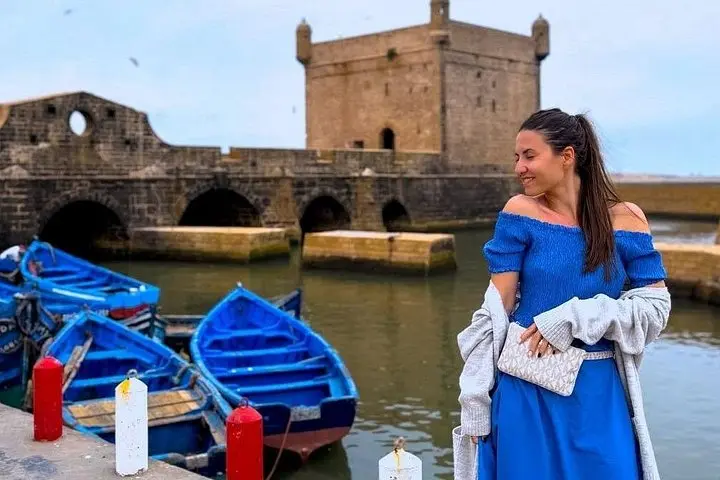
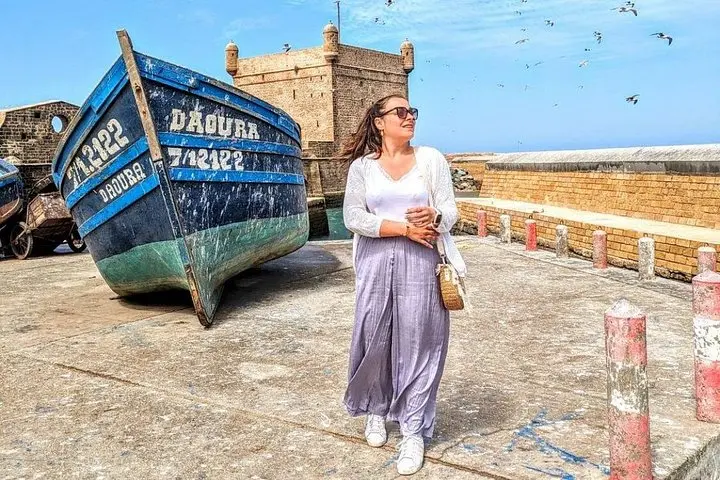
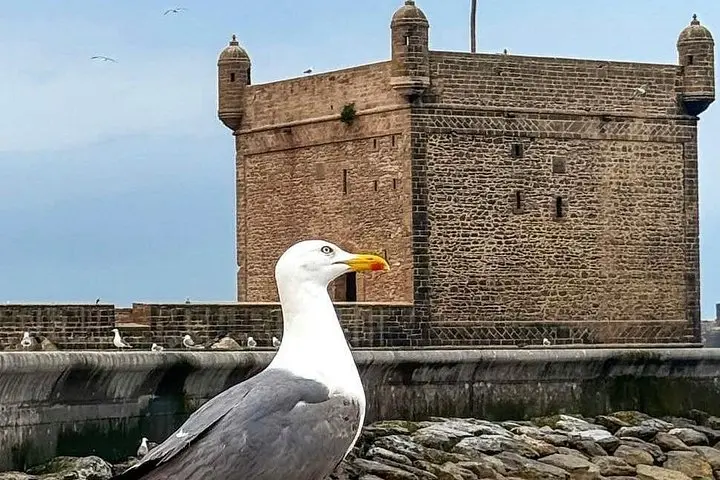
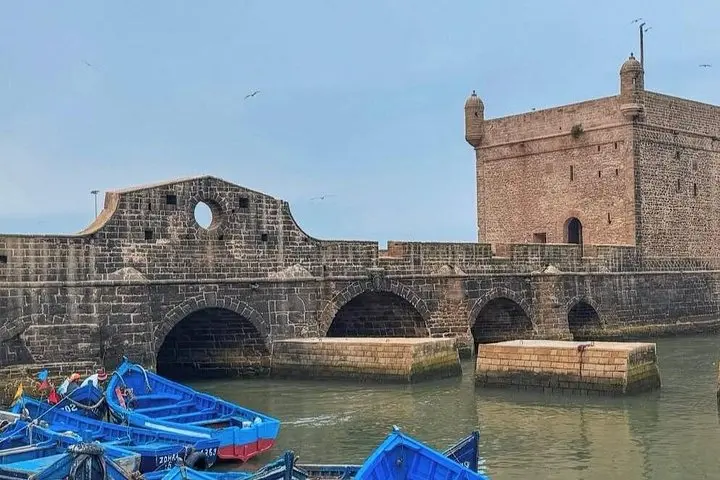
A brisk Atlantic wind meets you at the city walls as the minivan hums into Essaouira, salt on the air and gulls circling the stone ramparts. You step onto cobbled lanes where fishermen mend nets and blue-painted doors frame galleries; the port’s colorful boats bob like punctuation marks against a wide, bristling surf.
A brisk Atlantic wind meets you at the city walls as the minivan hums into Essaouira, salt on the air and gulls circling the stone ramparts. You step onto cobbled lanes where fishermen mend nets and blue-painted doors frame galleries; the port’s colorful boats bob like punctuation marks against a wide, bristling surf.
Essaouira—formerly Mogador—has a layered history of Berber, Portuguese and French influences visible in its 18th-century Skala fortifications and the compact Jewish Quarter (Mellah). Geologically the town sits on a windy shelf of pale coastal sands and ancient limestone; that exposed shoreline sculpts broad beaches and steady Atlantic swells that have long driven both trade and tradition.
Culture here is tactile: artisans carve thuya wood, argan oil women gather outside markets, and music spills from cafés that once drew Gnawa musicians and visiting artists. Practical edges matter on a day trip: expect roughly four hours of on-foot exploration in Essaouira itself within a 10-hour roundtrip from Marrakech, including highway driving across semi-arid plains.
Bring sturdy shoes for uneven stone, a windproof layer for the coastal breezes, and cash for small purchases in the souk. Aim for morning departures to avoid late-afternoon fatigue and to catch softer light for photography. Respect working harbor areas during visits and leave larger backpacks on the minivan to move faster through narrow alleys.
This itinerary balances relaxed cultural immersion with strategic planning—pack water, plan for wind, and give yourself time to linger at a seaside café before the return drive to Marrakech.