THE ADVENTURE COLLECTIVE® · Independent discovery and booking for outdoor travel

A full-day drive from Marrakech delivers Essaouira’s breezy medina, working port, and argan cooperatives where goats still climb trees. Expect market noise, salty air, and a compact old town you can explore by foot in a day.
A full-day drive from Marrakech delivers Essaouira’s breezy medina, working port, and argan cooperatives where goats still climb trees. Expect market noise, salty air, and a compact old town you can explore by foot in a day.
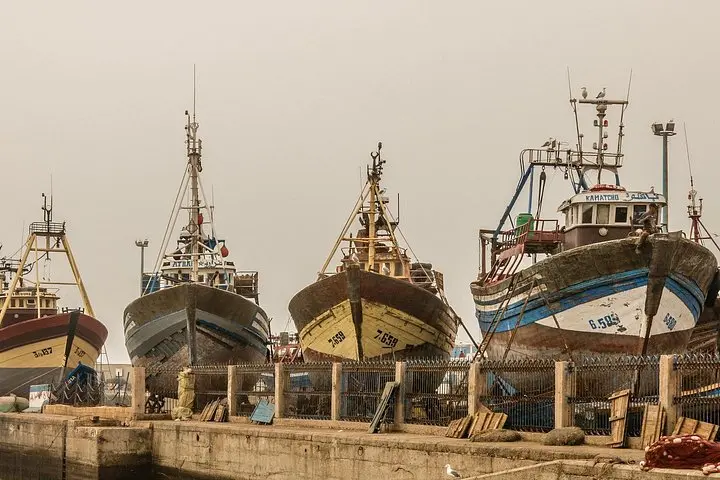
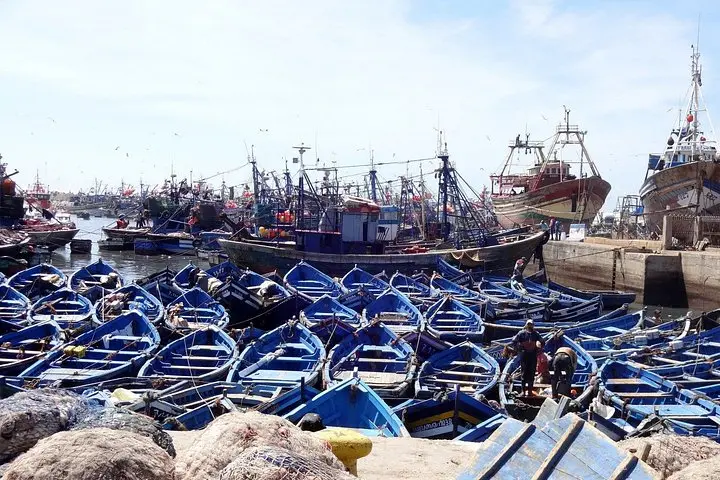
You step off the minivan into a wind that seems determined to rearrange your hair and your plans. The Atlantic pushes a steady breath across Essaouira's low white houses; gulls wheel over a port where fishermen mend nets and the quay smells of salt and seaweed.
Verified experiences and guided adventures in the surrounding area.
Operated by Amodou Tours · Essaouira, Marrakesh-Safi
You step off the minivan into a wind that seems determined to rearrange your hair and your plans. The Atlantic pushes a steady breath across Essaouira's low white houses; gulls wheel over a port where fishermen mend nets and the quay smells of salt and seaweed.
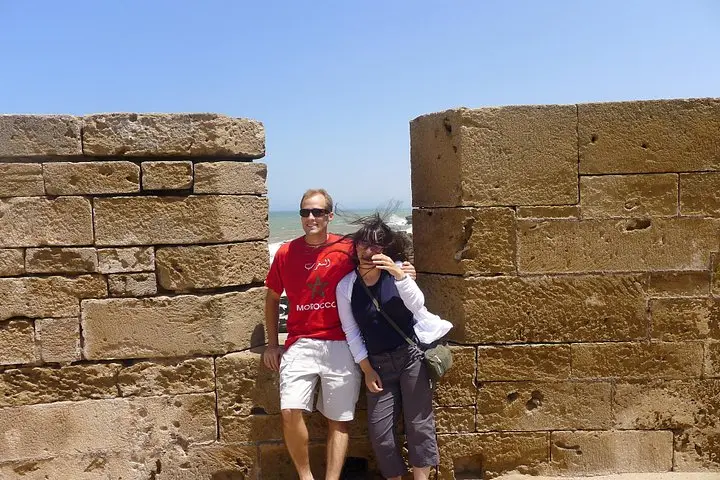
Essaouira (formerly Mogador) carries an 18th-century grid laid down under Sultan Sidi Mohammed ben Abdallah and echoes of Portuguese ramparts. The roofline of the medina and the defensive skala facing the ocean are limestone and sandstone shaped by centuries of salt spray. Inland, argan trees anchor the scrubby hills—goats clamber among the branches, an odd local habit that photographers prize and cooperatives have shaped into a small economy around argan oil.
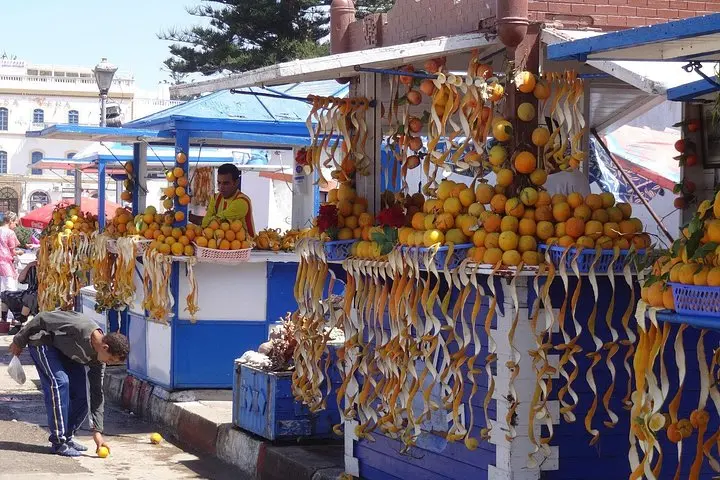
Culture here is direct: Berber cooperatives run by local women welcome visitors and demonstrate pressing and roasting. The port and fish market are active displays of daily life, while broad beaches invite long walks and wind-driven kitesurfers.
Practical guidance: expect a 2.5–3 hour drive each way from Marrakech, a full-day rhythm of walking, market browsing, and stops at cooperatives. Dress in layers—wind makes temperatures feel cooler than the sun suggests—and bring a windproof jacket and closed-toe shoes for cobbled streets and fishing wharves. Cash for small purchases and modest tipping at cooperatives goes a long way. If you want calmer moments, time your walk along the beach for late afternoon when the trade winds soften and the town’s color palette shifts toward ochre and blue.
The drive is typically 2.5–3 hours each way depending on traffic and chosen route, so expect a full day trip.
Yes—goats commonly climb argan trees in the region; sightings are frequent around argan scrub between Marrakech and Essaouira.
Many cooperatives are community-run and female-led; look for ones that allow you to observe the full production process and sell pure, unlabelled oil directly.
The medina has uneven cobbles and steps; while transport is wheelchair-accessible in some parts, exploring the old port and narrow streets may be difficult for those with limited mobility.
Amodou Tours operates guided outdoor trips and adventures with an emphasis on safety, stewardship, and memorable experiences.
You step off the minivan into a wind that seems determined to rearrange your hair and your plans. The Atlantic pushes a steady breath across Essaouira's low white houses; gulls wheel over a port where fishermen mend nets and the quay smells of salt and seaweed.
You step off the minivan into a wind that seems determined to rearrange your hair and your plans. The Atlantic pushes a steady breath across Essaouira's low white houses; gulls wheel over a port where fishermen mend nets and the quay smells of salt and seaweed.
Essaouira (formerly Mogador) carries an 18th-century grid laid down under Sultan Sidi Mohammed ben Abdallah and echoes of Portuguese ramparts. The roofline of the medina and the defensive skala facing the ocean are limestone and sandstone shaped by centuries of salt spray. Inland, argan trees anchor the scrubby hills—goats clamber among the branches, an odd local habit that photographers prize and cooperatives have shaped into a small economy around argan oil.
Culture here is direct: Berber cooperatives run by local women welcome visitors and demonstrate pressing and roasting. The port and fish market are active displays of daily life, while broad beaches invite long walks and wind-driven kitesurfers.
Practical guidance: expect a 2.5–3 hour drive each way from Marrakech, a full-day rhythm of walking, market browsing, and stops at cooperatives. Dress in layers—wind makes temperatures feel cooler than the sun suggests—and bring a windproof jacket and closed-toe shoes for cobbled streets and fishing wharves. Cash for small purchases and modest tipping at cooperatives goes a long way. If you want calmer moments, time your walk along the beach for late afternoon when the trade winds soften and the town’s color palette shifts toward ochre and blue.